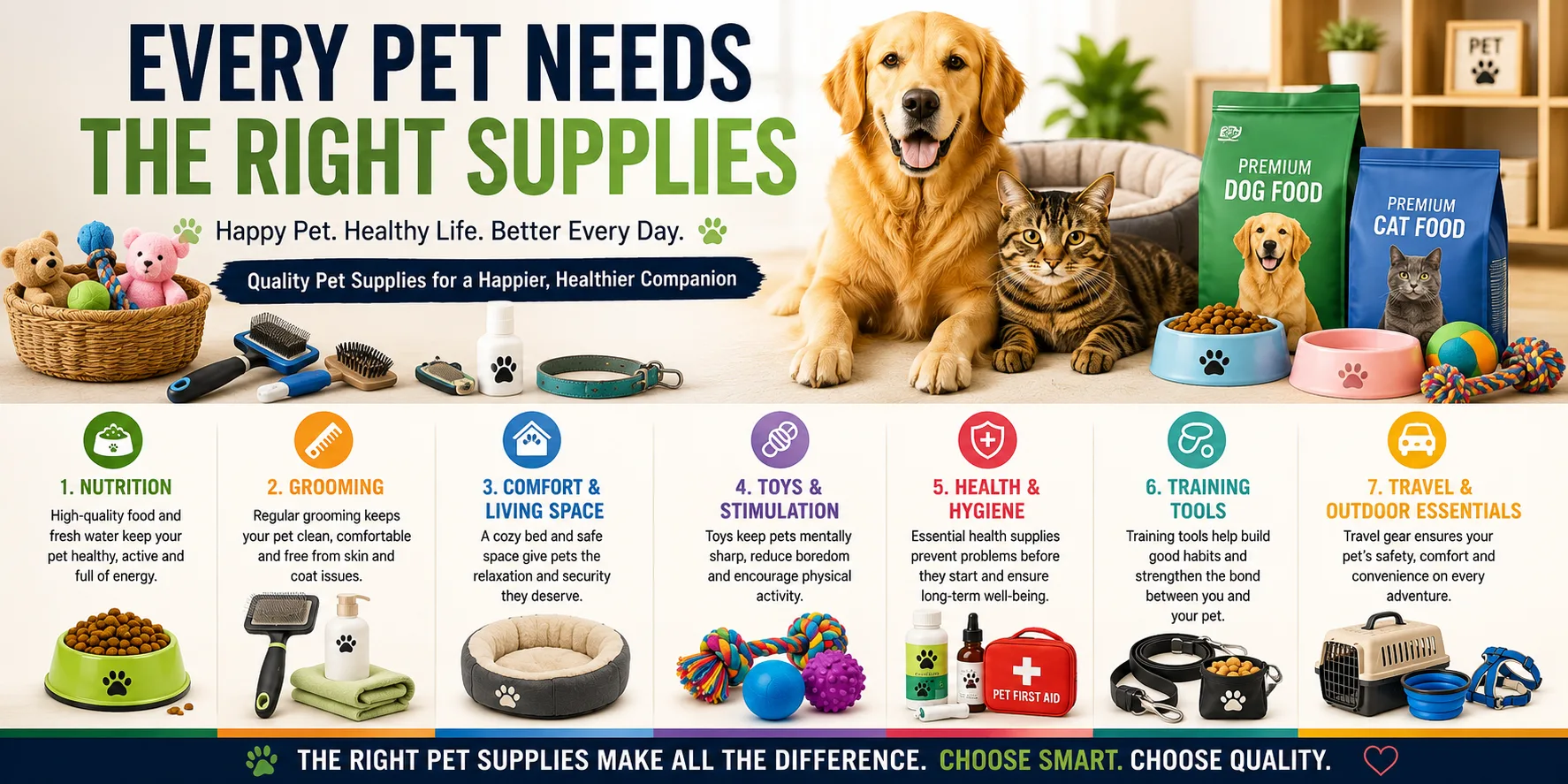
Pets are not just animals anymore; they are part of the family. Every pet owner wants their pet to stay healthy, active, and happy. To provide proper care, having the right pet supplies is extremely important. Pet supplies include food, toys, grooming products, beds, feeding accessories, and health care items that improve a pet’s daily life and overall well-being.
Pet Food – The Foundation of a Healthy Life
Good nutrition is one of the most important parts of pet care. Healthy and nutritious food helps pets stay strong and active while improving their immunity. There are many types of pet food available in the market, including dry food, wet food, organic food, and grain-free options. Pet owners should always choose food according to their pet’s age, breed, and health condition.
Pet Toys – Fun and Exercise Together
Toys are essential for keeping pets physically and mentally active. Chew toys, balls, rope toys, and interactive puzzle toys help reduce boredom and stress in pets. Toys also improve behavior and provide exercise, which is important for maintaining a healthy lifestyle.
Grooming Supplies – Cleanliness Matters
Regular grooming keeps pets clean, healthy, and comfortable. Grooming products such as pet shampoos, brushes, nail clippers, and wipes help maintain hygiene and reduce hair fall and skin infections. Proper grooming also keeps pets smelling fresh and looking healthy.
Pet Beds and Comfort Accessories
Every pet needs a comfortable place to rest and sleep. Soft beds, blankets, cushions, and cooling mats provide comfort and relaxation for pets. A comfortable sleeping area helps pets feel safe, stress-free, and relaxed.
Feeding Accessories
Feeding accessories make daily pet care easier and more hygienic. Food bowls, water dispensers, automatic feeders, and travel bottles help maintain proper feeding routines and improve water intake.
Health Care Products
Health care products are important for keeping pets healthy and disease-free. Vitamins, supplements, dental care kits, flea control products, and first aid kits help improve overall health and prevent common health issues.
Travel Accessories for Pets
For pet owners who travel frequently, travel accessories are extremely useful. Pet carriers, safety belts, portable bowls, and travel bags make traveling safer and more comfortable for pets.
Tips for Choosing the Best Pet Supplies
When buying pet supplies, always focus on quality, durability, and safety. Choose pet-friendly materials, read product reviews, and select trusted brands. It is important to buy products that match your pet’s size, age, and needs.
Conclusion
Pet supplies play a major role in keeping pets healthy, happy, and comfortable. From nutritious food to grooming products and toys, every item contributes to a better lifestyle for pets. Investing in high-quality pet supplies is one of the best ways to provide proper care and show love to your furry companions.