TL;DR
If your backyard in Cranbourne or Berwick slopes feel like they might shift after heavy rain, stone walls are your long-term champions—heavy, durable, and excellent at letting water drain naturally. Dry bag walls? They’re quick and flexible, but they need a little extra care to stay stable. Pro tip: combine smart drainage with quality fill for a wall that lasts. For the best results, consulting landscaping professionals in Cranbourne can save you time and prevent soil collapse headaches.
Why Do Backyard Retaining Walls Fail?
You’d be surprised how often walls fail simply because we forget one thing: water. After heavy rain, soil acts like a sponge—it swells, shifts, and presses against your wall. Left unchecked, the wall eventually gives way.
In Cranbourne, local landscapers report that around 1 in 5 backyard slips are caused by walls that weren’t designed for the soil type. Crazy, right?
Quick tip: Take a good look at your slope and drainage before deciding on your wall. Even a “gentle” slope can exert more pressure than you think.
How Do Stone Walls Keep Soil in Place?
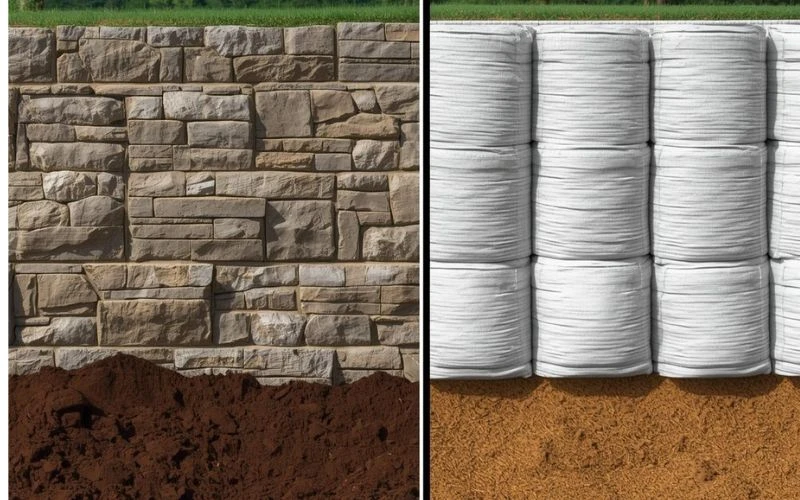
Stone walls aren’t just pretty—they’re heavy, solid, and naturally resist soil pressure. They also let water escape between the stones, which reduces the chance of soil collapse.
Why stone walls work:
- Heavy and stable, perfect for resisting sideways soil pressure.
- Natural drainage between stones stops water from building up.
- Durable—these walls can last decades if built right.
Local tip: In Berwick’s clay-heavy soil, a gravel layer behind the wall can cut water pressure by nearly half.
DIY-ish steps to make it stick:
- Dig a base at least 150mm below soil level.
- Add compacted gravel for a strong foundation.
- Stack stones tightly, staggering joints.
- Make small gaps or weep holes for drainage.
- Backfill with coarse gravel before topping with soil.
Even after building, keep an eye on the wall after storms—early signs of shifting can save a lot of trouble later.
Are Dry Bag Walls Safe for Sloped Backyards?
Dry bag walls—basically bags filled with soil or sand—are lighter and faster to install. But don’t let the speed fool you; they aren’t automatically strong.
Tips to make them last:
- Drainage is everything: perforated pipes or gravel behind the wall help a lot.
- Step the bags in tiers to distribute weight.
- Keep walls under 1.2m unless you add reinforcement.
In Cranbourne, landscapers often use dry bag walls for temporary terraces or quick fixes for erosion. A clever trick is to add a geogrid layer between bag tiers—suddenly, they resist soil movement much better.
How to Choose Between Stone and Dry Bag Walls
Stone walls:
- Long-term strength
- Sloped or clay-heavy backyards
- Low-maintenance, natural drainage
Dry bag walls:
- Quick setup for small projects
- Temporary terraces or lightweight beds
- Flexibility over brute strength
Pro tip: Skilled landscapers in Berwick combine both—stone base for support, dry bag tiers for planting terraces. Quick, functional, and looks great.
How Can a Retaining Wall Last Longer?
- Drainage first. Water is the #1 enemy of retaining walls.
- Use quality backfill. Gravel or crushed rock keeps soil from pressing too hard.
- Step or tier walls. Spreads weight more evenly.
- Check after heavy rain. Spot bulging stones or bags before things get worse.
- Call local pros if unsure. Landscaping experts know soil types and slopes—trust them.
Conclusion: Keep Your Backyard in Place
Stone walls are long-term, stable, and low-maintenance. Dry bag walls are quick and flexible but need drainage and smart installation. Either way, a little planning goes a long way.
Quick Checklist:
- Assess slope and soil type
- Decide wall height and material
- Install proper drainage behind the wall
- Backfill with gravel or coarse material
- Inspect and maintain, especially after storms
Whether it’s Cranbourne, Berwick, or nearby, a properly planned wall saves money, keeps your garden safe, and avoids messy soil collapses.