Introduction: The Bold Language of Fashion
In the ever-evolving world of fashion, few names resonate with the same level of mystique and innovation as Comme Des Garcons The Japanese label, founded by Rei Kawakubo in 1969, has challenged conventional ideas of beauty, symmetry, and form for over five decades. To step into a Comme des Garçons design is to enter an alternative universe—one where garments become a form of intellectual dialogue, and clothing transcends function to embrace conceptual storytelling.
Comme des Garçons is not just a brand; it's a movement, a philosophy, and an artistic rebellion against the predictable. The label has carved its space at the crossroads of fashion, sculpture, and social commentary. Whether it's through deconstructed silhouettes, irregular stitching, or unorthodox fabric combinations, the brand continuously redefines what it means to be stylish in the modern world.
The Visionary Behind the Brand: Rei Kawakubo
No discussion of Comme des Garçons is complete without paying homage to its enigmatic founder, Rei Kawakubo. A visionary designer often compared to artists and architects rather than traditional fashion designers, Kawakubo has never followed trends—she creates them. With a background in fine arts and literature, her design language is complex, filled with contradiction and surprise. She doesn’t merely design clothes; she constructs experiences that force observers to reconsider their perceptions of identity, gender, beauty, and wearability.
Kawakubo’s refusal to conform to the industry's expectations has not only earned her critical acclaim but also inspired a cult following that spans continents. The designer famously avoids interviews and public appearances, choosing instead to let her designs speak for themselves. This deliberate mystique has only deepened the allure of Comme des Garçons, turning each collection into an anticipated cultural event.
Rewriting the Fashion Rulebook
Comme des Garçons first burst onto the international fashion scene in the early 1980s, during the Paris Fashion Week debut that left critics both stunned and intrigued. The collection, characterized by its asymmetrical cuts, distressed fabrics, and predominantly black palette, defied the polished glamour that dominated the fashion industry at the time. Critics dubbed it “Hiroshima chic,” a phrase that reflected their discomfort with its raw, emotional aesthetic.
Rather than back down, Kawakubo leaned into her radical vision. Comme des Garçons continued to deconstruct garments—quite literally—using irregular shapes, exaggerated proportions, and unexpected textiles. Sleeves found themselves attached at new angles; jackets lost their structure; dresses defied gravity. Each piece became a challenge to the viewer, asking them to reconsider what constitutes fashion and beauty.
This commitment to innovation has remained the brand’s signature. Even today, a Comme des Garçons collection is a deeply artistic and often provocative experience that pushes the boundaries of how fashion communicates and what it can achieve.
More Than Just Clothing: Fashion as Conceptual Art
To wear Comme des Garçons is not just to dress differently but to think differently. Each collection tells a story, often without the need for words. From explorations of gender fluidity to examinations of cultural identity and existential themes, Kawakubo’s creations transform the runway into a gallery of moving art.
One of the most iconic collections, Body Meets Dress, Dress Meets Body from Spring/Summer 1997, introduced padding and distorted shapes to challenge traditional ideas of beauty. Instead of flattering the female form, the clothes exaggerated it to grotesque and surreal proportions. The reaction was polarized, but the fashion world couldn’t look away. That collection has since become a turning point in contemporary CDG Long Sleeve fashion history, showing that fashion could be both intellectual and confrontational.
This approach has continued over the years, with collections exploring everything from metaphysical philosophy to digital identity. Comme des Garçons' runways are not mere fashion shows—they are conceptual performances, and the garments are the visual language through which Kawakubo speaks to her audience.
The Global Influence and Cult Appeal
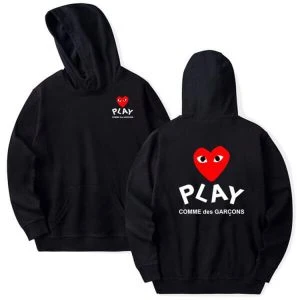
Comme des Garçons has grown from a single label into a sprawling empire of sub-brands, collaborations, and retail experiences. The Play line, with its now-iconic heart-with-eyes logo, brought a sense of accessible luxury to the brand and found mainstream appeal without sacrificing integrity. Collaborations with brands like Nike, Converse, and Supreme have introduced Kawakubo’s vision to younger, streetwear-focused audiences, bridging the gap between avant-garde and commercial fashion.
Despite its global reach, the brand has retained its authenticity. Its flagship stores—such as Dover Street Market—are themselves experiential art spaces, combining fashion, music, and design in immersive environments that reflect Kawakubo’s boundary-pushing vision. Every corner, every garment rack, every installation serves as a continuation of the Comme des Garçons ethos.
Celebrities, artists, and designers alike draw inspiration from Comme des Garçons. Rihanna, Pharrell Williams, Kanye West, and Lady Gaga have all been seen in pieces from the brand. Designers such as Junya Watanabe and Kei Ninomiya, both protégés of Kawakubo, have continued to develop and expand the aesthetic into their own sub-labels under the Comme des Garçons umbrella.
Genderless, Timeless, Fearless
A defining feature of Comme des Garçons is its embrace of androgyny and rejection of gender norms. Long before gender-neutral fashion became a cultural talking point, Kawakubo was designing clothes that refused to fit neatly into “menswear” or “womenswear” categories. Her runway shows feature diverse casts and her garments often fit the body in ways that obscure rather than reveal traditional markers of gender.
In this way, Comme des Garçons doesn't just follow cultural shifts—it often preempts them. Its genderless approach has influenced a generation of designers and consumers who increasingly seek fashion that reflects fluid identities and non-binary aesthetics.
Wearing Comme des Garçons Today
For the uninitiated, wearing Comme des Garçons can seem intimidating. The silhouettes are often architectural, the styling unorthodox, and the prices premium. But the brand offers multiple entry points. From the artistic high fashion of the mainline collections to the more wearable pieces in CDG Shirt and Play lines, there's a spectrum of styles and budgets that allow anyone to engage with Kawakubo’s universe.
Wearing Comme des Garçons is about embracing the unexpected. It’s about choosing a jacket that doesn’t sit evenly, a dress that challenges proportion, a pair of shoes that double as sculpture. It’s not about following fashion—it’s about expressing something unique and deeply personal through the clothes you wear.
Conclusion: A Legacy of Radical Creativity
Comme des Garçons continues to be one of the most daring and influential fashion houses in the world. Rei Kawakubo has built not just a brand, but a legacy—one that will continue to challenge, provoke, and inspire for generations to come. In a world saturated with trends and algorithms, Comme des Garçons remains a beacon for those who view fashion as an art form, a form of resistance, and a mode of deep personal expression.
To step into a Comme des Garçons design is not simply to wear fashion. It is to engage in a dialogue with creativity itself. It is to walk the line between chaos and order, beauty and imperfection, form and abstraction. It is to say, boldly and unapologetically, that style should never be safe.