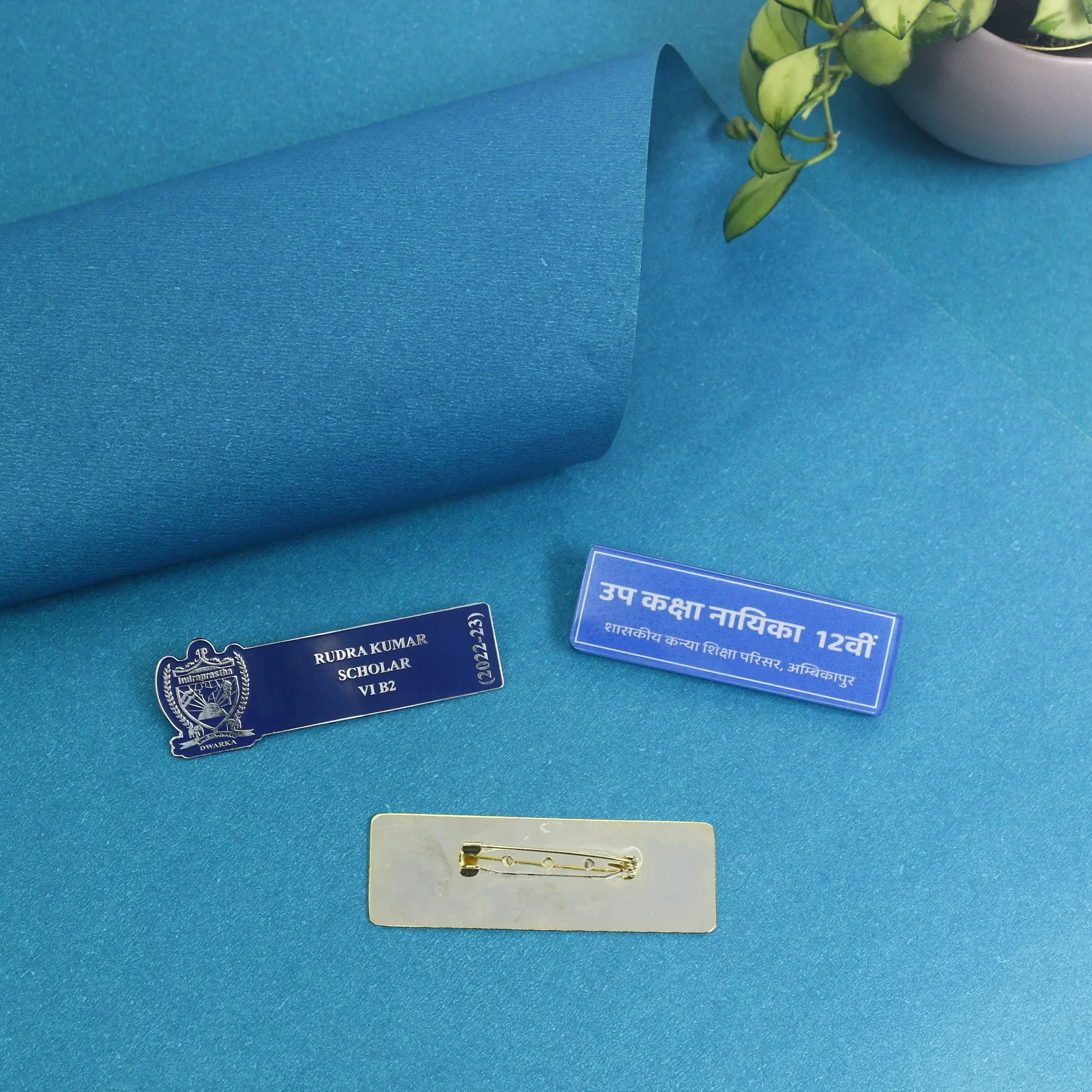
Ask ten businesses what they look for in a name badge and you will get ten different answers: durability, elegance, low cost, bright colour, easy replacement. The truth is that no single material wins in every situation. The best choice depends on who wears the badge, where they work, how long it needs to last and what impression it should make.
This head-to-head guide compares the four most popular materials used for name badges so you can match the right one to your organisation.
First, Decide What Matters Most
Before comparing materials, rank your priorities:
- Longevity: Will the badge be worn daily for years or for a single event?
- Appearance: Do you want modern, classic, colourful or natural?
- Budget: Are you ordering for 20 people or 2,000?
- Environment: Is the wearer in a kitchen, a ward, a classroom, a lobby or outdoors?
- Brand fit: Does the badge need to match premium interiors or a youthful, casual identity?
Whatever you choose, going the personalised route pays off. A customized name badge can be shaped around your colours, fonts and layout, rather than forcing your brand into a template. Professionally produced custom name badges also make it easy to keep every batch consistent over time.
Round 1: Steel
Look: Clean, sleek and contemporary. Available in brushed, matte or mirror finishes.
Strengths: A steel name badge is known for strength. It resists scratches, bending and corrosion, so it stays presentable even with heavy daily use. Engraved or etched text remains sharp for years.
Limitations: It feels more formal and less colourful than acrylic. Full-colour designs are limited compared with printed materials.
Best for: Banks, corporate offices, airlines, hospitals, security teams and any workplace where durability and a professional look matter.
Round 2: Brass
Look: Warm, golden and classic. Can be polished, brushed, antiqued or plated.
Strengths: A brass name badge radiates quality. The natural tone adds a touch of luxury that suits premium brands, and the metal holds fine engraving and enamel detail beautifully.
Limitations: Unplated brass can develop a patina over time. Some people love the aged character, while others prefer a protective coating to keep the shine.
Best for: Boutique hotels, fine-dining restaurants, clubs, jewellery and luxury retail, and institutions with a heritage image.
Round 3: Acrylic
Look: Light, vibrant and versatile. Can be clear, frosted, glossy or coloured, with full-colour printing.
Strengths: An acrylic name badge is the most design-friendly option. Gradients, photographs and detailed logos reproduce well, and the badge is light enough for all-day wear. It is also cost-effective for large teams.
Limitations: It can scratch with rough handling and does not have the weight or prestige of metal.
Best for: Retail chains, cafes, salons, startups, creative agencies, exhibitions and any business that wants a bright, friendly identity.
Round 4: MDF
Look: Natural, matte and handcrafted. Can be laser-engraved or printed.
Strengths: An MDF name badge is the most budget-friendly choice and works well for short-term use. Laser cutting allows custom shapes, and the natural finish suits eco-conscious brands and community events.
Limitations: It is less durable than metal or acrylic and is not ideal for wet or rough conditions.
Best for: Conferences, workshops, training programmes, campaigns, festivals and temporary staff.
Side-by-Side Summary
FactorSteelBrassAcrylicMDFDurabilityExcellentVery goodGoodFairPremium feelHighVery highMediumLow to mediumColour optionsLimitedLimitedWideModerateCostMid to highMid to highLow to midLowIdeal useDaily, long-termLuxury, long-termTeams, retail, eventsShort-term, eventsWhich Should You Pick? Quick Scenarios
"We run a busy corporate office and want badges that last." Choose steel.
"Our hotel has a heritage look and we want staff to match it." Choose brass, ideally with a protective finish.
"We have 300 employees across multiple stores and want our brand colours on the badge." Choose acrylic.
"We are hosting a two-day conference and need badges fast and cheap." Choose MDF.
"We want a premium look for managers and a cost-effective one for general staff." Combine brass or steel for senior roles with acrylic for the wider team.
Matching Badges to Your Industry
HospitalityFirst impressions are everything in hotels and restaurants, so hospitality badges are usually made in brass, steel or premium acrylic. Many properties add the role and languages spoken so guests can connect easily. Comfortable magnetic or pin fastenings suit long shifts.
EducationSchool name badges need to be safe, sturdy and clear. Rounded edges, secure backs and readable fonts are essential. Schools often use different designs for houses, prefects, club heads and student council members, which turns identification into recognition.
Branding Across IndustriesWhatever the material, adding your emblem boosts impact. A logo name badge keeps your brand visible in every conversation, and simple, bold logos reproduce best at small sizes.
Care and Maintenance Tips
- Steel: Wipe with a soft, damp cloth. Avoid harsh abrasives.
- Brass: Polish occasionally, or choose a lacquered finish for low maintenance.
- Acrylic: Clean with mild soap and a soft cloth to prevent scratches.
- MDF: Keep dry and store flat. Treat as a short-term or semi-durable option.
Before You Place an Order
- Request a digital proof and check spelling, alignment and colours.
- Ask about minimum quantities and delivery timelines.
- Confirm the fastening type that suits your uniform.
- Check whether your design is stored for future reorders.
- Compare sample finishes if you can.
A manufacturer with experience in all four materials can recommend the best fit and keep quality consistent from the first batch to the fiftieth. To see the available options and styles, explore the complete range of name badges.
Conclusion
Steel gives you strength and modern polish, brass gives you timeless prestige, acrylic gives you colour and flexibility, and MDF gives you affordability and a natural look. The best choice is the one that fits your people, your environment and your brand. Start with a clear idea of how and where the badge will be worn, then personalise it properly.
Ready to decide? Create a customized name badge in the material that suits you, build a set of custom name badges for every department, and add a logo name badge to reinforce your brand. Whether you pick a steel name badge, a brass name badge, an acrylic name badge or an MDF name badge, dedicated hospitality badges and school name badges are also available to suit every setting.