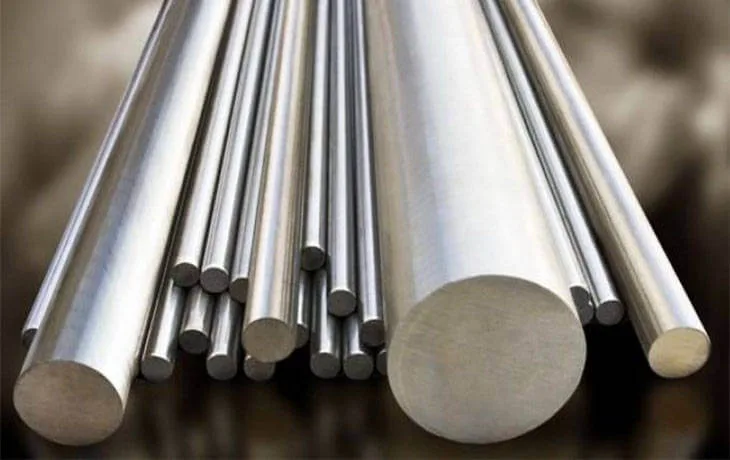
Stainless steel round bars are widely used in engineering, fabrication, machining and industrial equipment because they provide a practical combination of strength, corrosion resistance and fabrication performance. Among the many stainless steel grades available, Stainless Steel 304 Round Bars remain a commonly specified option for general-purpose applications.
Also known as SS 304 Round Bars, AISI 304 Round Bars or UNS S30400 Round Bars, these cylindrical solid bars are available in different diameters, lengths, finishes and manufacturing conditions. Their versatility makes them suitable for components ranging from shafts and fasteners to machine parts, supports and fabricated assemblies.
ASTM A276/A276M is a commonly referenced specification for stainless steel bars. The standard covers hot-finished and cold-finished bars, including round, square and hexagonal products. ASTM Store
What Are Stainless Steel 304 Round Bars?
Stainless Steel 304 Round Bars are solid cylindrical sections manufactured from Type 304 austenitic stainless steel. The material is part of the chromium-nickel stainless steel family and is commonly identified by UNS S30400.
The round shape makes these bars particularly useful when the finished component needs to be machined, turned, drilled, threaded or otherwise fabricated.
Depending on the application and purchasing specification, SS 304 round bars may be supplied as:
- Hot-finished round bars
- Cold-finished round bars
- Cold-drawn bars
- Bright bars
- Peeled and polished bars
- Ground bars
- Centreless-ground bars
- Machined round bars
- Custom-cut bars
The appropriate finish and manufacturing condition depend on dimensional requirements, surface finish and the intended end use.
Why Is SS 304 Used for Round Bars?
The popularity of Stainless Steel 304 comes from its balanced properties rather than one single characteristic.
The grade offers:
- Good general corrosion resistance
- Good strength
- Excellent ductility
- Good formability
- Good weldability
- Useful machining characteristics
- Good surface appearance
- Wide availability
- Compatibility with many common fabrication processes
This combination allows manufacturers and fabricators to use 304 round bar across a broad range of components and industrial environments.
Chemical Composition of Stainless Steel 304
The typical chemistry of Type 304 stainless steel includes chromium and nickel as the principal alloying elements.
ElementTypical/Maximum Requirement*Chromium (Cr)18–20%Nickel (Ni)8–11%Carbon (C)0.08% max.Manganese (Mn)2.00% max.Silicon (Si)0.75% max.Phosphorus (P)0.045% max.Sulfur (S)0.030% max.*Exact limits should be checked against the applicable material specification and product standard.
The chromium content contributes to stainless steel's corrosion resistance, while nickel supports the austenitic structure and contributes to ductility and fabrication performance.
Key Properties of Stainless Steel 304 Round Bars
Corrosion Resistance
SS 304 provides good resistance to general atmospheric corrosion and many common industrial environments. This makes it suitable for applications where ordinary carbon steel could require additional corrosion protection.
However, 304 should not be treated as universally corrosion-proof. Highly chloride-rich environments and certain aggressive chemical conditions may require another grade, such as 316 or a more specialized alloy.
Strength and Ductility
304 combines useful mechanical strength with relatively high ductility. This balance is valuable when round bar needs to undergo machining, forming or fabrication.
Weldability
Austenitic 304 stainless steel is generally considered readily weldable using commonly used welding processes. Proper welding procedures and post-weld cleaning remain important for maintaining the desired surface and corrosion performance.
Formability
The ductility of 304 allows it to be used in applications involving forming and fabrication. The exact behavior depends on bar condition, diameter, processing method and the required operation.
Surface Finish
Round bars can be supplied in different surface conditions, including hot-finished, cold-finished, ground and polished forms. Surface requirements should be specified at the time of procurement because finish can affect both appearance and subsequent machining operations.
Stainless Steel 304 Round Bar Specifications
For industrial procurement, specifications should be selected according to the final application rather than simply specifying "SS 304."
Common specification information includes:
Grade: Stainless Steel 304
UNS: S30400
Material Type: Austenitic stainless steel
Product Form: Round bar
Common Standard: ASTM A276/A276M
Manufacturing Condition: Hot finished or cold finished, as required
Surface: Bright, polished, ground, peeled, turned or other specified finish
Dimensions: Diameter and length according to order requirements
ASTM states that A276/A276M covers hot-finished and cold-finished stainless steel bars, including rounds, squares and hexagons. It also provides requirements relating to material conditions and mechanical testing. ASTM Store
Common Applications of SS 304 Round Bars
Because of their combination of corrosion resistance, mechanical properties and machinability, Stainless Steel 304 Round Bars are used in numerous industries.
1. Engineering and Machinery
Round bars can be machined into:
- Shafts
- Pins
- Bushes
- Spacers
- Rollers
- Machine components
- General engineering parts
2. Food Processing Equipment
304 stainless steel is frequently selected for equipment and components where cleanliness, corrosion resistance and ease of fabrication are important considerations.
3. Chemical Processing
The material can be used for general-purpose components in moderately corrosive environments, provided that the actual chemical conditions are compatible with 304.
4. Pharmaceutical Equipment
SS 304 components may be used in equipment, supports and fabricated assemblies where stainless construction and cleanable surfaces are required.
5. Architectural and Fabrication Work
Round bars can also be incorporated into:
- Railings
- Supports
- Frames
- Decorative components
- Fabricated structures
6. Automotive and General Industrial Components
Machined 304 bar can be used for various non-critical components, brackets, pins, shafts and other fabricated or machined parts.
Stainless Steel 304 Round Bar vs 304L Round Bar
304 and 304L are closely related grades, but their carbon limits differ.
304L has a lower maximum carbon content, which can be advantageous when welding is an important part of fabrication, particularly where resistance to sensitization is a consideration.
For straightforward machining or general-purpose applications, 304 may be appropriate. For welded construction, 304L may be considered depending on the design and applicable specification.
The correct grade should therefore be selected based on fabrication requirements, welding procedure, service environment and applicable codes.
Stainless Steel 304 vs 316 Round Bars
A common purchasing decision is whether to use 304 or 316 stainless steel.
PropertySS 304SS 316Chromium-nickel austenitic gradeYesYesGeneral corrosion resistanceGoodVery goodMolybdenumNo intentional additionYesChloride resistanceModerateBetterGeneral industrial useVery commonCommonRelative costUsually lowerUsually higherThe presence of molybdenum in 316 improves resistance to certain chloride-containing environments. Therefore, the service environment should be considered carefully before choosing between the two grades.
How to Select the Right Stainless Steel 304 Round Bar
Choosing the correct round bar involves more than selecting the material grade.
Consider the following factors:
Diameter
Select the diameter according to the finished component, machining allowance and mechanical requirements.
Length
Determine whether standard commercial lengths or cut-to-length bars are required.
Surface Finish
Bright, ground, polished and other finishes may be selected depending on appearance, dimensional tolerance and machining requirements.
Manufacturing Condition
Hot-finished and cold-finished bars can have different dimensional, surface and mechanical characteristics. Select the condition specified by the design or purchasing requirement.
Application Environment
Consider exposure to moisture, chemicals, chlorides, temperature and other environmental factors before finalizing the grade.
Documentation
For industrial procurement, buyers may require material certificates, chemical analysis, mechanical test results, dimensional inspection or other quality documentation.
Benefits of Using Stainless Steel 304 Round Bars
The continued use of SS 304 round bar across different industries can be attributed to several practical advantages:
- Good balance of corrosion resistance and strength
- Excellent ductility
- Good weldability
- Good fabrication characteristics
- Availability in different finishes
- Suitable for machining and component manufacturing
- Attractive stainless steel appearance
- Broad industrial availability
- Suitable for many general-purpose applications
Rather than choosing a material based only on price, engineers should consider the complete service environment and fabrication requirements.
Stainless Steel 304 Round Bars for Industrial Projects
For industrial buyers, consistency is particularly important. Material should be purchased according to the required grade, dimensional specification, finish, quantity and applicable standard.
A reliable Stainless Steel 304 Round Bar manufacturer, supplier or exporter should be able to provide appropriate material documentation and clearly identify the grade and product condition.
Buyers should also confirm whether the requirement is for standard commercial material or a product manufactured to a specific drawing, tolerance or testing requirement.