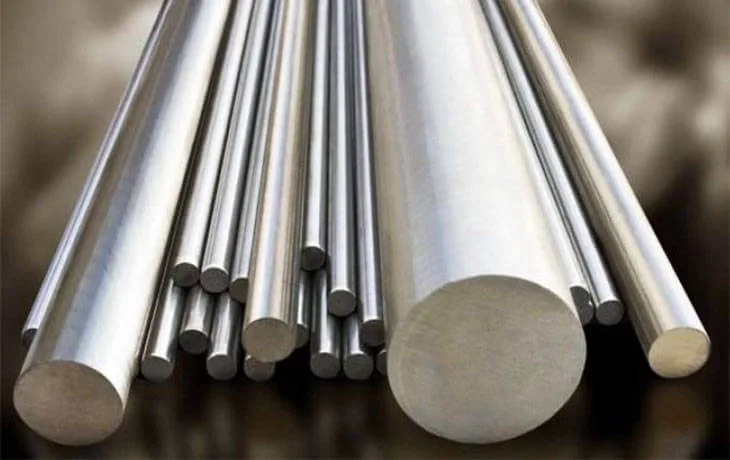
Stainless Steel 304 Round Bars are among the most widely used stainless steel bar products for industrial fabrication, machining, engineering, and equipment manufacturing. Their combination of corrosion resistance, strength, ductility, formability, and weldability makes SS 304 Round Bars suitable for a broad range of applications.
Stainless Steel 304 is an austenitic chromium-nickel stainless steel, commonly identified as UNS S30400 and EN 1.4301. It is often described as an 18/8 stainless steel because of its approximate chromium and nickel content. Outokumpu describes 304 as an all-purpose stainless steel with good corrosion resistance, formability, and weldability.
For engineers, OEMs, fabricators, procurement teams, and industrial buyers, understanding the properties and selection criteria of Stainless Steel 304 Round Bars is essential when specifying material for demanding applications.
What Are Stainless Steel 304 Round Bars?
Stainless Steel 304 Round Bars are solid, cylindrical bars manufactured from Type 304 stainless steel. They can be supplied in different diameters, lengths, finishes, and material conditions depending on the manufacturing and application requirements.
Common forms and finishes can include:
- Hot-finished round bars
- Cold-finished round bars
- Cold-drawn bars
- Bright bars
- Peeled and polished bars
- Ground bars
- Centreless-ground bars
- Custom-machined bars
ASTM A276 is a commonly referenced specification for stainless steel bars, including round bars, while the exact applicable standard should be confirmed according to the customer's application and purchasing requirements.
Why Choose SS 304 Round Bars?
The popularity of Stainless Steel 304 Round Bars comes from their balanced combination of properties.
Key advantages include:
- Good corrosion resistance
- Good mechanical strength
- Excellent ductility
- Good formability
- Good weldability
- Good fabrication characteristics
- Wide industrial availability
- Suitability for machining
- Attractive surface appearance
Outokumpu identifies 304 as a standard austenitic Cr-Ni stainless steel with good corrosion resistance, formability, and weldability.
Chemical Composition of Stainless Steel 304
The chemical composition of Type 304 is controlled to provide the required corrosion resistance and mechanical characteristics.
A typical ASTM composition range is:
ElementTypical RequirementCarbon0.08% max.Chromium18–20%Nickel8–11%Manganese2.00% max.Silicon0.75% max.Phosphorus0.045% max.Sulfur0.030% max.IronBalanceThe precise limits depend on the applicable product standard. For procurement, buyers should always verify the chemistry against the relevant specification and material test certificate.
Mechanical Properties of SS 304 Round Bars
The mechanical properties of Stainless Steel 304 Round Bars depend on the product form and condition.
For annealed material, commonly referenced minimum values include approximately:
PropertyTypical MinimumTensile Strength515 MPaYield Strength205 MPaElongation35–40%DensityApproximately 8.0 g/cm³Cold finishing or cold drawing can increase strength and hardness, so industrial buyers should specify the required condition rather than assuming that every 304 round bar has identical mechanical properties.
Corrosion Resistance of Stainless Steel 304 Round Bars
Corrosion resistance is one of the primary reasons industries select SS 304.
The chromium content allows stainless steel to form a passive surface layer that helps protect the underlying material from corrosion in many common environments.
304 is widely used for:
- Food-processing equipment
- Kitchen equipment
- Storage tanks
- Valves
- Architectural components
- General industrial equipment
Outokumpu lists food and beverage equipment, storage tanks, flanges, valves, handrails, and window frames among typical applications for 304 stainless steel.
However, SS 304 should not automatically be considered suitable for every corrosive environment. Highly aggressive chloride environments and specific chemical-processing conditions may require a different stainless steel grade, such as 316 or another corrosion-resistant alloy.
Applications of Stainless Steel 304 Round Bars
1. Chemical Processing Equipment
Stainless Steel 304 Round Bars can be machined into components used in chemical-processing equipment where the corrosion environment is compatible with the grade.
Possible components include:
- Shafts
- Pins
- Fittings
- Valve components
- Fasteners
- Machine parts
The chemical concentration and operating temperature should be considered before selecting the material.
2. Food and Beverage Industry
Hygiene, corrosion resistance, cleanability, and fabrication characteristics are important in food-processing environments.
SS 304 is widely used in food and beverage equipment, including various fabricated and machined components.
3. Pharmaceutical Equipment
Pharmaceutical manufacturing equipment often requires stainless steel materials with good corrosion resistance and suitable fabrication characteristics.
304 can be used in selected applications depending on process conditions and cleanliness requirements.
4. General Engineering
SS 304 Round Bars are frequently used as raw material for general engineering components.
They can be machined into:
- Shafts
- Bushes
- Pins
- Couplings
- Rollers
- Spacers
- Studs
- Machine components
5. Automotive Components
304 stainless steel can be considered for selected automotive and transportation components where its corrosion resistance, formability, and mechanical properties meet the design requirements.
6. Architectural Applications
The combination of corrosion resistance and surface appearance makes stainless steel useful for architectural components.
Round bars can be used in:
- Handrails
- Balustrades
- Support structures
- Decorative components
- Interior fittings
7. Pumps and Valves
Round bars provide a convenient raw material for machining valve and pump components.
Depending on the service environment, 304 can be used for selected:
- Valve stems
- Shafts
- Bushes
- Fittings
- Pump components
Stainless Steel 304 Round Bars for Machining
One major advantage of round bar products is their suitability as machining stock.
Manufacturers can use SS 304 Round Bars to produce precision components through operations such as:
- Turning
- Drilling
- Milling
- Threading
- Grinding
- CNC machining
- Centreless grinding
However, 304 is an austenitic stainless steel and can work-harden during machining. Appropriate tooling, cutting parameters, and machining practices should therefore be used.
Hot-Finished vs Cold-Finished 304 Round Bars
The manufacturing condition can influence the dimensional accuracy, surface finish, and mechanical properties of the bar.
Hot-Finished Round Bars
Hot-finished bars are generally suitable for applications where extremely tight dimensional tolerances and highly polished surfaces are not the primary requirements.
They can be economical for larger sections and components that will undergo additional machining.
Cold-Finished Round Bars
Cold-finished bars can provide improved dimensional control and surface characteristics.
They are commonly considered when manufacturers require closer tolerances or a better starting surface for precision machining.
Cold-Drawn Round Bars
Cold drawing can improve dimensional accuracy and increase strength through work hardening.
The appropriate condition should be selected based on the component's mechanical and machining requirements.
SS 304 Round Bar Surface Finishes
Different applications require different surface conditions.
Common finishes can include:
- Bright finish
- Polished finish
- Ground finish
- Peeled finish
- Cold-drawn finish
- Rough-turned finish
- Hot-finished surface
For decorative, architectural, food-processing, or precision applications, surface finish can be an important purchasing requirement.
Stainless Steel 304 vs 304L Round Bars
304 and 304L are closely related grades, but their carbon limits differ.
304L has a lower carbon content, which reduces the risk of chromium-carbide precipitation during welding and can improve resistance to intergranular corrosion after welding.
Outokumpu describes 304L as the low-carbon alternative to 304 and notes that its lower carbon content minimizes carbide precipitation resulting from heat input.
For welded fabrications where post-weld heat treatment is not practical, engineers may therefore consider 304L.
Stainless Steel 304 vs 316 Round Bars
304 and 316 are both widely used austenitic stainless steels, but they are not interchangeable in every application.
The major difference is that 316 contains molybdenum, which generally provides improved resistance in certain chloride-containing and more aggressive environments.
FeatureSS 304SS 316Stainless typeAusteniticAusteniticChromiumApproximately 18–20%Approximately 16–18%NickelApproximately 8–11%Approximately 10–14%MolybdenumNone intentionally specifiedTypically 2–3%General corrosion resistanceGoodHigher in many aggressive environmentsGeneral-purpose applicationsExcellentExcellentCostGenerally lowerGenerally higherFor ordinary industrial and mild-to-moderate corrosive conditions, 304 can be an economical choice. For applications involving demanding chloride exposure, 316 may be more appropriate.
Standards for Stainless Steel 304 Round Bars
When purchasing industrial SS 304 Round Bars, specifying the correct standard is important.
Depending on the product and application, relevant standards may include:
- ASTM A276
- ASME SA276
- EN 10088
- Other customer- or industry-specific specifications
ASTM A276 covers stainless steel bars and includes requirements relating to chemical composition, mechanical properties, heat treatment, and supplementary requirements.
The purchaser should confirm the exact specification before ordering.
How to Select Stainless Steel 304 Round Bars
Industrial buyers should provide complete technical information to avoid receiving an unsuitable product.
1. Specify the Grade
Clearly state:
Stainless Steel 304 / UNS S30400 / EN 1.4301
2. Specify Diameter
Provide the exact required diameter and dimensional tolerance.
3. Specify Length
Mention whether you require:
- Standard lengths
- Random lengths
- Cut lengths
- Custom lengths
4. Select the Material Condition
Specify whether you require:
- Hot finished
- Cold finished
- Cold drawn
- Annealed
- Ground
- Polished
5. Specify Surface Finish
For precision or aesthetic applications, define the required surface condition.
6. Specify Testing Requirements
Depending on the project, buyers may request:
- Chemical analysis
- Tensile testing
- Yield testing
- Elongation testing
- Hardness testing
- Dimensional inspection
- Surface inspection
- Material Test Certificate
- Third-party inspection