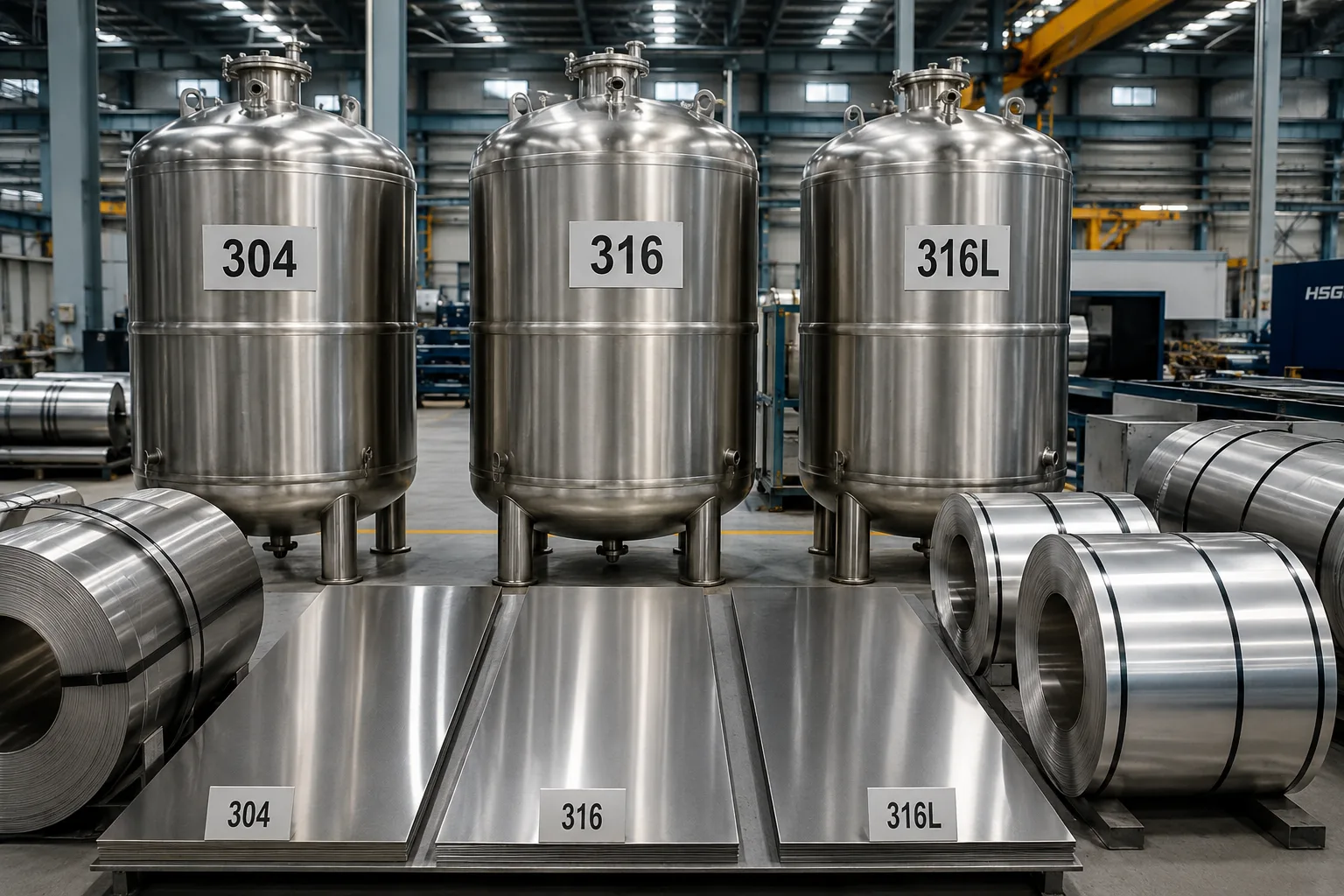
If you have ever asked a supplier for a quotation on stainless steel equipment, you have probably seen three terms come up again and again: SS 304, SS 316, and SS 316L. To someone outside the metallurgy world, these can look almost identical, just a set of numbers on a datasheet. But for a plant that runs on hygiene, chemical exposure, and regulatory approval, picking the wrong grade can lead to corrosion, contamination risk, or a failed audit down the line. Understanding the real difference between these three grades is one of the simplest ways to avoid expensive mistakes later.
What Actually Makes These Grades Different
All three grades are part of the austenitic stainless steel family, which means they share a similar base structure. The real difference lies in their composition. SS 304 contains chromium and nickel, which give it good general corrosion resistance. SS 316 adds molybdenum to that mix, which significantly improves resistance to chlorides and acidic environments. SS 316L is almost the same as SS 316, except it has a lower carbon content, which matters more than it sounds like it should, especially during welding and fabrication.
SS 316: Built for Tougher Conditions
SS 316 is the step up when equipment needs to handle more aggressive environments. The added molybdenum gives it noticeably better resistance to chlorides, acids, and salty conditions, which is why it is a common choice in chemical processing, coastal facilities, and applications involving frequent CIP or SIP cleaning cycles. Dairy plants, in particular, often prefer SS 316 because of the repeated exposure to cleaning chemicals and higher hygiene demands compared to general food processing.
SS 316L: The Pharma and Critical-Process Standard
SS 316L takes things one step further by reducing the carbon content. This might sound like a minor technical detail, but it has a real practical benefit: lower carbon reduces the risk of carbide precipitation during welding, which in turn reduces the chance of corrosion forming near weld joints. This makes SS 316L the preferred choice for pharmaceutical, biotech, and API manufacturing equipment, where weld integrity and long-term corrosion resistance are directly linked to product safety and regulatory compliance. Most GMP-compliant tanks, piping, and process equipment are specified in SS 316L for exactly this reason.
Where Cost Comes Into the Decision
It is natural to want the highest grade available, but cost is a real factor in equipment planning. SS 304 is the most economical option, SS 316 sits in the middle, and SS 316L is usually the most expensive of the three because of its refined composition and more demanding manufacturing process. The right approach is not to default to the most expensive grade for every application, but to match the grade to the actual exposure and risk level of that specific part of the plant.
How to Actually Decide
The decision usually comes down to three questions. First, what is the equipment exposed to on a daily basis, plain water, mild cleaning agents, or aggressive chemicals and chlorides? Second, does the application involve welding, and if so, how critical is long-term weld integrity? Third, is there a regulatory requirement, such as GMP or pharmacopoeia standards, that specifies a minimum grade? Once these three questions are answered honestly, choosing between SS 304, SS 316, and SS 316L becomes far less confusing. A trustworthy supplier will usually ask these same questions before recommending a grade, rather than pushing whichever one is easiest to source.
A Common Mistake Worth Avoiding
One mistake many plants make is assuming that a supplier's paperwork automatically means the material grade is correct. Grade mismatches happen more often than expected, especially when equipment is sourced from multiple vendors with different sourcing practices. It is worth asking for material test certificates and confirming grade consistency across all equipment feeding into the same process line, rather than assuming everything matches simply because it looks the same on the outside.
The Bottom Line
SS 304, SS 316, and SS 316L are not interchangeable, even though they might look similar at first glance. The right choice depends on what the equipment will be exposed to, how it will be fabricated, and what your industry's compliance standards demand. Getting this right at the sourcing stage saves plants from corrosion issues, failed audits, and costly replacements later. If you are unsure which grade fits your specific process, it helps to walk through your requirement with a manufacturer that works across all three grades and can guide the decision based on your actual application, not just what is available in stock. You can browse the full range or simply reach out to discuss your requirement.