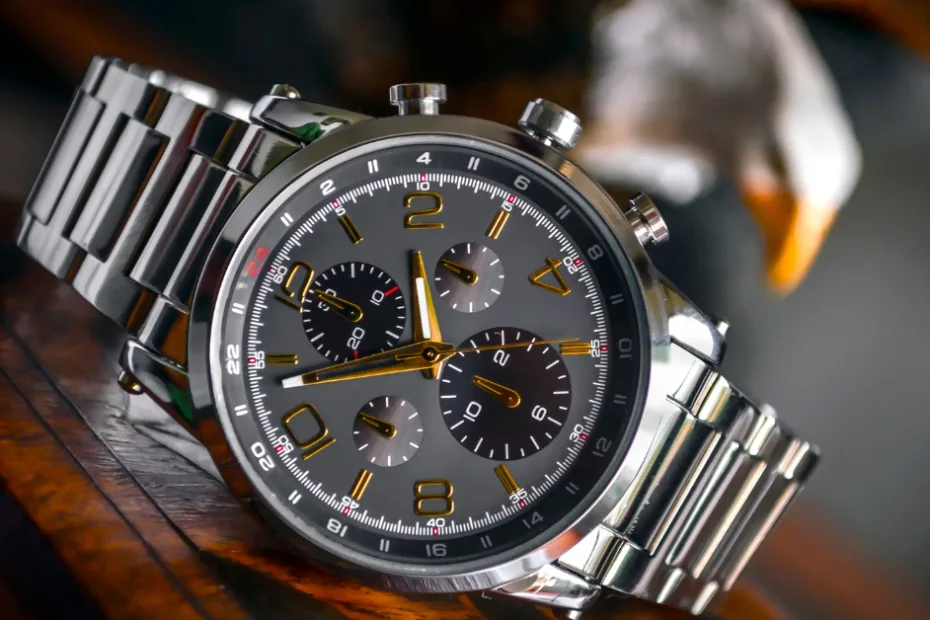
Owning a Rolex puts a watch in your hands that has been faked more than almost any other timepiece on the planet. Before going to Rolex Watch Buyers and walking away with a serious offer, the watch needs to pass a few basic tests of authenticity. Counterfeit Rolexes have become so good over the past decade that some pass a quick visual check easily. Real verification takes a closer look.
This article runs through what to check at home before approaching a dealer, what experts look for, and what documents support the sale.
Why authenticity matters so much
A real Rolex Submariner from the late 1990s could fetch hundreds of thousands of rand. A high-grade fake of the same model is worth almost nothing. Even buyers offering Sell My Rolex services will check carefully before quoting anything. No reputable buyer wants to deal in counterfeit goods, and no honest seller wants to be on the wrong end of a refused payment.
A few owners are surprised to learn their watch isn’t real. Older watches passed down through families, or bought second-hand decades ago, sometimes turn out to be replicas. Better to know this at home than find out in front of a buyer.
The weight test
A genuine Rolex feels heavy in the hand. Solid stainless steel models, gold versions and two-tone watches all carry real heft. Most counterfeits use lighter materials and feel noticeably hollow when lifted. This isn’t a definitive test on its own — some good fakes have been weighted — but it’s a first check that takes seconds.
Compare the weight against any other quality watch nearby. The difference is usually clear right away.
The cyclops lens and date window
Real Rolex date watches have a small magnifying lens (the cyclops) over the date. Under that lens, the date should appear to be about 2.5 times its actual size and should fill the window completely. Many fakes get the magnification wrong — either showing the date too small or distorting the numbers near the edges.
Look at the date from above. The numerals should sit perfectly centred in their little frame. Crooked, slanted or off-centre dates are a red flag.
The second hand sweep
This is one of the easier tests. A real Rolex has an automatic movement with a smooth sweeping second hand — it appears to glide around the dial in continuous motion. Cheap fakes use a quartz movement that produces the familiar ticking motion, one second at a time.
Higher-quality fakes have started using better movements that mimic the sweep. The motion still isn’t quite as smooth as the real thing. Hold the watch up to your ear in a quiet room — a true Rolex makes almost no sound.
Engravings and serial numbers
Every genuine Rolex has its serial number etched between the lugs at the six o’clock position (on older models) or on the inner bezel at six o’clock (on newer models from 2005 onwards). The engraving is clean, precise and very fine — almost like it was etched with a laser, which it was.
Fakes often have engravings that look sandblasted, grainy or too deep. The lines won’t be sharp under a magnifier. Some fakes even have repeated serial numbers across multiple watches, which gives them away when checked against records.
The model number is engraved between the lugs at the twelve o’clock position. Both serial and model numbers should be present and crisp on a real Rolex.
The crown logo
The Rolex crown logo appears in several places on a genuine watch: on the dial just below the twelve o’clock marker, on the winding crown itself, on the clasp of the bracelet, and sometimes on the case back. Look closely at each one. The proportions of the crown should be exact — five points, all the same size, with a clean stem. Many fakes get the crown wrong in subtle ways: points too thin, stem too long, spacing slightly off.
The case back
Real Rolex watches have plain, smooth case backs with no engravings (with a few rare exceptions for limited models). Should the case back have detailed engravings of fish, crowns or scenes, the watch is almost certainly fake. Some sellers think a fancy engraved back makes the watch look more special — it does the opposite.
A few authentic Rolex models had small inscriptions on the case back for specific dealers or events. These are rare and well documented. Generic engraved backs are a clear warning sign.
Documents and box
A Rolex sold with original box, papers, warranty card and any extra links can carry a much higher value than a watch sold on its own. Buyers offering Sell my Rolex near me services routinely ask whether the original paperwork is available before quoting a top price.
Service history matters too. When the watch has been serviced by Rolex or an authorised service centre, the receipts and dates are worth keeping together. A well-documented service history can add real money to the final offer.
When in doubt, get it checked
If any of the above checks raise concerns, take the watch to a qualified watchmaker or an experienced second-hand watch dealer for a professional opinion. Most serious buyers will do their own authentication anyway, opening the case back to check the movement, the rotor and the markings inside. A trained eye spots a fake in minutes.
For an owner who wants to Sell Rolex for Cash with confidence, doing this homework first saves time and avoids any awkward moments at the counter. A confirmed genuine Rolex with paperwork is one of the easier high-value items to sell in South Africa, with buyers ready to make firm offers on the spot.
Final thoughts
Verification doesn’t take long once you know what to look for. The weight, the sweep, the engravings, the cyclops magnification and the crown logo are all simple things to check at home. If everything passes, the next step is to compare offers from a few reputable buyers and pick the best one. A genuine Rolex sold the right way puts real money in the bank, often more than the original owner expected.