When couples face difficulty conceiving, sperm count gets most of the attention. But sperm count is only one piece of the male fertility picture.
Sperm quality and motility are equally important. A man can have millions of sperm and still struggle to conceive if those sperm cannot move efficiently, are structurally abnormal, or carry damaged DNA. Understanding what sperm quality and motility actually mean changes how male fertility is evaluated and treated.
At a trusted fertility centre in Nagapattinam, sperm quality and motility assessment is part of every comprehensive male fertility workup from the very first consultation.
What Is Sperm Quality and Motility
Sperm quality is not a single measurement. It is a combination of several parameters assessed together during a semen analysis.
Sperm count measures how many sperm are present per millilitre of semen. Normal is 16 million or above per millilitre.
Sperm motility measures how well sperm moves. Forward progressive movement matters most. For fertilisation to occur naturally, sperm must swim efficiently through the female reproductive tract to reach the egg. Normal motility requires at least 32% of sperm to show progressive forward movement.
Sperm morphology assesses the shape and structure of individual sperm cells. Abnormally shaped sperm have difficulty penetrating an egg effectively. Normal morphology requires at least 4% of sperm to be correctly formed.
Sperm DNA fragmentation measures the integrity of genetic material inside sperm cells. High fragmentation rates cause fertilisation failure and recurrent miscarriage even when count, motility, and morphology appear normal on a standard semen analysis.
All four parameters together define sperm quality at a fertility centre in Nagapattinam.
What Causes Poor Sperm Quality and Motility
Multiple biological and lifestyle factors affect sperm parameters independently and simultaneously.
Varicocele raises scrotal temperature by trapping warm blood around the testes. Sperm production and motility are highly sensitive to temperature. Even small consistent rises reduce sperm quality measurably over time. Varicocele is found in nearly 40% of infertile men and is the most common correctable cause of poor sperm parameters.
Hormonal imbalance involving testosterone, FSH, and LH disrupts the signalling chain that drives sperm production. Low testosterone directly reduces sperm count and motility without producing any external symptom.
Oxidative stress from smoking, alcohol, poor diet, and environmental toxin exposure damages sperm cell membranes and DNA. High oxidative stress is one of the most consistent drivers of elevated sperm DNA fragmentation in men of all ages.
Infections and past medical history including mumps orchitis, sexually transmitted infections, and previous groin surgery can leave lasting damage to sperm production and motility pathways.
Lifestyle factors including obesity, chronic stress, poor sleep, and excessive heat exposure from saunas, tight clothing, and prolonged sitting all reduce sperm motility and overall sperm quality over time.
For men experiencing symptoms alongside sperm quality concerns, low sperm count in Nagapattinam covers the clinical presentation and evaluation pathway in detail.
How Sperm Quality and Motility Are Tested
A complete sperm quality evaluation at a fertility centre in Nagapattinam covers several specific investigations.
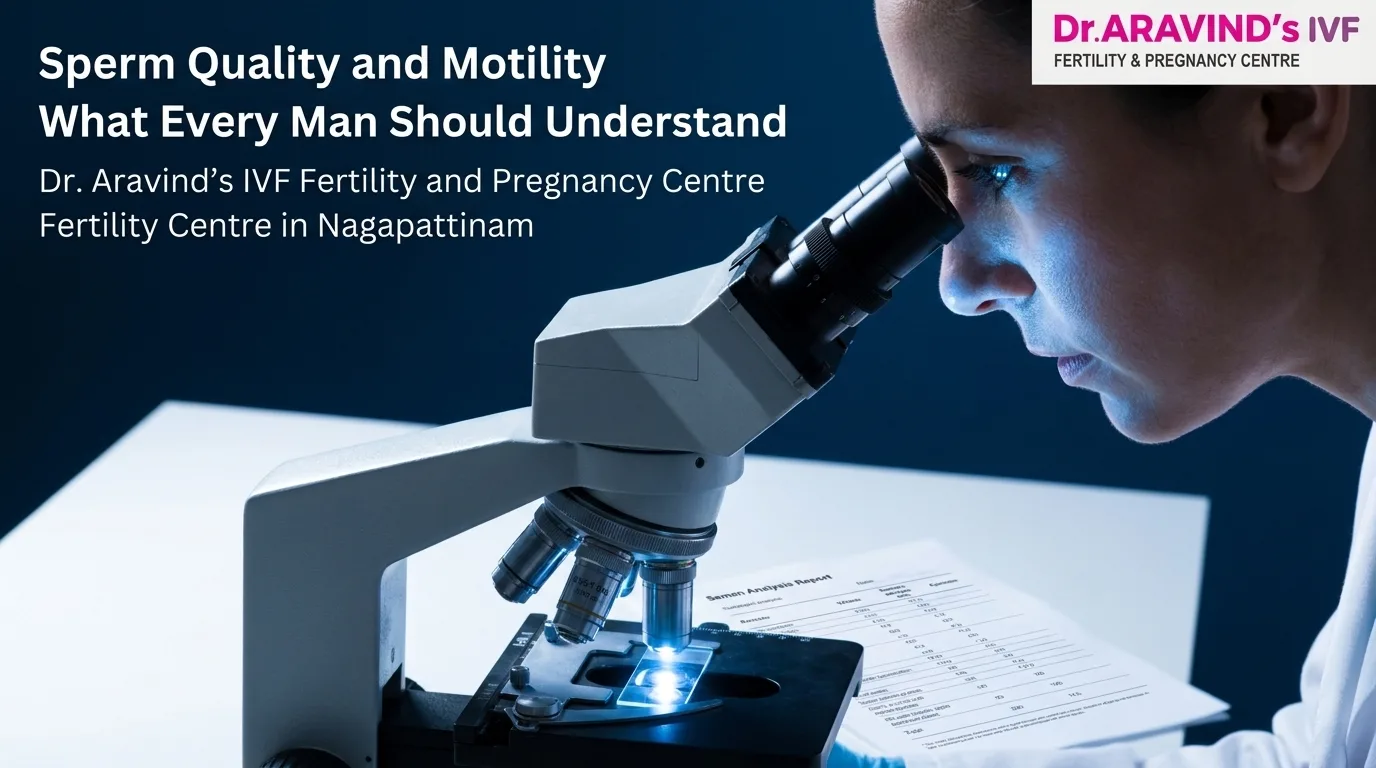
Semen analysis is always the starting point. It assesses sperm count, sperm motility, morphology, and semen volume in a single non-invasive appointment. Two samples taken two to four weeks apart give the most clinically accurate baseline picture.
Sperm DNA fragmentation testing is the most important additional investigation when semen analysis results appear borderline normal but conception challenges continue. It reveals genetic damage inside sperm cells that standard analysis cannot detect.
Hormonal blood tests assess testosterone, FSH, LH, prolactin, and thyroid function to identify whether the cause of poor sperm parameters originates in the testes or in the hormonal signals driving them.
Scrotal ultrasound with Doppler imaging identifies varicocele, testicular abnormalities, and structural concerns affecting sperm production and quality.
For a broader clinical perspective on male fertility evaluation across Tamil Nadu, male fertility doctor in Chennai provides additional specialist guidance on the diagnostic process and what to expect during a male fertility workup.
How Poor Sperm Motility Is Treated
Male fertility treatment for poor sperm quality and motility is always matched to the specific cause identified through evaluation.
Varicocele repair through microsurgical varicocelectomy improves sperm count and sperm motility in 60 to 70% of men within three to six months. It is the single most impactful surgical intervention available for poor sperm parameters caused by varicocele.
Hormonal correction through targeted medication restores the signalling chain driving sperm production. In men with treatable hormonal imbalance, normalising hormone levels alone produces significant improvement in sperm motility within months of treatment.
Antioxidant therapy with CoQ10, vitamin C, vitamin E, and selenium reduces oxidative stress and measurably improves sperm quality and sperm DNA fragmentation rates within one to two sperm production cycles. It is recommended alongside clinical treatment at the best IVF centre in India.
ICSI, intracytoplasmic sperm injection, is the most effective assisted reproductive option for severe sperm motility problems. A single sperm is selected and injected directly into an egg, bypassing the need for the sperm to swim independently. Success rates at the fertility centre in Nagapattinam are strong even when motility is severely compromised.
For a comprehensive clinical overview of male infertility treatment options available across Tamil Nadu, male infertility treatment in Chennai covers the full treatment spectrum alongside diagnostic guidance.
How to Improve Sperm Quality Naturally
Alongside clinical treatment, consistent lifestyle habits meaningfully support sperm motility and overall sperm quality within one 74-day sperm production cycle.
- Cut smoking immediately. Smoking is the single most damaging lifestyle habit for sperm DNA integrity and motility. Stopping produces measurable improvement within one production cycle.
- Reduce alcohol significantly. Regular alcohol consumption directly reduces testosterone, lowers zinc absorption, and impairs sperm morphology over time.
- Eat antioxidant-rich foods. Walnuts, tomatoes, leafy greens, eggs, and oily fish reduce oxidative stress that damages sperm quality daily.
- Exercise moderately. Three to five sessions weekly of moderate activity raises testosterone naturally and improves sperm parameters measurably.
- Protect scrotal temperature. Avoid tight clothing, prolonged sitting, saunas, hot baths, and laptop use on the lap. Consistent heat exposure reduces sperm motility significantly over time.
- Sleep seven to nine hours nightly. Testosterone is produced during sleep. Consistent poor sleep directly reduces the hormonal support for sperm production.
Fertility experts in India consistently recommend combining these lifestyle changes with clinical evaluation rather than treating them as alternatives to medical investigation.
FAQ
What is sperm motility and why does it matter?
Sperm motility is the ability of sperm to move efficiently toward an egg. At least 32% of sperm must show progressive forward movement for natural fertilisation to be likely. Poor motility is one of the most common male fertility problems identified at a fertility centre in Nagapattinam.
What causes poor sperm quality?
The most common causes include varicocele, hormonal imbalance, oxidative stress from smoking and alcohol, past infections, lifestyle factors, and high sperm DNA fragmentation. A structured evaluation at the best IVF centre in India identifies the specific cause driving poor parameters.
How is sperm motility tested?
Through semen analysis assessing progressive forward movement percentage alongside sperm count and morphology. Sperm DNA fragmentation testing and hormonal blood panels are added when semen analysis results are borderline or when conception challenges persist despite adequate motility scores.
Can sperm motility be improved naturally?
Yes. Cutting smoking, reducing alcohol, antioxidant-rich nutrition, moderate exercise, protecting scrotal temperature, and consistent sleep all improve sperm motility measurably within two to three months. Fertility experts in India recommend combining lifestyle optimisation with clinical evaluation for the strongest outcomes.
Where can men get sperm quality testing in Nagapattinam?
Dr. Aravind's IVF Fertility and Pregnancy Centre provides comprehensive sperm quality and motility evaluation including semen analysis, sperm DNA fragmentation testing, and hormonal assessment. As the trusted fertility centre in Nagapattinam and part of the best IVF centre in India network, both partners are evaluated from the very first consultation.
Closing Thought
Sperm count is one number. Sperm quality is the full picture.
Understanding motility, morphology, and DNA integrity alongside count gives couples and specialists the complete information needed to identify the right treatment and move forward with confidence.
Dr. Aravind's IVF Fertility and Pregnancy Centre is the trusted fertility centre in Nagapattinam for comprehensive sperm quality evaluation and targeted male fertility treatment. Because accurate diagnosis is always the foundation of effective treatment. And effective treatment starts from the very first consultation.