A clean washroom is more than a sign of good housekeeping. It is an important part of health, safety and the overall visitor experience. In offices, schools, hospitality venues, healthcare settings and public buildings, washrooms can face heavy daily use. Without the right products and a clear maintenance plan, small hygiene issues can quickly become costly problems.
Choosing suitable commercial washroom supplies can make these challenges easier to manage. The right combination of cubicles, fittings, dispensers and hygiene products can support cleaner facilities, reduce maintenance demands and improve the user experience.
Understanding Common Commercial Washroom Challenges
Commercial washrooms must cope with far more use than a typical domestic bathroom. High footfall can lead to frequent touching of surfaces, water spills, blocked facilities and faster wear. Cleaning teams may also have limited time to deal with these issues between periods of heavy use.
Poor ventilation can create damp conditions. Water and cleaning chemicals can affect unsuitable materials. Broken fittings can cause inconvenience and increase repair costs. In busy facilities, even a minor fault can become a repeated complaint.
These challenges show why washroom design and product selection should be considered together. A good washroom is not simply one that looks attractive when first installed. It should remain practical, hygienic and easy to maintain throughout its working life.
Choosing Materials That Can Handle Daily Use
Durability is one of the most important factors when selecting washroom products. Commercial facilities need materials that can cope with repeated use, regular cleaning and occasional impact.
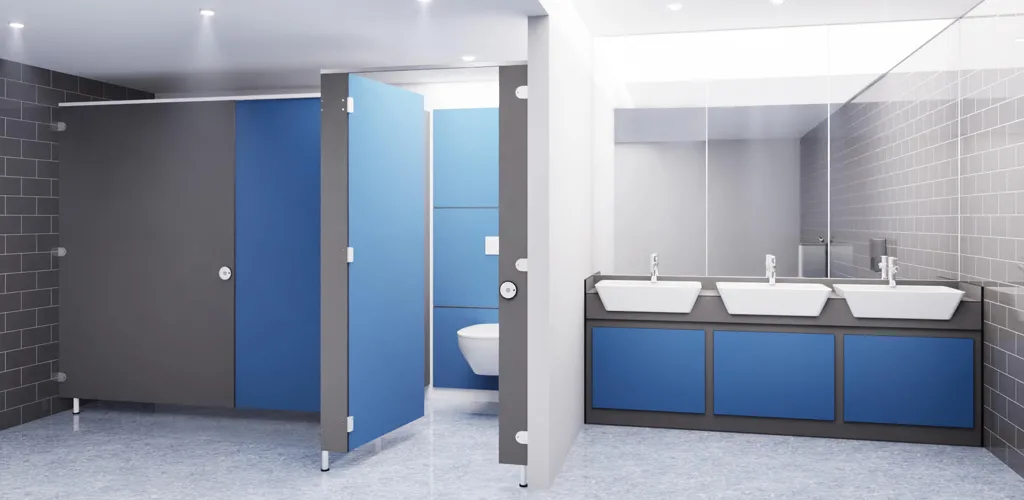
For example, commercial bathroom cubicles should be selected according to the environment in which they will be installed. A busy school may have different requirements from a corporate office or a leisure centre. Material strength, moisture resistance, ease of cleaning and expected usage should all be considered.
Quality materials can help reduce the frequency of repairs and replacements. They can also make cleaning easier, which is valuable for facilities with strict hygiene requirements.
How Commercial Toilet Cubicles Support Better Hygiene
Cubicles are a central part of most commercial washrooms. Their condition can influence both hygiene and the user's perception of cleanliness.
Well-designed commercial toilet cubicles can provide privacy while allowing cleaning teams to access surfaces easily. Smooth, durable finishes can make it easier to remove dirt and reduce areas where moisture can remain.
Cubicle hardware also matters. Hinges, locks, handles and brackets are used repeatedly throughout the day. Choosing reliable components can reduce failures and prevent minor maintenance problems from becoming major disruptions.
A practical cubicle system should therefore balance privacy, durability, hygiene and ease of maintenance.
Reducing Cleaning Problems Through Better Design
Cleaning becomes more difficult when washroom products have unnecessary gaps, difficult corners or surfaces that are hard to reach. Poor design can increase cleaning time and allow dirt and moisture to build up.
This is why commercial washroom cubicles should be chosen with maintenance in mind. Accessible surfaces and suitable finishes can help cleaning teams work more efficiently.
The same principle applies to dispensers, taps and other washroom fittings. Products that are simple to operate and easy to clean can help maintain better hygiene throughout the day.
Good design does not remove the need for regular cleaning. Instead, it makes effective cleaning more practical.
Managing High-Traffic Washrooms
High-traffic washrooms need a different approach from facilities with occasional use. Airports, shopping centres, schools, sports venues and hospitality businesses may experience hundreds or even thousands of users.
In these environments, products can experience constant wear. Doors may be opened and closed repeatedly. Locks and handles may receive heavy use. Dispensers may need frequent refilling.
A strong maintenance plan should identify the components most likely to require attention. Regular inspections can help staff find loose fittings, damaged panels, leaking taps or empty dispensers before they become serious problems.
It is also useful to keep essential replacement parts available. Quick repairs can minimise downtime and prevent users from having to avoid particular facilities.
Improving Hygiene with Touch-Free Solutions
Touch-free products have become increasingly useful in commercial washrooms. Automatic taps, sensor-operated flush systems and touchless soap dispensers can reduce the number of surfaces users need to touch.
These solutions can support hygiene by limiting shared contact points. They can also offer practical benefits in busy facilities where repeated manual contact is unavoidable.
However, technology should be selected carefully. Sensor products still require maintenance, cleaning and occasional battery or component replacement. The best solution is one that suits the facility's usage levels and maintenance capabilities.
Preventing Moisture and Water Damage
Water is one of the biggest maintenance concerns in a washroom. Leaking taps, overflowing sinks and wet floors can damage unsuitable materials and create slip hazards.
Good ventilation is also important. Excess moisture can contribute to unpleasant odours and damage over time.
Choosing moisture-resistant products can help protect the washroom environment. Staff should also check plumbing and fittings regularly. A small leak may seem harmless at first, but continued exposure to water can cause much greater damage.
Preventive maintenance is usually more cost-effective than waiting for a visible failure.
Creating an Effective Maintenance Routine
Even the best products need proper care. A structured maintenance routine helps keep commercial washrooms safe, clean and functional.
Daily checks should focus on obvious hygiene issues, consumable levels, leaks and visible damage. More detailed inspections can be carried out at regular intervals to examine hinges, locks, brackets, taps, dispensers and other fittings.
Cleaning products should also be used according to manufacturers' recommendations. Harsh chemicals may damage some finishes if they are used incorrectly or too often.
A simple maintenance checklist can help cleaning teams maintain consistent standards across multiple washrooms.
Choosing Supplies Based on the Building
There is no single solution for every commercial washroom. The right products depend on the building, user group, traffic level and available maintenance resources.
An office may prioritise appearance and a professional finish. A school may need strong and easy-to-clean products. A hotel may focus on appearance, privacy and durability. A healthcare facility may have more demanding hygiene requirements.
This makes careful product selection essential. Businesses should consider the complete lifecycle of a product rather than focusing only on the initial purchase price.
A cheaper product may cost more over time if it needs frequent repairs or replacement. A durable product may provide better value by delivering reliable performance for longer.
The Importance of Working with an Experienced Supplier
Selecting the right products can be easier when businesses work with an experienced supplier that understands commercial washroom requirements.
Washroom Cubicles Direct Ltd provides solutions for commercial washroom environments, helping customers consider practical requirements such as durability, design and installation needs.
A reliable supplier can also help customers identify suitable options for different types of buildings. This can be particularly useful when planning a new washroom or refurbishing an existing facility.
The aim should not simply be to purchase individual products. A well-planned washroom should work as a complete system, with products that complement each other and support efficient cleaning and maintenance.
Balancing Hygiene, Appearance and Cost
Budget is always an important consideration. However, the cheapest option is not necessarily the most economical choice in the long term.
Businesses should consider the total cost of ownership. This includes the purchase price, installation, cleaning, repairs, replacement parts and eventual replacement.
Durable commercial washroom supplies can help reduce unexpected maintenance costs. Easy-to-clean surfaces may also reduce the time required for routine cleaning.
At the same time, appearance should not be ignored. Clean, well-maintained washrooms create a more positive impression and can contribute to the overall reputation of a business.
The best approach is to find a sensible balance between quality, performance, appearance and budget.
Training Staff for Better Washroom Maintenance
Good products cannot replace good maintenance practices. Cleaning and facilities teams should understand how each product should be cleaned and maintained.
Staff should know which cleaning products are suitable for different surfaces. They should also understand how to identify early signs of damage, leaks or loose fittings.
Simple training can prevent avoidable damage. It can also help staff respond quickly when a problem appears.
When maintenance becomes part of the daily routine, washroom standards are easier to maintain.
Conclusion
Commercial washroom hygiene depends on more than frequent cleaning. It requires suitable materials, practical design, reliable fittings and consistent maintenance.
From durable commercial bathroom cubicles and commercial toilet cubicles to carefully selected commercial washroom cubicles, every element can contribute to better hygiene and easier upkeep. Businesses should consider how products will perform under real-world conditions rather than focusing only on appearance or initial cost.
By choosing quality commercial washroom supplies, establishing regular maintenance routines and working with an experienced supplier such as Washroom Cubicles Direct Ltd, businesses can create washrooms that are cleaner, safer, more durable and easier to manage.
A well-planned commercial washroom is an investment in both the building and the people who use it every day.