Lithium battery has become an integral part of today's technological landscape, powering everything from everyday consumer electronics to essential industrial equipment. Despite their advantages, lithium batteries present a significant challenge: the risk of thermal runaway. This complex phenomenon can lead to catastrophic failures, including fires and explosions. The innovative efforts of LIFMOCER are focused on developing solutions to mitigate this pressing issue effectively.
The Risk of Thermal Runaway in Lithium Batteries
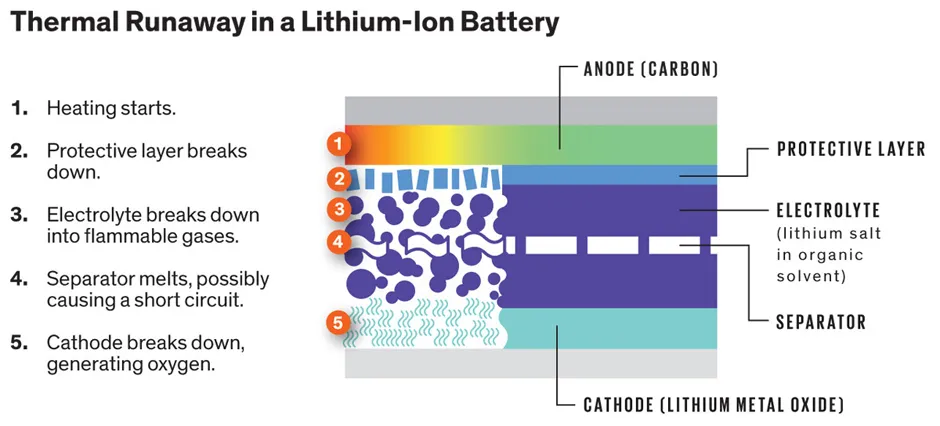
Thermal runaway refers to the uncontrolled increase in temperature within a battery cell, which can occur due to overcharging, short-circuiting, or external heat. During thermal runaway, the heat generated can escalate quickly, leading to the release of flammable gases and potentially resulting in fire or explosion. This represents a severe safety hazard not only to users but also to surrounding environments.
Factors contributing to thermal runaway include battery design, material defects, and extreme operating conditions. Moreover, as the utilization of lithium ion batteries increases, particularly in applications such as electric vehicles and large-scale energy storage systems, the need for safety becomes more critical. The public's trust in lithium battery technology hinges on manufacturers' ability to address safety concerns effectively.
Innovative Solutions for Enhanced Lithium Battery Safety
To address these challenges, manufacturers are taking noteworthy initiatives to enhance lithium battery safety. LIFMOCER, in particular, focuses on advanced research and development to address the fundamental causes of thermal runaway. By emphasizing high-quality materials and state-of-the-art manufacturing processes, they ensure that their products minimize the risk of overheating during operation.
One of the key strategies employed involves the incorporation of innovative thermal management systems. These systems are designed to distribute heat evenly across the battery and dissipate excess heat efficiently. This approach not only helps to maintain optimal operating temperatures but also extends the lifespan of the batteries.
For applications such as golf cart batteries and forklift batteries, manufacturers have developed specialized battery solutions that feature enhanced thermal stability. By integrating materials resistant to thermal degradation, these products aim to fortify the safety profile of batteries, thus significantly reducing the likelihood of thermal events during operation.
Regulatory Compliance and Industry Standards
Understanding that regulatory compliance is crucial in the battery industry, many leading companies adhere to stringent safety standards and work closely with regulatory bodies to ensure that their products meet or exceed safety requirements. By doing so, they not only secure consumer trust but also position themselves as leaders in promoting safety in battery technology.
Continuous monitoring and evaluation of battery performance under various conditions is part of this commitment to safety. By conducting rigorous testing and implementing industry best practices, manufacturers ensure that their batteries remain reliable and safe for users around the globe.
Future Directions for Lithium Ion Battery Technology
As the demand for lithium batteries continues to surge, it is essential for manufacturers to be prepared for the evolving landscape of battery technology. Many companies are exploring advanced technologies such as solid-state batteries and new cooling mechanisms designed to further enhance safety. Solid-state batteries have the potential to eliminate many of the risks associated with traditional lithium-ion batteries, including thermal runaway, due to their inherently stable chemistry.
Additionally, investments in research collaborations with academic and industrial partners are increasingly common. These partnerships aim to explore groundbreaking materials and designs that can revolutionize battery safety and performance. By fostering innovation through collaboration, the industry collectively seeks to pave the way for the next generation of safer, more efficient lithium ion battery solutions.
In conclusion, while the challenge of thermal runaway in lithium batteries is significant, innovators in the field are making strides toward developing solutions that prioritize safety without compromising performance. With a commitment to continuous improvement and research, the industry is not just addressing the present challenges but is also shaping the future of the battery technology. The focus on ensuring reliable products—particularly in applications like golf cart and forklift batteries—demonstrates the dedication to delivering high-quality, safe battery solutions that users can trust.