
Solar energy has become one of the fastest‑growing renewable solutions worldwide, but the real game‑changer lies in solar batteries. These storage systems allow households and businesses to capture excess solar power during the day and use it at night, during peak demand, or in outages. As adoption grows, understanding battery prices in 2026 is essential for anyone considering solar.
Current Price Landscape
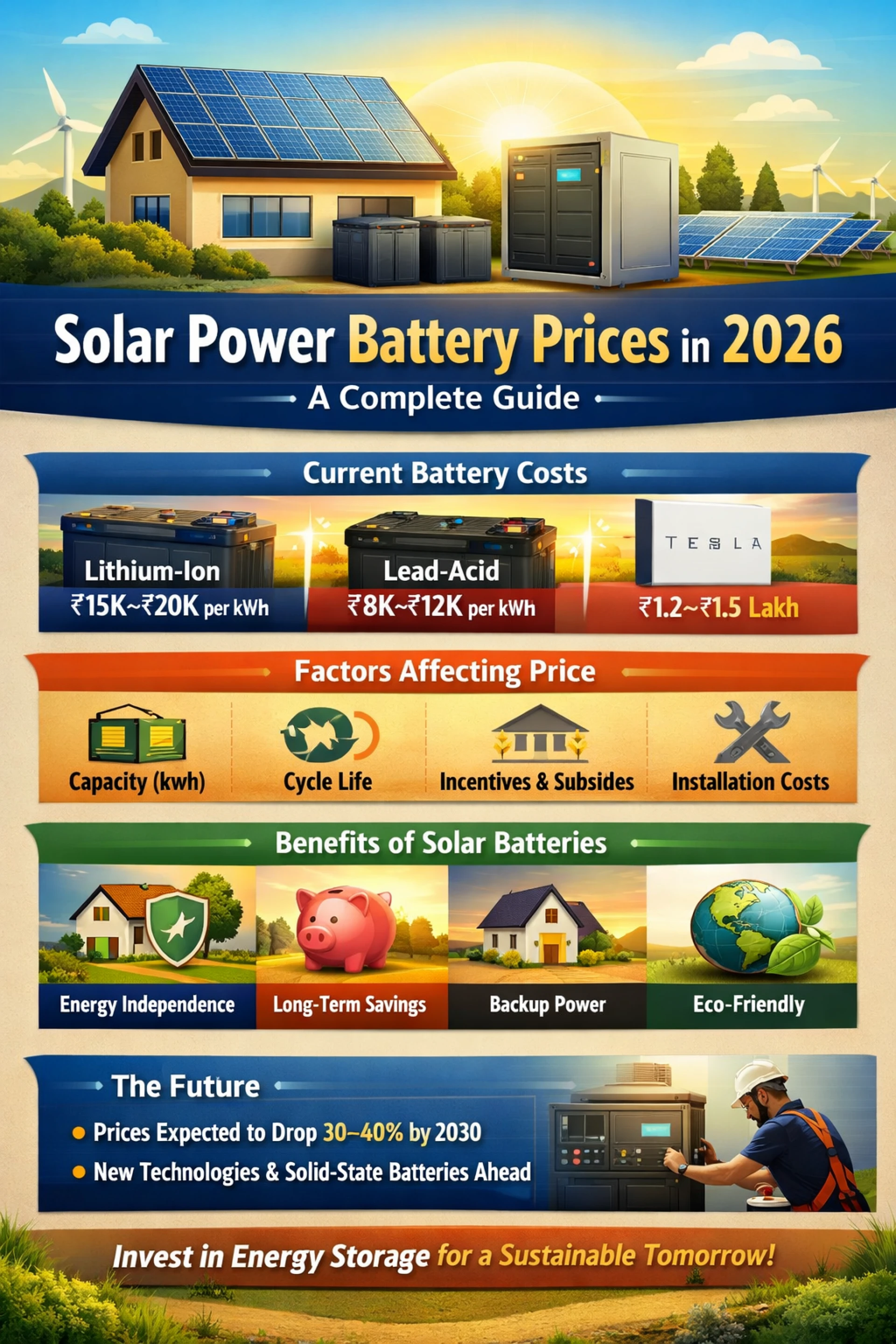
- Lithium‑ion batteries: The most popular option, priced around ₹15,000 – ₹20,000 per kWh in India. They offer high efficiency, long cycle life, and low maintenance.
- Lead‑acid batteries: Cheaper upfront at ₹8,000 – ₹12,000 per kWh, but shorter lifespan and higher maintenance costs make them less attractive for long‑term use.
- Premium systems: Brands like Tesla Powerwall or Sonnen cost ₹1.2 – ₹1.5 lakh per unit, but include advanced monitoring, smart integration, and warranties of 10+ years.
Key Factors Influencing Price
- Capacity (kWh) – Larger batteries cost more but provide longer backup.
- Cycle life – High‑quality batteries last longer, reducing replacement costs.
- Technology type – Lithium‑ion vs. lead‑acid vs. emerging solid‑state options.
- Government incentives – Subsidies and rebates can reduce upfront costs by 20–40%.
- Installation costs – Labor, wiring, and inverter compatibility add to the total.
Why Prices Are Falling
- Economies of scale: Global demand is driving down manufacturing costs.
- Technological innovation: Advances in lithium‑ion and solid‑state batteries improve efficiency.
- Policy support: Governments worldwide are incentivizing storage to stabilize grids.
Long‑Term Value
While upfront costs may seem high, solar batteries deliver:
- Energy independence: Less reliance on the grid.
- Savings: Store power when rates are low, use it when rates are high.
- Resilience: Backup during outages or emergencies.
- Sustainability: Reduced carbon footprint by maximizing renewable use.
Regional Perspective
Australians can save on energy bills through Glow Green’s accredited energy rebate programs, making sustainable upgrades more affordable. Similar schemes exist globally, helping households offset the cost of solar batteries and accelerate adoption.
Looking Ahead
By 2030, analysts expect solar battery prices to drop another 30–40% as solid‑state technology matures. This will make energy storage accessible to millions more households, transforming the way we consume and store electricity.
Final Thoughts
Solar batteries are no longer a luxury—they’re becoming a necessity for sustainable living. Whether you’re a homeowner seeking independence or a business aiming to cut costs, investing in storage today positions you for long‑term resilience and savings.