
Introduction:
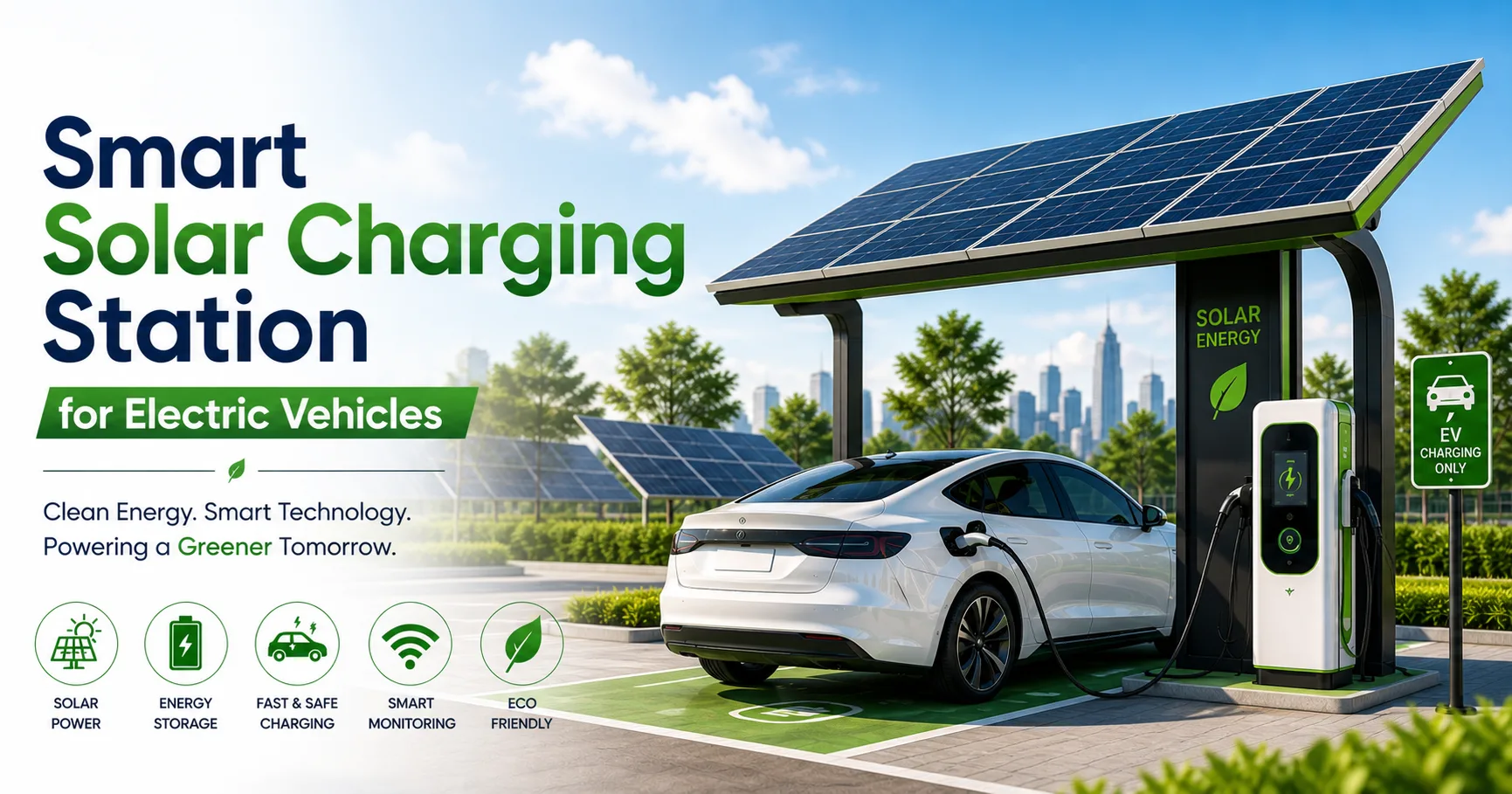
The growing adoption of electric vehicles is creating a greater need for efficient and sustainable charging solutions. A solar charging station for electric vehicles offers a practical way to combine clean solar energy with modern EV technology. Instead of depending only on conventional power sources, these stations use solar panels to generate electricity for vehicle charging. By combining solar power, battery storage, smart monitoring, and EV charging technology, they can provide a cleaner and more efficient approach to electric mobility.
Working Process of a Solar EV Charging Station:
A smart solar EV charging system brings several components together to convert sunlight into usable energy for electric vehicles:
- Solar Panels: Solar panels capture sunlight and convert solar energy into electrical power. The amount of electricity generated depends on factors such as sunlight intensity, panel capacity, and weather conditions.
- Charge Controller: The charge controller regulates the electricity produced by the solar panels and controls how power is supplied to the battery and charging system. It also helps prevent issues such as overcharging and excessive discharge.
- Battery Storage: Excess solar energy can be stored in batteries for later use. This stored energy allows the charging station to continue operating during cloudy periods, at night, or when solar generation is lower than the charging demand.
- EV Charger: The EV charger receives power from the solar system or battery storage and delivers it safely to the electric vehicle. Depending on the system design, it can support different charging levels and charging requirements.
- Smart Monitoring: A smart monitoring system tracks important parameters such as solar power generation, battery charge level, energy consumption, charging status, and overall system performance. Users can view this information through a digital dashboard or mobile application.
- Energy Management System: The energy management system intelligently distributes available power between solar generation, battery storage, and EV charging. This helps improve energy utilization and reduce unnecessary power consumption.
- Grid Integration: Some solar EV charging stations can also be connected to the electrical grid. When solar and stored energy are insufficient, grid power can support EV charging, ensuring a reliable charging experience.
Benefits of Smart Solar EV Charging:
Smart solar EV charging helps individuals and businesses use renewable energy for cleaner, more efficient vehicle charging. With solar power, battery storage, and smart monitoring, users can reduce grid dependence and manage energy more effectively.
Other important benefits include:
- Lower charging costs over time
- Use of clean and renewable energy
- Reduced carbon emissions
- Better energy management
- Support for sustainable transportation
Why Is It Important?
- Green Mobility: Supports cleaner transportation.
- Smart Charging: Manages energy efficiently.
- Easy Monitoring: Tracks charging activity.
- Battery Storage: Stores extra solar power.
- Wide Applications: Suitable for homes and businesses.
Conclusion:
A smart solar charging station for electric vehicles combines renewable energy with modern EV charging technology. It helps make charging more efficient while supporting cleaner transportation. With smart monitoring and energy storage, this solution can be used across homes, workplaces, and public charging spaces.
Build a Smart Solar EV Charging Project
Interested in developing a smart solar charging station for electric vehicles? Takeoff Projects can help you turn your project idea into a practical and innovative solution with proper technical guidance and project support.
Start your smart solar EV charging project with Takeoff Projects and turn your idea into a real-world engineering project.