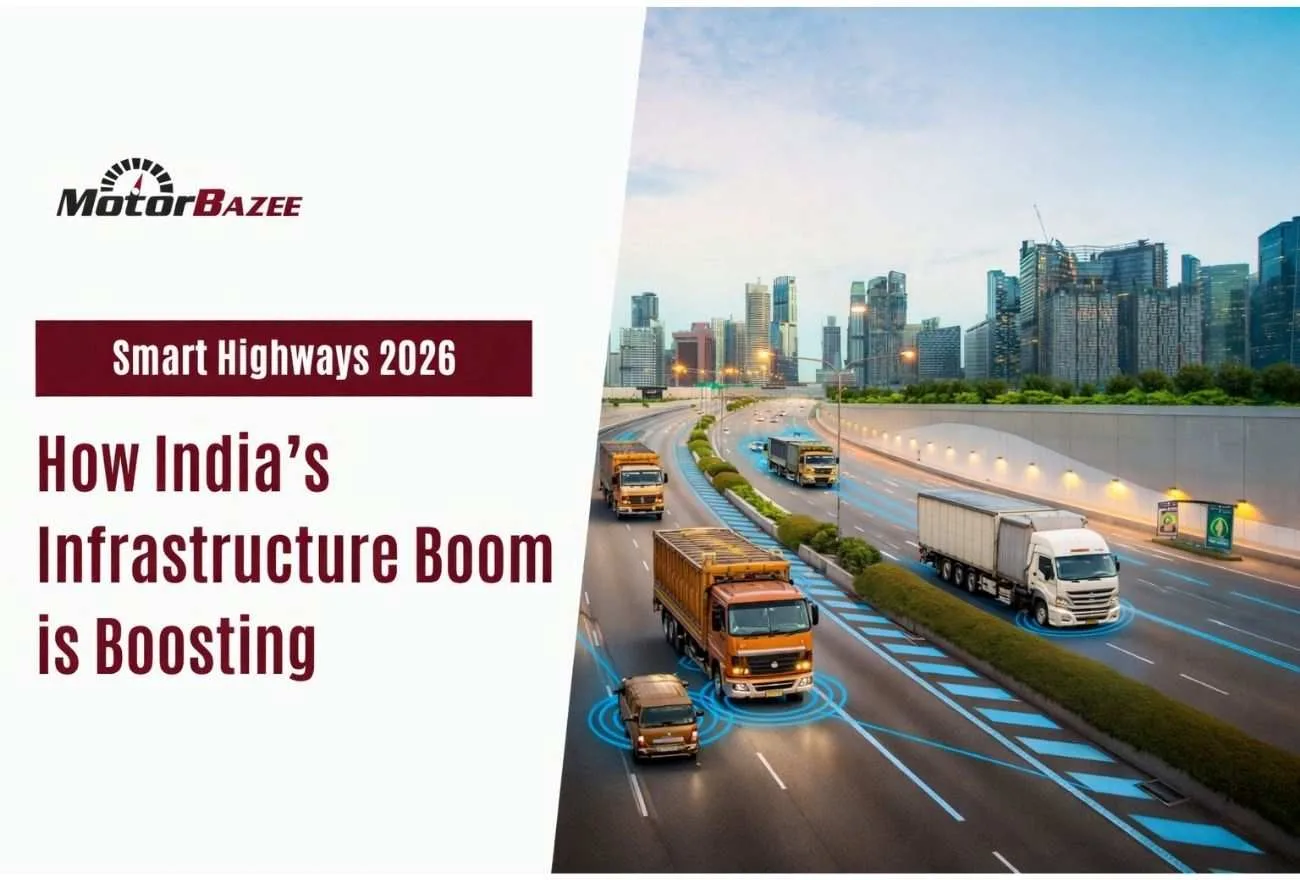
India is rapidly transforming its road infrastructure, and by 2026, smart highways, expressways, and freight corridors are reshaping the transportation industry.
For truck owners, fleet operators, and logistics businesses, this is more than just development—it’s a major growth opportunity.
With better roads and faster connectivity, the truck business in India is becoming more profitable, efficient, and future-ready.
Visit Us: Smart Highways 2026: How India’s Infrastructure Boom is Boosting Truck Business
India’s road infrastructure is undergoing a remarkable transformation, and by 2026, the scale and speed of development are redefining how goods move across the country. The expansion of smart highways, world-class expressways, and dedicated freight corridors is not just a story of better roads—it is a shift that is fundamentally changing the economics and efficiency of the transportation sector.
For decades, logistics in India faced persistent challenges: congested highways, unpredictable transit times, high fuel consumption, and frequent delays. These inefficiencies increased operational costs and made long-haul trucking a difficult business to scale. Today, that narrative is changing rapidly. The government’s focused investment in infrastructure, combined with technology integration, is building a transportation ecosystem designed for speed, reliability, and growth.
Smart highways are one of the most significant advancements. These roads are equipped with digital monitoring systems, automated tolling, real-time traffic updates, and improved safety mechanisms. For truck operators, this means fewer stoppages, better route planning, and enhanced safety for both drivers and cargo. Reduced waiting time at toll plazas alone can save hours on long journeys, directly improving delivery timelines and fuel efficiency.
Expressways are another game-changer. Unlike traditional highways, expressways are designed for high-speed, uninterrupted travel with controlled entry and exit points. This dramatically cuts travel time between major cities and industrial hubs. For example, routes that once took 20–24 hours can now be completed in nearly half the time. Faster deliveries mean trucks can complete more trips in a month, increasing revenue potential without necessarily expanding fleet size.
Dedicated freight corridors (DFCs) are also playing a crucial role in reshaping logistics. While primarily focused on rail freight, DFCs indirectly benefit the trucking industry by decongesting existing rail and road networks. As bulk cargo shifts to these corridors, highways experience less congestion, allowing trucks to move more freely and predictably. This improved flow reduces idle time, lowers fuel consumption, and enhances overall supply chain efficiency.
For truck owners and fleet operators, these developments translate into tangible business advantages. One of the most important is improved asset utilization. With faster turnaround times, a single truck can now cover more distance in less time, effectively increasing its earning capacity. This makes it easier for operators to recover costs and achieve higher profitability.
Fuel efficiency is another major benefit. Smooth, high-quality roads reduce wear and tear on vehicles and minimize unnecessary braking and acceleration. Consistent speeds lead to better mileage, which is critical in an industry where fuel costs account for a significant portion of expenses. Over time, these savings can substantially improve margins.
The new infrastructure is also encouraging the adoption of technology within the trucking industry. GPS tracking, fleet management software, and data analytics tools are becoming increasingly common. These tools allow operators to monitor vehicle performance, optimize routes, and make data-driven decisions. When combined with improved road networks, technology enables a level of efficiency that was previously difficult to achieve.
For logistics businesses, the impact is even broader. Faster and more reliable transportation allows companies to streamline their supply chains, reduce inventory holding costs, and improve customer satisfaction. Timely deliveries are no longer a competitive advantage—they are becoming the standard expectation. Businesses that leverage the new infrastructure effectively can scale operations and expand into new markets with greater confidence.
The transformation also opens doors for new entrepreneurs entering the trucking and logistics sector. Lower operational risks, better connectivity, and higher demand for efficient transportation services create a favorable environment for growth. Whether it’s starting with a single truck or building a large fleet, the opportunities are expanding alongside the infrastructure.
However, this shift also brings increased competition. As the industry becomes more efficient and profitable, more players are entering the market. To stay ahead, truck owners and logistics companies must focus on professionalism, maintenance, driver training, and technology adoption. Simply relying on better roads is not enough; success will depend on how effectively businesses adapt to the evolving landscape.
In conclusion, India’s rapidly developing road infrastructure is more than a construction success story—it is a catalyst for transformation in the trucking and logistics industry. Smart highways, expressways, and freight corridors are creating a faster, safer, and more efficient transportation network. For truck owners, fleet operators, and logistics businesses, this is a moment of opportunity. Those who embrace the change, invest wisely, and operate strategically will find themselves well-positioned in a future-ready industry that is moving faster than ever before.