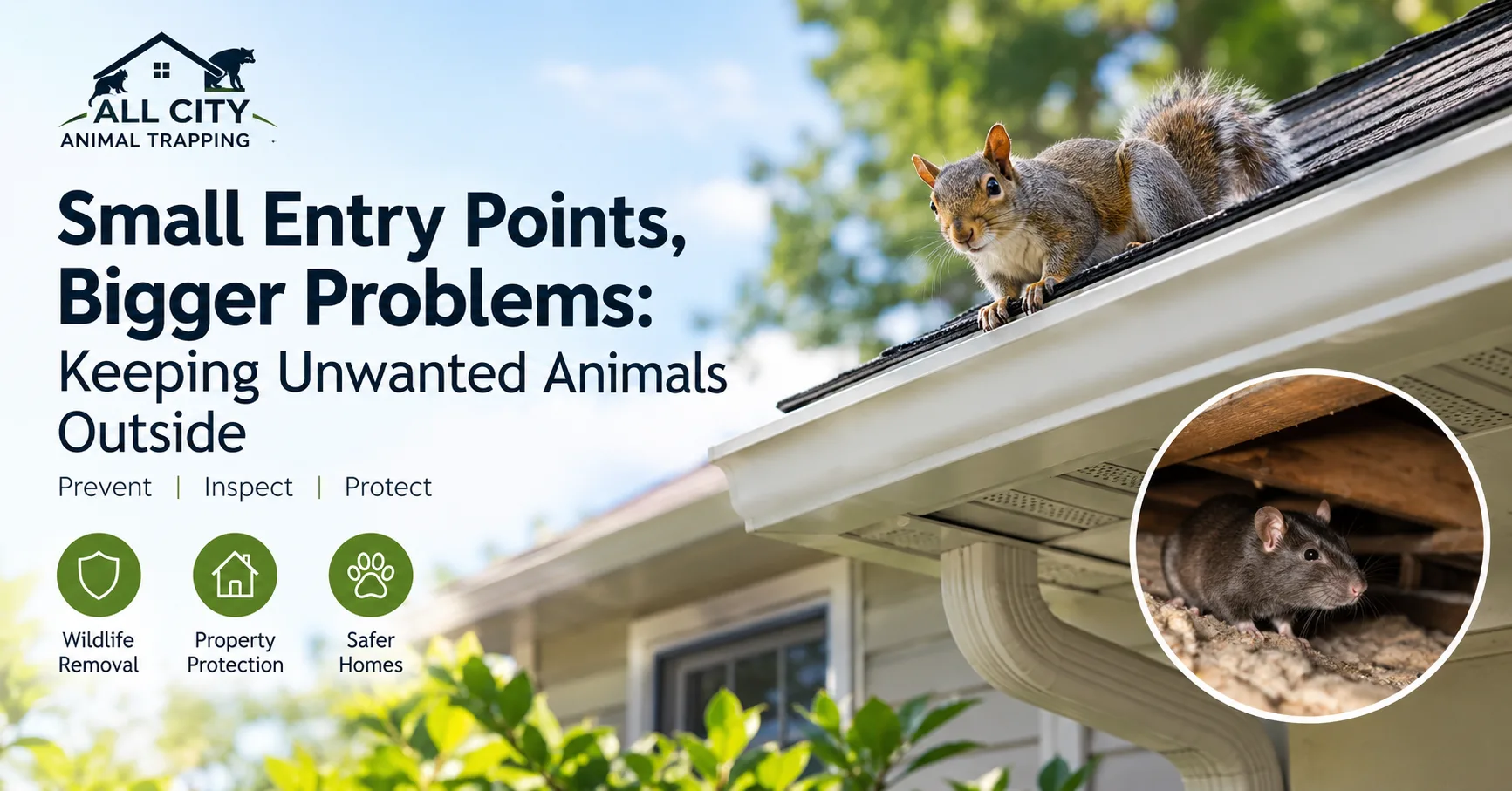
A home can appear completely secure while still offering wildlife several unnoticed ways to get inside. Animals do not necessarily enter through obvious openings. Small gaps beneath decks, loose vents, damaged roof edges, foundation spaces, and openings around utility lines can become convenient routes for wildlife looking for food, shelter, or a protected place to raise young.
Understanding these hidden routes can help homeowners recognize problems earlier and make practical changes before minor activity develops into a larger household concern.
Look Beyond the Main Living Areas
When people check their homes for signs of animals, they often focus on kitchens, garages, and visible outdoor areas. However, wildlife frequently occupies spaces that receive very little daily attention. Crawl spaces, attics, wall voids, sheds, rooflines, and areas beneath porches can provide quiet shelter.
Underground activity deserves particular attention. Animals such as skunks, rodents, ground squirrels, and other wildlife may dig beneath structures or use existing tunnels and gaps. These spaces can remain unnoticed until homeowners discover disturbed soil, unusual odors, holes near foundations, or sounds coming from underneath floors.
For homeowners interested in understanding how animals can affect properties from below, this resource on underground animal threats provides additional context.
Why Small Openings Matter
Wildlife does not need a large entrance to investigate a property. Once an animal discovers a sheltered area, it may repeatedly return to the same location. Over time, repeated movement can enlarge an existing opening or disturb insulation, nesting materials, soil, and other parts of the property.
A useful inspection should include areas around pipes, vents, doors, roofing materials, chimneys, crawl-space access points, and foundation edges. Look for fresh scratches, droppings, nesting material, disturbed soil, tracks, or damaged screens.
It is also worth paying attention to sounds. Scratching or movement during the evening may indicate activity from an animal that is using an attic, wall cavity, or space beneath the structure.
Attics Can Become Unexpected Shelters
Attics are particularly attractive to wildlife because they are generally dark, quiet, and protected from weather. Birds, squirrels, bats, and other animals may find their way inside through damaged vents, roof gaps, chimney openings, or loose construction materials.
Bats require especially careful handling because simply blocking an opening while bats are inside can create a serious problem. If young bats are present, sealing an active entry point can also prevent them from reaching their mothers.
Before making repairs, homeowners should determine whether an opening is actively being used. A thoughtful approach focuses on exclusion and prevention rather than simply closing every gap immediately. This article about humane bat exclusion offers useful information about keeping bats out of attic spaces without unnecessarily harming the animals.
Prevention Starts With the Property Exterior
Once wildlife activity has been identified and appropriately addressed, prevention becomes much easier. Walk around the property and inspect areas where different materials meet. Rooflines, siding, vents, foundation walls, fences, decks, and exterior utility openings deserve attention.
Tree branches should also be considered. Limbs that extend close to a roof can provide animals with easier access to elevated parts of a house. Keeping vegetation maintained can reduce some access routes while also making exterior inspections easier.
Garbage containers should have secure lids, while pet food and birdseed should be stored appropriately. Food sources left outside can attract wildlife and encourage animals to spend more time around the property.
Know When an Inspection Is Necessary
Not every sign requires immediate intervention. A single animal passing through a yard is different from repeated activity around a structure. The frequency, location, and type of evidence can help determine whether further investigation is needed.
Homeowners should avoid reaching into dark cavities, disturbing nests, or attempting to handle unfamiliar wildlife. Animals can behave defensively when they feel trapped or threatened, particularly when protecting young.
For properties experiencing repeated wildlife activity, professional wildlife removal guidance can help homeowners understand what should be inspected and what preventative measures may be appropriate.
Small Maintenance Habits Make a Difference
Wildlife prevention is rarely about one major repair. Instead, it often comes down to regular observation and basic property maintenance. Replacing damaged screens, repairing loose vents, maintaining roof edges, securing garbage, trimming problematic branches, and monitoring crawl spaces can all reduce opportunities for unwanted animal entry.
It is also helpful to investigate unusual signs early. A strange odor, repeated scratching sound, disturbed soil, or new opening may be easier to address before the situation becomes more complicated.
A home does not need to be completely inaccessible to wildlife to remain protected. The goal is to understand how animals interact with the property, identify vulnerable areas, and make sensible improvements that keep both the home and local wildlife safer.