A Shift Away From Traditional Degrees
For much of the last two decades, the four-year degree was treated as the default route into a stable career. That assumption is loosening. More young professionals and career changers are weighing technical training against classroom-heavy programs, largely because the return on investment looks different when a shorter, hands-on path leads directly to employable skills. Manufacturing, automotive, and aerospace sectors are among the industries driving this shift, since they depend on workers who understand materials, tools, and precision fabrication rather than theoretical coursework alone.
Why Hands-On Training Appeals Now
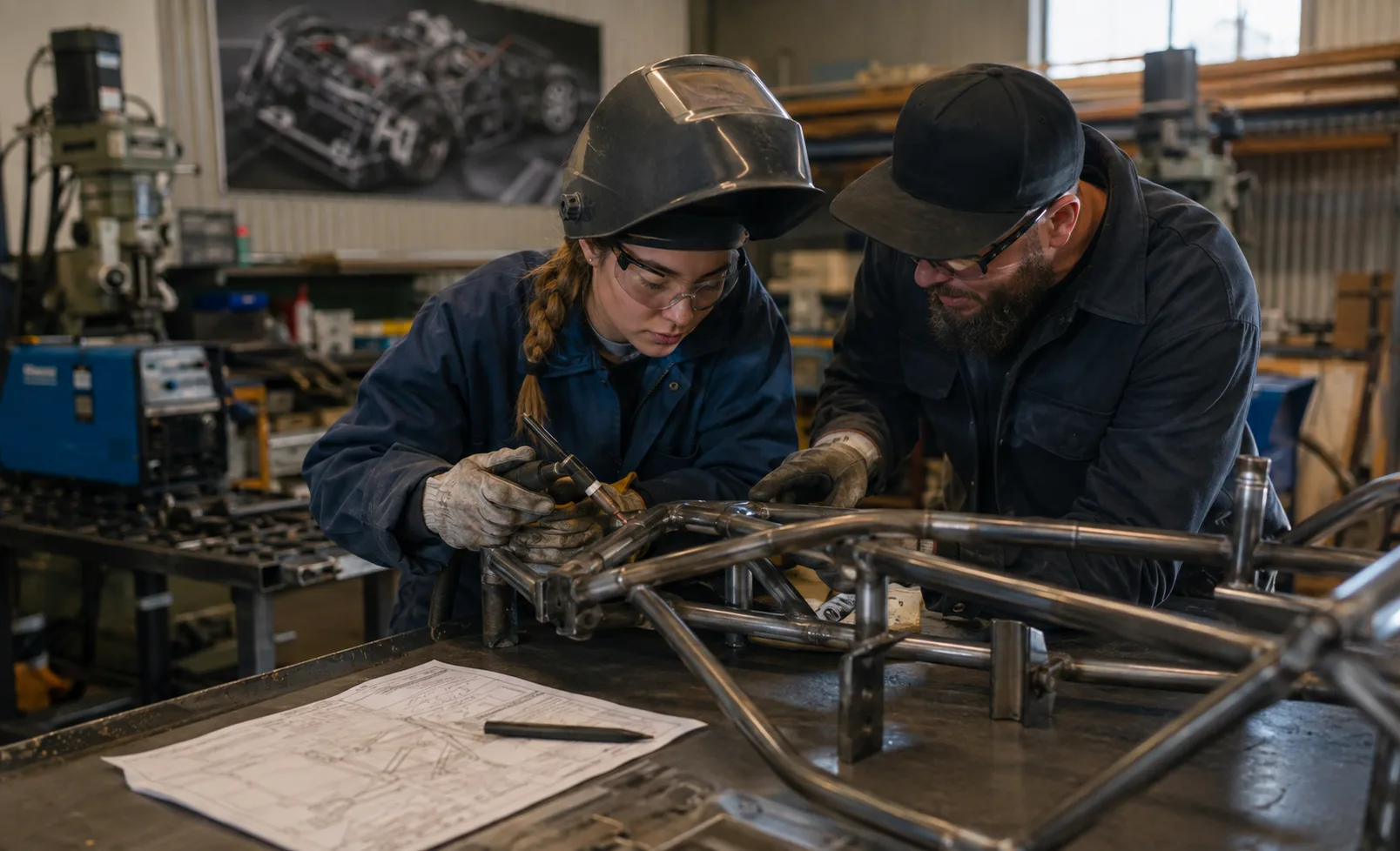
Employers in metal fabrication and welding consistently report that new hires need practical shop experience before they can contribute meaningfully to production timelines. A worker who has spent hundreds of hours cutting, bending, and welding metal under supervision arrives at a job site with fewer costly mistakes and a shorter learning curve. This matters for companies balancing tight margins against project deadlines, particularly in industries where a single fabrication error can delay an entire build. Technical programs that combine welding certification with broader fabrication skills, including sheet metal shaping and CAD-based design work, tend to produce graduates who can move fluidly between departments rather than staying confined to one narrow task.
Regional Demand Is Growing
Southern California in particular has seen sustained demand for trained fabricators, driven by its concentration of motorsports, custom automotive, and aerospace suppliers. Students exploring fabrication classes in Rancho Cucamonga often cite proximity to this employer base as a deciding factor, since local training pipelines tend to align closely with the skills regional manufacturers are actively hiring for. This regional clustering effect is common across skilled trades: where the employers concentrate, the training programs tend to follow, and vice versa. It creates a feedback loop that keeps curricula current with actual shop-floor practices rather than outdated industry standards.
What Employers Actually Look For
Beyond raw welding technique, employers increasingly value fabricators who can read blueprints, operate CNC equipment, and understand structural design principles well enough to catch errors before they become expensive. This broader skill set separates entry-level welders from fabricators who can lead a project. Programs structured around progressive, project-based learning, where students build increasingly complex assemblies such as chassis components or suspension systems, tend to produce workers who adapt faster to real production environments than those trained on isolated exercises alone.
A Career Path Built on Demonstrable Skill
What makes this shift notable isn't just the practical training itself, but what it signals about how people are choosing careers. Certifications and portfolio-style project work are becoming currency in fields where employers want proof of capability over credentials alone. As manufacturing continues to modernize with digital design tools and advanced composite materials, the fabricators who combine traditional welding skill with newer digital fluency are positioned to take on more technical, higher-responsibility roles. For many entering the trades today, that combination, not a diploma alone, is what opens the door.