
Why Precision Cutting Matters More Than Ever
Modern engineering, manufacturing, and research sectors increasingly deal with materials that are harder, tougher, and more complex than ever before. From semiconductor wafers and advanced ceramics to aerospace composites and optical glass, these materials enable next-generation technologies—but they also pose a unique challenge: how to cut, grind, or shape them without compromising integrity, tolerances, or surface finish.
Traditional cutting tools fall short when faced with these advanced materials. This is where diamond tools come into play, delivering the hardness and wear resistance required for high-precision operations. Among the various diamond tool technologies, sintered (metal-bond) diamond tools have emerged as the gold standard for durability and performance in demanding applications.
In this article, we’ll explore what makes sintered metal-bond diamond tools unique, why engineers and research labs rely on them, and how innovations like SMART CUT® technology from UKAM Industrial Superhard Tools are pushing the boundaries of precision machining.
What Are Sintered (Metal-Bond) Diamond Tools?
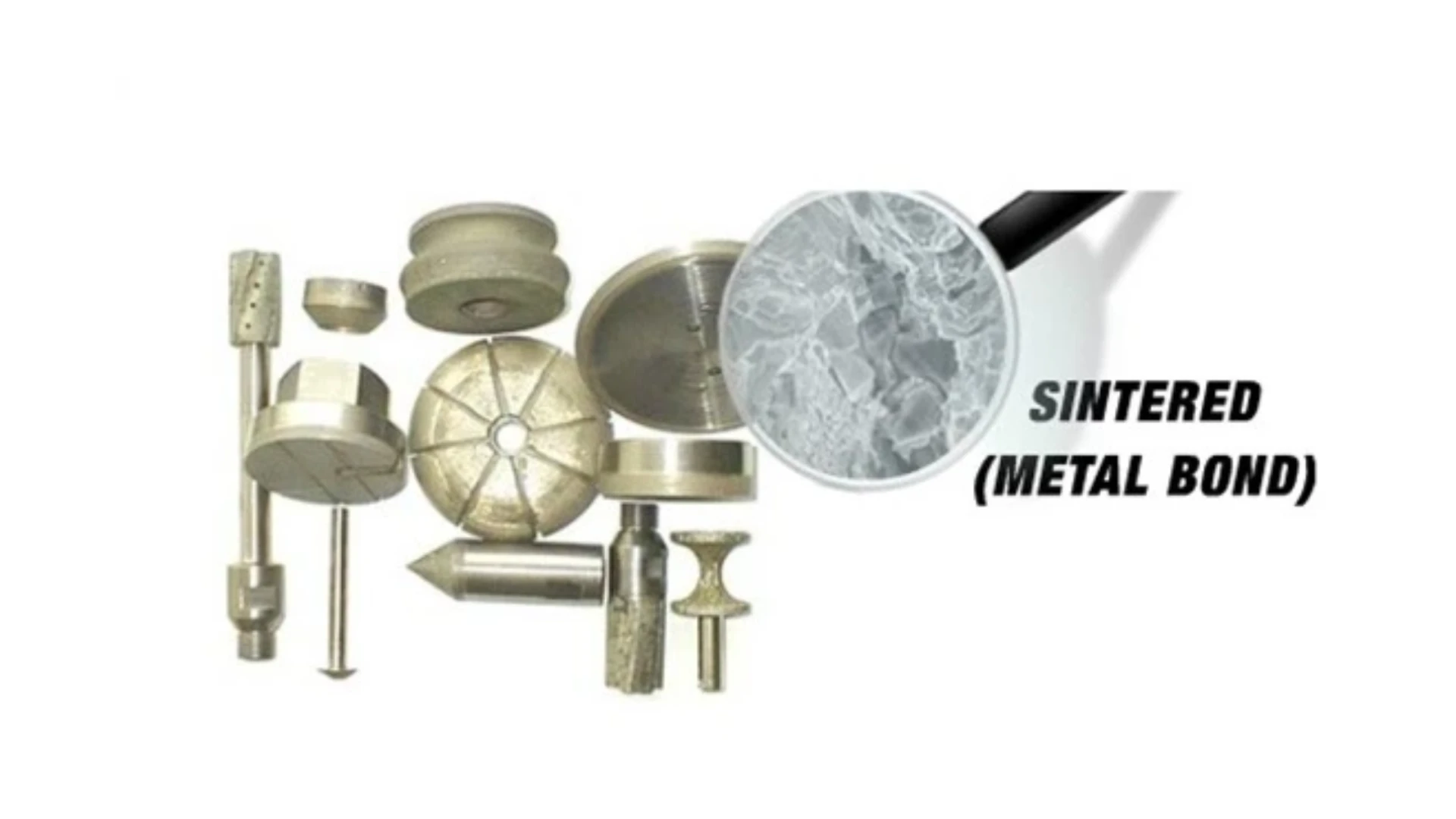
At their core, sintered metal-bond diamond tools are made by embedding diamond particles into a metal matrix—typically a combination of metals like bronze, cobalt, iron, or other alloys. This mixture is compacted and hot-pressed under high temperature and pressure, a process known as sintering. The result? A tool with exceptional strength, thermal stability, and diamond retention properties.
Unlike electroplated or resin-bond tools, which hold diamond grains on the surface, sintered metal-bond tools have diamond particles distributed throughout the entire bond structure. This means as the outer layer wears away, fresh diamonds are continuously exposed, ensuring consistent cutting performance over a long service life.
The Science Behind the Strength
The sintering process creates a dense, cohesive metal bond that locks diamond particles firmly in place. Here’s why this matters:
Improved Diamond Retention: Diamonds are held more securely, minimizing premature pull-out.
High Wear Resistance: The tool maintains geometry even under extreme pressure.
Thermal Resilience: Handles higher operating temperatures without breakdown.
Self-Sharpening Action: As the bond wears, new diamonds are exposed, maintaining efficiency.
This engineered bond structure makes sintered diamond tools ideal for cutting extremely hard or brittle materials where precision and longevity are critical.
Advantages Over Other Bond Types
Not all diamond tools are created equal. Let’s compare metal-bond to other common bond types:
1. Resin-Bond Tools:
- Pros: Good surface finish, lower cost.
- Cons: Shorter lifespan, less heat resistance, prone to bond breakdown.
2. Electroplated Tools:
- Pros: Aggressive cutting at initial stages, low cost for short runs.
- Cons: No diamond renewal (single-layer), limited lifespan, not ideal for heavy-duty use.
3. Vitrified Bond Tools:
- Pros: Good thermal stability, high-speed applications.
- Cons: Fragile structure, less forgiving in impact conditions.
Metal-Bond Advantage:
Longest service life among all bond types.
Superior diamond retention under high loads.
Excellent heat resistance for dry or wet cutting.
Best choice for high-precision, high-volume operations.
While metal-bond tools are often more expensive initially, their extended life and consistent performance reduce overall operational costs, making them a smarter investment for labs and manufacturers.
Applications: Where Metal-Bond Diamond Tools Excel
The versatility of sintered diamond tools makes them indispensable across multiple high-tech sectors:
1. Semiconductor and Electronics Manufacturing
- Wafer slicing and dicing of silicon, sapphire, and gallium arsenide.
- Micro-drilling for circuit boards and MEMS devices.
- Maintaining micron-level tolerances for delicate components.
2. Aerospace and Defense
- Cutting and profiling of advanced composites and titanium alloys.
- Shaping turbine blades, ceramic armor plates, and high-performance polymers.
3. Optical and Photonic Components
- Precision grinding and polishing of quartz, glass lenses, and laser components.
- Maintaining scratch-free surfaces for high-value optics.
4. Advanced Ceramics and Engineering Materials
- Processing zirconia, alumina, and other ultra-hard ceramics.
- Creating precision parts for automotive, energy, and biomedical industries.
5. Stone, Concrete, and Construction Materials
- Profiling granite, engineered stone, and ultra-hard concrete.
- Applications in decorative stone and large-scale infrastructure projects.
These examples highlight why engineers, manufacturers, and research facilities choose sintered metal-bond tools when precision and performance cannot be compromised.
SMART CUT® Technology: Raising the Standard
While the basic principles of metal-bond diamond tooling are well established, not all tools deliver the same performance. UKAM Industrial Superhard Tools has developed its proprietary SMART CUT® technology, which introduces a new level of control and consistency to the cutting process.
What Makes SMART CUT® Different?
- Uniform Diamond Distribution: Every tool is engineered to maintain even diamond exposure for consistent cutting speed.
- Optimized Bond Hardness: Customized to match specific material hardness and cutting requirements.
- Reduced Chipping and Micro-Cracks: Ideal for brittle and high-value materials where edge quality is critical.
- Extended Tool Life: Reduced dressing frequency and lower cost per cut over time.
For R&D labs, university research centers, and high-precision production facilities, these innovations translate into better accuracy, less downtime, and lower operational costs.
Types of Metal-Bond Diamond Tools Available
The adaptability of this technology is reflected in the wide range of tool formats:
Diamond Blades:
- Wafering and slicing blades for semiconductors and optics.
- Sizes from 0.5” to 72”, thicknesses as low as 0.001”.
Diamond Grinding Wheels:
- Flat, cup, and profile wheels for ceramics, glass, and metals.
- Used in precision grinding and finishing applications.
Diamond Core Drills and Bits:
- For drilling micro-holes (as small as 0.001”) or large diameters up to 48”.
- Essential in electronics, geological sampling, and biomedical device production.
Custom Engineered Tools:
- Tailored for unique materials and specialized processes.
Optimized for speed, finish, and life expectancy based on application needs.
Maintenance Tips: Maximizing Tool Life
Even the best tool needs proper handling. To get the most out of your sintered metal-bond diamond tools:
- Use Coolant: Reduces thermal stress and extends tool life.
- Follow Recommended Speed and Feed Rates: Avoid excessive pressure that causes bond failure.
- Dress and Condition Regularly: Maintains sharpness and exposes new diamond layers.
- Match the Tool to the Material: Selecting the right grit and bond hardness is key to performance.
Proper maintenance not only ensures longevity but also guarantees consistent quality in your finished products.
Future Outlook: Evolving Demands, Smarter Tools
As industries continue to push the boundaries of material science, the demand for precision cutting and grinding solutions will only grow. From quantum computing components to next-generation aerospace alloys, sintered metal-bond diamond tools will remain at the forefront of innovation.
With advancements like SMART CUT® technology, companies like UKAM Industrial Superhard Tools are setting new benchmarks for precision, efficiency, and adaptability. These tools aren’t just accessories—they are enablers of progress in some of the world’s most advanced industries.
Final Thoughts
For engineers, manufacturers, and research professionals, the choice of tooling can determine the success of an entire project. Sintered metal-bond diamond tools offer the durability, accuracy, and consistency needed to machine today’s most challenging materials.
When performance matters, partnering with a trusted provider like UKAM Industrial Superhard Tools ensures you have access to the latest innovations and custom-engineered solutions.