In today’s fast-paced business environment, managing employee time efficiently is essential for productivity and growth.
Many organizations are turning to HR Software India to streamline their workforce operations and reduce manual workload. With the rise of digital tools, smart time tracking solutions are helping businesses gain better control over attendance, improve accuracy, and make informed decisions.
The Need for Smarter Workforce Management
Traditional methods like manual registers, spreadsheets, or punch cards are no longer reliable. They are prone to errors, time theft, and inefficiencies. As companies grow, tracking employee hours, shifts, and overtime becomes increasingly complex. This is where modern time tracking solutions come into play.
Smart systems simplify everyday tasks by automating attendance recording, leave management, and reporting. Instead of spending hours verifying data, HR teams can focus on strategic initiatives that improve employee engagement and business outcomes.
What Are Smart Time Tracking Solutions?
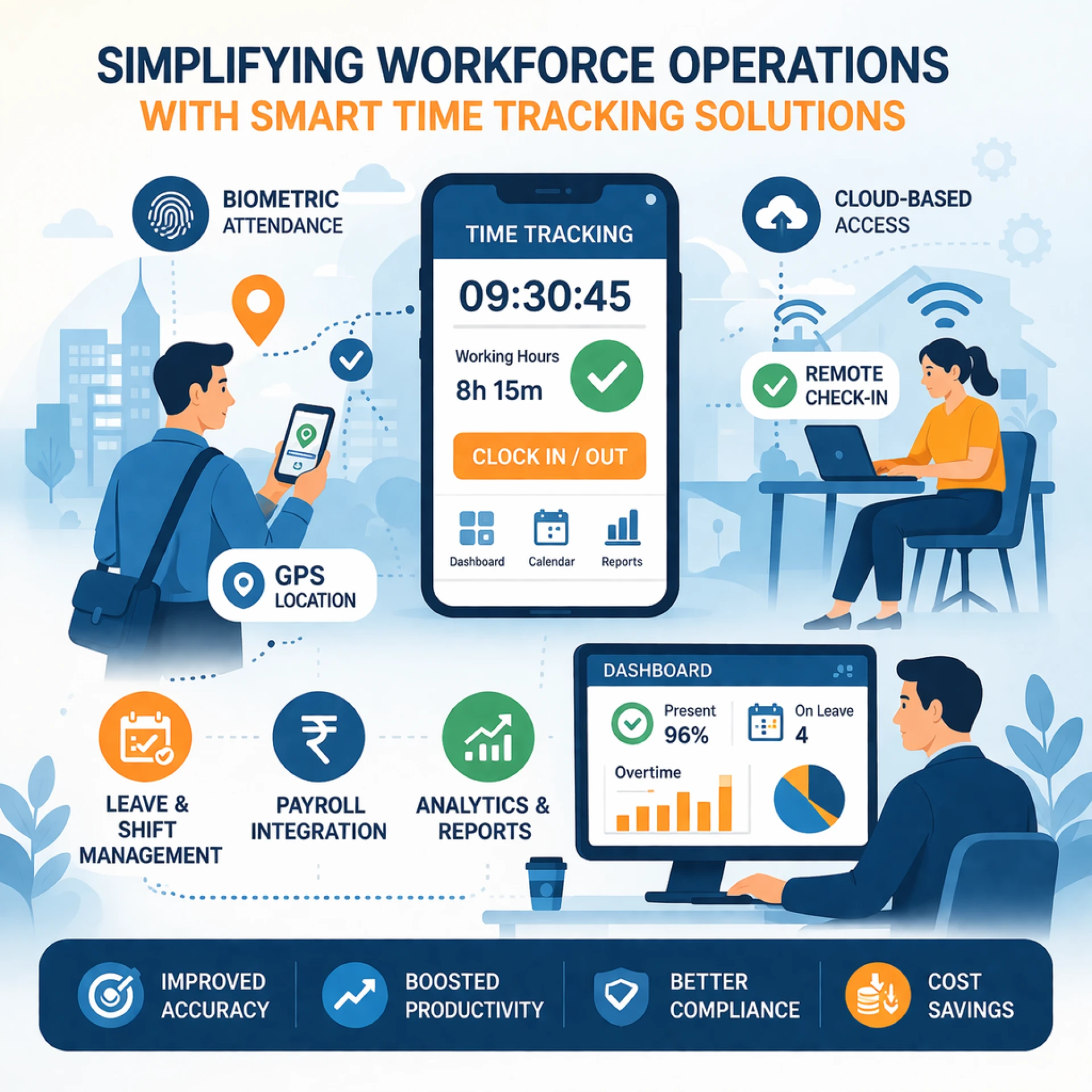
Smart time tracking solutions are digital tools designed to monitor and record employee working hours accurately. These systems often include features like biometric attendance, mobile check-ins, GPS tracking, and cloud-based dashboards.
They are not just about recording time; they provide insights into employee productivity, attendance patterns, and workforce trends. By using such tools, businesses can ensure transparency and accountability across teams.
Key Features That Drive Efficiency
Modern time tracking systems come equipped with advanced features that make workforce management easier:
Automated Attendance Tracking
- Employees can log their time using biometric devices, mobile apps, or web portals. This eliminates manual errors and ensures accurate data collection.
Real-Time Monitoring
- Managers can view attendance data in real time, helping them make quick decisions regarding staffing and shift planning.
Leave and Shift Management
- Employees can request leaves and check schedules directly through the system. Managers can approve or modify requests without delays.
Integration with Payroll
- Time tracking data seamlessly integrates with payroll systems, reducing calculation errors and ensuring timely salary processing.
Detailed Reports and Analytics
- Businesses can generate reports on attendance, overtime, and productivity, helping them identify trends and optimize operations.
Benefits of Implementing Smart Time Tracking
Improved Accuracy
- Automated systems reduce the chances of human error. Every clock-in and clock-out is recorded precisely, ensuring reliable data.
Increased Productivity
- When employees know their time is being tracked accurately, they are more likely to stay focused and productive.
Better Compliance
- Organizations can easily comply with labor laws and regulations by maintaining accurate attendance records.
Cost Savings
- Reducing manual processes and minimizing errors can significantly cut operational costs over time.
Enhanced Employee Experience
- User-friendly systems allow employees to manage their schedules, apply for leave, and track their working hours effortlessly.
Role of Attendance Systems in Modern Businesses
A well-implemented Attendance Software in India plays a crucial role in ensuring smooth workforce operations. It helps businesses maintain discipline, track employee performance, and improve overall efficiency.
These systems are especially useful for organizations with remote or field employees. GPS-based tracking and mobile access allow employees to mark attendance from anywhere, ensuring flexibility without compromising accountability.
How Smart Solutions Support Remote and Hybrid Work
The shift towards remote and hybrid work models has made traditional attendance tracking obsolete. Smart solutions address this challenge by offering cloud-based platforms that employees can access from any location.
Features like mobile check-ins, geofencing, and real-time updates ensure that businesses can track employee activities without being physically present. This not only improves transparency but also builds trust between employers and employees.
Choosing the Right Time Tracking Solution
Selecting the right system is crucial for maximizing benefits. Businesses should consider the following factors:
Ease of Use
- The platform should be simple and intuitive for both employees and managers.
Scalability
- Choose a solution that can grow with your business and handle increasing workforce demands.
Customization
- Every organization has unique needs. A flexible system allows customization of features and workflows.
Data Security
- Ensure the software has strong security measures to protect sensitive employee data.
Integration Capabilities
- The system should integrate seamlessly with existing tools like payroll and HR management systems.
Overcoming Implementation Challenges
While adopting new technology can be beneficial, it may come with challenges such as employee resistance and initial setup complexities. To overcome these:
- Provide proper training to employees
- Communicate the benefits clearly
- Start with a pilot program before full implementation
- Offer continuous support and updates
By addressing these challenges proactively, businesses can ensure a smooth transition to smart time tracking systems.
The Future of Workforce Operations
As technology continues to evolve, time tracking solutions are becoming more advanced. Artificial intelligence and machine learning are being integrated to provide predictive insights and automate decision-making.
In the future, businesses can expect even more intelligent systems that not only track time but also suggest ways to improve productivity and optimize workforce utilization.
Conclusion
Simplifying workforce operations is no longer a luxury—it is a necessity for modern businesses. Smart time tracking solutions provide the tools needed to manage employees efficiently, reduce errors, and improve overall productivity.
By adopting digital systems, organizations can move away from outdated methods and embrace a more streamlined, data-driven approach. Whether managing a small team or a large workforce, investing in the right solution can make a significant difference in achieving long-term success.