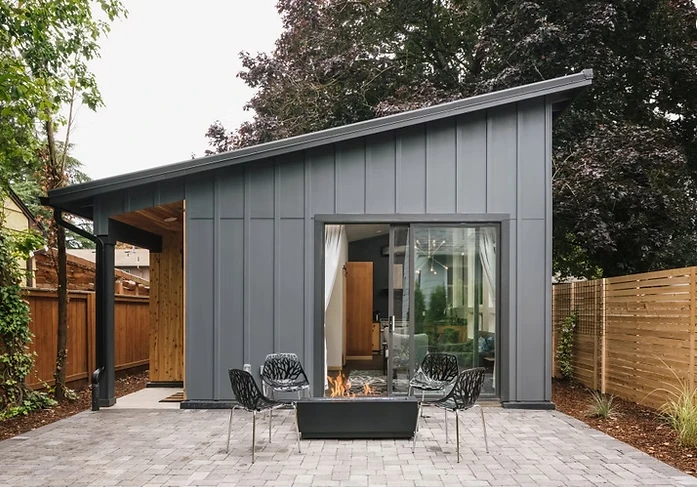
For homeowners dreaming of adding an Accessory Dwelling Unit (ADU) to their property, the permitting phase often feels like the steepest climb. Between navigating local codes, submitting detailed plans, and waiting for approval, the ADU permit process can stretch into months of uncertainty and frustration. As someone who’s guided countless property owners through this maze, I’ve seen how pre-approved plans—ready-made designs vetted by municipalities—can transform this ordeal into a streamlined, stress-free experience. By aligning with ADU permit requirements from the outset, these plans save time, cut costs, and bring that backyard cottage or garage conversion within reach.
The beauty of pre-approved plans lies in their simplicity. Cities like Los Angeles, Seattle, and Portland have embraced this approach, offering libraries of blueprints that comply with local zoning, building codes, and safety standards. These designs—ranging from compact 400-square-foot studios to spacious 1,000-square-foot units—eliminate the guesswork of custom drafting. Instead of hiring an architect to start from scratch, homeowners can select a pre-vetted layout, tweak it to their liking, and submit it with confidence. In my experience, this shaves weeks, if not months, off the timeline. Where a bespoke plan might face multiple rounds of revisions, a pre-approved one often sails through review on the first try.
Why does this matter? The ADU permit process is notoriously time-sensitive. In California, for instance, state law pushes cities to approve ADUs within 60 days, but that clock only starts once a complete application lands on the planner’s desk. Miss a detail—like a setback measurement or structural calculation—and you’re back to square one, waiting out another review cycle. Pre-approved plans sidestep this pitfall. They’re engineered to meet ADU permit requirements upfront, covering essentials like fire safety, energy efficiency, and accessibility. I’ve seen clients in San Diego go from application to approval in under a month using these designs, a feat unheard of with traditional submissions.
Cost is another hurdle pre-approved plans help clear. Custom architectural drawings can run thousands of dollars, especially if revisions pile up during permitting. By contrast, many cities offer pre-approved plans for free or a nominal fee—Los Angeles, for example, provides a catalog online at no cost, while others charge a few hundred dollars for downloadable files. Even when customization is needed, the starting point is already compliant, reducing the scope of professional tweaks. For budget-conscious homeowners, this can mean redirecting funds from design to construction, where quality matters most. I’ve worked with families who saved upwards of $5,000 by opting for a pre-approved 600-square-foot ADU over a fully custom alternative.
The stress reduction is just as significant. The JADU permit process and its ADU counterpart often overwhelm first-timers with technical demands—think utility connections, height restrictions, or parking rules. Pre-approved plans come with these details ironed out. Take parking, a common sticking point: a pre-approved design in a transit-rich area like Oakland might exclude a parking space entirely, leveraging local waivers, while one in a suburban zone might include it by default. Homeowners don’t need to decode the zoning ordinance; the plan does it for them. I recall a client in Sacramento who’d spent weeks agonizing over roof pitch requirements, only to switch to a pre-approved plan and submit successfully within days.
Of course, pre-approved plans aren’t a one-size-fits-all solution. They shine brightest for standard projects—detached units, garage conversions, or attic expansions—but may fall short for unique lots or ambitious designs. A sloped yard or historic district might still demand custom work to meet ADU permit requirements. That said, many programs allow minor modifications, like adjusting window placement or adding a porch, without voiding the pre-approval status. In Portland, for instance, homeowners can tweak layouts as long as core structural and code elements stay intact. Checking with your local planning department is key to understanding these limits.
To make the most of this shortcut, start by browsing your city’s pre-approved plan library—most are online or available at the permitting office. Match the design to your property’s specifics: lot size, existing structures, and intended use (rental, guest house, or family space). Then, pair it with a solid application package—site plans, ownership proof, and any required fees. Some jurisdictions, like San Jose, even offer expedited reviews for pre-approved submissions, cutting wait times further. I’ve seen this approach turn a six-month slog into a six-week success story.
The ADU permit process doesn’t have to be a gauntlet. Pre-approved plans hand homeowners a roadmap, aligning with regulations while dodging the pitfalls of trial and error. They’re not just a time-saver; they’re a lifeline for those daunted by bureaucracy or tight on funds. With the right pre-approved design, that ADU isn’t just a possibility—it’s a project breaking ground sooner than you’d ever imagined