
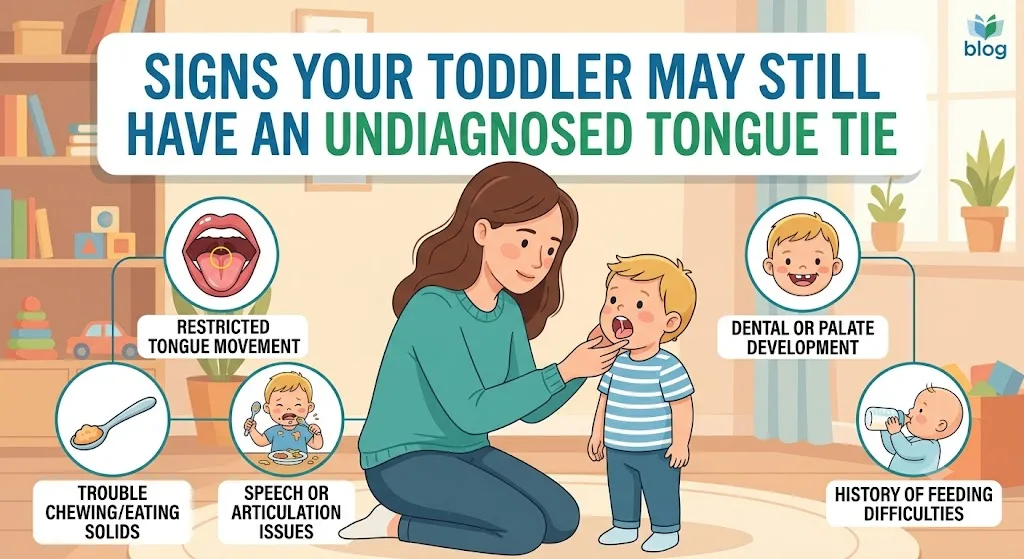
As parents, it's natural to assume that if your toddler is growing well, any early feeding challenges are long behind you. However, some children continue to experience difficulties that seem unrelated at first—unclear speech, picky eating, frequent gagging, or even restless sleep. In some cases, these concerns may be linked to an undiagnosed tongue tie.
Tongue tie, also known as ankyloglossia, occurs when the thin band of tissue beneath the tongue (the lingual frenulum) is too short, thick, or tight, limiting tongue movement. While many babies are diagnosed shortly after birth, others may not show obvious symptoms until they become toddlers and begin speaking, eating a wider variety of foods, and developing new oral skills.
If you've been wondering whether your child could have a tongue tie that was never identified, understanding the common signs can help you decide when to seek a professional evaluation.
Quick Answer
A toddler with an undiagnosed tongue tie may have difficulty pronouncing certain sounds, struggle with chewing or swallowing, gag frequently, prefer soft foods, experience ongoing speech delays, or have limited tongue mobility. A comprehensive evaluation by a Tongue tie doctor can determine whether a tongue tie is contributing to these challenges and whether Tongue tie treatment for older children may be beneficial.
Why Some Tongue Ties Go Undiagnosed
Not every tongue tie causes noticeable problems during infancy. Some children breastfeed successfully despite having restricted tongue movement, while others compensate as they grow.
As toddlers become more active communicators and begin eating a broader diet, the limitations of tongue mobility may become more noticeable. Parents often seek answers after months of speech concerns or feeding frustrations without realizing that tongue function could be playing a role.
An undiagnosed tongue tie doesn't always require treatment, but identifying it early can help families make informed decisions and prevent ongoing difficulties.
Common Signs of Tongue Tie in Toddlers
Speech Isn't Developing as Expected
One of the most common reasons parents seek an evaluation is delayed or unclear speech. While a tongue tie doesn't cause every speech delay, limited tongue movement can make it more difficult to produce certain sounds that require the tongue to lift, extend, or move freely.
You may notice that your toddler:
- Has difficulty pronouncing certain letters.
- Is harder to understand than other children of the same age.
- Becomes frustrated while trying to communicate.
- Is already receiving speech therapy for toddlers with limited progress.
A speech-language pathologist and a tongue tie specialist can work together to determine whether restricted tongue mobility is contributing to speech issues in children.
Difficulty Chewing Certain Foods
As toddlers transition from purees to textured foods, tongue mobility becomes essential for chewing safely and moving food around the mouth.
Children with an undiagnosed tongue tie may:
- Prefer soft foods.
- Avoid meats or chewy textures.
- Take much longer to finish meals.
- Frequently spit food out.
- Struggle to move food from side to side.
Parents often mistake these behaviors for picky eating when they may actually reflect limited tongue function.
Frequent Gagging or Choking While Eating
The tongue plays a critical role in coordinating swallowing. Restricted movement can make it harder to manage food effectively, increasing episodes of gagging during meals.
If your toddler frequently coughs, gags, or seems uncomfortable while eating certain foods, it may be worth discussing these symptoms with a provider experienced in Tongue tie treatment for older children.
Limited Tongue Movement
Sometimes the most obvious clue is the tongue itself.
Signs include:
- Difficulty sticking the tongue out past the lips.
- Inability to lift the tongue toward the roof of the mouth.
- A heart-shaped appearance when the tongue is extended.
- Difficulty licking lips or an ice cream cone.
- Trouble clearing food from the teeth after eating.
These physical findings can suggest a restricted lingual frenulum.
Persistent Feeding Challenges
Although infancy has passed, feeding issues can continue.
Some toddlers:
- Tire quickly while eating.
- Eat unusually slowly.
- Avoid certain textures.
- Frequently store food in their cheeks.
- Become frustrated during meals.
These challenges may become more noticeable as dietary variety increases.
Ongoing Speech Delay Despite Therapy
Parents sometimes wonder why their child is participating in therapy speech delay programs yet continues to struggle with specific sounds.
If tongue mobility is physically restricted, therapy alone may not fully address the problem. A comprehensive evaluation can help determine whether a tongue tie is one factor affecting speech development.
Many families benefit from a collaborative approach involving both a Tongue Tie Surgery Specialist and a pediatric speech-language pathologist.
Sleep and Breathing Concerns
Emerging research continues to explore the relationship between oral function and airway development.
Some toddlers with restricted tongue movement may also experience:
- Mouth breathing
- Snoring
- Restless sleep
- Frequent nighttime waking
While these symptoms have many possible causes, they should be discussed during a professional evaluation, particularly if they occur alongside feeding or speech concerns.
When Should Parents Seek an Evaluation?
You should consider scheduling an evaluation if your toddler:
- Has persistent speech concerns.
- Struggles with chewing or swallowing.
- Frequently gags during meals.
- Has difficulty moving their tongue.
- Shows several Signs of tongue tie together.
- Has ongoing feeding difficulties without another clear explanation.
A thorough examination looks beyond the frenulum itself and evaluates how the tongue functions during everyday activities such as speaking, eating, and swallowing.
How Is Tongue Tie Treated in Older Children?
Treatment depends on your child's symptoms, age, and functional limitations.
For some children, observation and continued therapy may be appropriate. For others, a provider may recommend laser tongue tie release to improve tongue mobility.
When treatment is recommended, it is often combined with oral exercises and, when appropriate, continued speech therapy for kids to help children learn how to use their improved tongue movement effectively.
Every child is unique, so treatment decisions should always be based on a comprehensive clinical evaluation rather than the appearance of the frenulum alone.
Choosing the Right Specialist
If you suspect your child has an undiagnosed tongue tie, look for a provider with experience evaluating both oral anatomy and tongue function.
An experienced Tongue tie doctor will assess:
- Tongue mobility
- Feeding function
- Speech concerns
- Oral development
- Airway considerations
- Overall medical history
This comprehensive approach helps ensure that treatment recommendations are personalized to your child's needs.
Frequently Asked Questions
Can a toddler have a tongue tie even if breastfeeding went well?
Yes. Some children compensate well during infancy, and symptoms don't become noticeable until speech, chewing, and oral development place greater demands on tongue mobility.
Does every tongue tie require surgery?
No. Treatment depends on how much the tongue restriction affects function. Some children benefit from observation or therapy, while others may be candidates for tongue tie surgery.
Can tongue tie affect speech?
It can contribute to speech difficulties in some children, although not every speech delay is caused by a tongue tie. A proper evaluation is important before deciding on treatment.
Is laser treatment safe for older children?
When performed by an experienced provider, laser tongue tie release is commonly used and is generally well tolerated. Your provider can explain the benefits, risks, and recovery process based on your child's specific situation.
Final Thoughts
An undiagnosed tongue tie can sometimes continue to affect a child well beyond infancy, influencing speech, feeding, and oral function in ways that aren't always immediately obvious. While not every toddler with these challenges has a tongue tie, recognizing the signs can help parents seek the right evaluation sooner rather than later.
If your child is experiencing persistent speech concerns, feeding difficulties, or limited tongue movement, consulting a provider experienced in Tongue tie treatment for older children can provide clarity and help determine the most appropriate next steps. Early evaluation and individualized care can make a meaningful difference in your child's comfort, communication, and overall development.