Homes are designed to meet the needs of a family at a certain stage of life. Over time, those needs can change. Families grow, work situations evolve, and daily routines shift. What once felt like a comfortable space may start to feel crowded or limited.
When homeowners begin to experience space-related challenges, it may be time to consider a home addition or expansion. Instead of moving to a new property, expanding the existing home can provide the extra space needed while keeping the familiar environment.
Understanding the signs that indicate a home needs an expansion can help homeowners make better decisions about improving their living space.
Your Family Has Grown
Another major reason homeowners consider expanding their homes is family growth. New children, elderly parents moving in, or extended family members staying long term can significantly change space requirements.
Homes that were once ideal for a smaller household may no longer meet the needs of a larger family.
Ways Home Additions Support Growing Families
Expanding the home allows families to adapt their space to new circumstances.
• adding extra bedrooms
• creating larger living areas
• building guest suites for relatives
• adding additional bathrooms
These improvements allow families to remain in their current neighborhood while gaining the space they need.
Limited Storage Is Creating Clutter
Storage problems are often an early sign that a home is no longer meeting a family’s needs. Closets, cabinets, and storage areas may quickly become overcrowded.
When storage is limited, homeowners may begin placing items in hallways, garages, or living spaces.
Signs Storage Space Is No Longer Enough
Storage-related issues can appear in several ways.
• overflowing closets and cabinets
• seasonal items stored in living areas
• garages filled with household belongings
• difficulty organizing daily items
Adding storage through room expansions, larger closets, or built-in shelving can help restore order to the home.
Your Lifestyle Has Changed
Lifestyle changes often require new types of living spaces. Many homeowners now need dedicated areas for remote work, hobbies, or fitness activities.
Older homes may not have been designed with these modern lifestyle needs in mind.
Common Lifestyle Changes That Require More Space
Several lifestyle adjustments may lead to the need for an expansion.
• working from home and needing a private office
• starting a home business
• creating workout or recreation areas
• adding entertainment or media rooms
Home additions can transform unused areas into spaces that support modern living.
Your Home Layout Feels Outdated
Some homes may technically have enough space but still feel uncomfortable due to outdated layouts. Older floor plans often include smaller rooms and limited open areas.
Modern homeowners typically prefer flexible layouts that connect living spaces.
Layout Issues That Suggest an Expansion
Several design problems can affect comfort and functionality.
• closed off kitchens that limit interaction
• small dining areas that cannot accommodate gatherings
• narrow hallways or poorly arranged rooms
• lack of connection between living areas
Expanding or redesigning the layout can create a more open and functional home.
Comparison of Expansion Options
The following table shows several common home addition options and how they benefit homeowners.
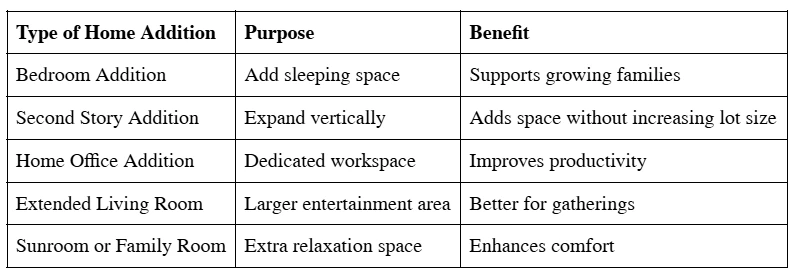
Reviewing these options helps homeowners determine the type of expansion that best fits their needs.
You Love Your Neighborhood but Need More Space
Many homeowners feel attached to their neighborhoods because of schools, community connections, or convenient locations. When space becomes limited, moving to a new home may not be the preferred option.
In these situations, expanding the current home can provide the needed space without leaving the neighborhood.
Benefits of Expanding Instead of Moving
Choosing to expand a home offers several advantages.
• avoiding the cost and stress of moving
• staying close to schools and workplaces
• maintaining community relationships
• customizing the home to fit specific needs
Home additions allow homeowners to upgrade their living space while keeping the location they enjoy.
Your Property Has Unused Space
Some homes are built on lots that have extra space that is not fully utilized. Large yards or unused areas around the house may provide expansion opportunities.
Taking advantage of available property space can significantly improve the functionality of the home.
Areas Where Additions Can Be Built
Homeowners may consider expanding in several areas.
• extending the back of the house
• adding side extensions
• building additional rooms above existing structures
• converting garages into living spaces
Proper planning ensures the addition integrates well with the existing structure.
Your Home Value Could Increase With Expansion
Home additions not only improve comfort but can also increase property value. Adding usable square footage is one of the most effective ways to boost a home’s market appeal.
Potential buyers often look for homes with spacious layouts and modern features.
Types of Additions That Increase Value
Certain expansions are particularly attractive to buyers.
• additional bedrooms and bathrooms
• larger kitchens and dining areas
• family rooms or entertainment spaces
• home offices or flexible work areas
These upgrades make the home more appealing if homeowners decide to sell in the future.
Renovations No Longer Solve the Problem
Sometimes homeowners try to solve space issues through small renovations or reorganizing existing rooms. While these improvements may help temporarily, they may not address the root problem.
When space limitations continue despite renovations, an addition may be the better long-term solution.
Signs Renovations Are Not Enough
Homeowners may notice several patterns.
• repeated furniture rearrangements without improvement
• constant decluttering efforts
• temporary storage solutions that create new problems
• rooms serving too many purposes
A well-planned expansion can permanently solve these issues.
Conclusion
Homes should evolve with the changing needs of the people who live in them. When families grow, lifestyles change, or space becomes limited, homeowners may begin to feel that their current home no longer meets their needs.
Common signs that a home may require an addition include overcrowded living areas, limited storage, outdated layouts, and lifestyle changes such as working from home. Expanding the home can provide the additional space required while preserving the comfort of a familiar environment.
A well-designed addition can improve functionality, enhance daily living, and increase property value. With careful planning and professional guidance, homeowners can transform their existing homes into spaces that support both present and future needs. Experienced builders such as Upscale Construction Inc help homeowners design and construct additions that blend seamlessly with existing structures while improving comfort and usability.
FAQs1. How do homeowners know when they need a home addition
Signs include overcrowded living spaces, limited storage, growing families, and lifestyle changes that require additional rooms.
2. Is expanding a home better than moving
In many cases, expanding allows homeowners to stay in a preferred neighborhood while gaining the space they need.
3. What type of home additions are most common
Bedroom additions, home offices, expanded living rooms, and second-story additions are among the most common options.
4. Do home additions increase property value
Yes, increasing usable square footage and adding functional rooms can improve the market value of a home.
5. How long does it take to complete a home addition
The timeline depends on the size and complexity of the project, but most additions take several weeks to a few months to complete.