Side sleeping can feel like a hug for your spine when everything lines up. When things do not, your shoulder takes the load, your hip rotates, and your lower back pays for it in the morning.
A body pillow fixes small gaps that throw your posture off while you rest. It fills the space between your knees and keeps your top leg from twisting forward. It also gives your arms a soft anchor so your shoulders do not round in.
The result is calmer joints and easier breathing, which can add up to deeper sleep. Think of it as simple gear that trains your body to stay in a healthy shape through the night.
Why a body pillow helps side sleepers
Side sleep can be great for your back when your body stays in line. The best body pillows for side sleepers keep hips, knees, and shoulders stacked so your spine stays neutral. Without support, your top knee often drifts down and pulls your lower back.
A long pillow between the legs stops that drift and eases pressure in the hips. Hugging the pillow keeps the upper shoulder from collapsing, which can help neck comfort and reduce numb hands. Many people also find that a body pillow helps them keep a side position, which may lower snoring for some.
Signals you may need one
- You wake with hip or shoulder soreness
- Your low back aches after a full night
- You roll to your stomach by morning and feel stiff
- Your arm or hand goes numb when you lie on your side
Shapes and fills that change the feel
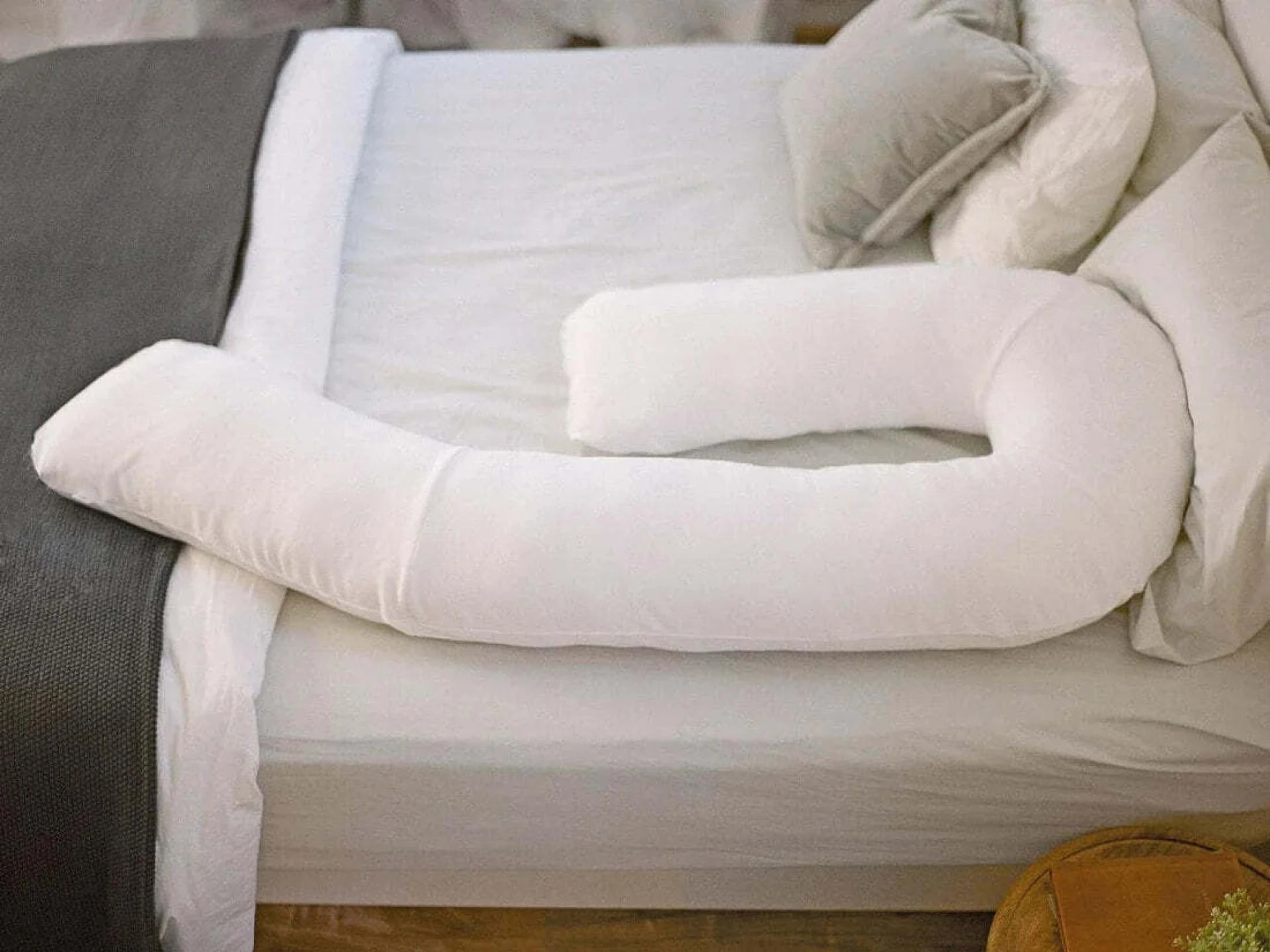
Body pillows come in a few common shapes. A straight or rectangular pillow is simple and easy to fit on any bed. A J shape adds a short hook for your head or knees. C and U shapes wrap more of you at once and can support both front and back.
Side sleepers who run warm may prefer a straight or J shape because it leaves more open air around the body. If you want full cradling on both sides, a U shape can give steady support when you turn over in the night.
Fills matter just as much. Here is how common options feel:
- Shredded foam: Moldable and supportive. Good if you like to hug and squeeze your pillow. Often adjustable by adding or removing fill.
- Solid memory foam core: Uniform support that holds shape well. Feels slower to respond.
- Latex: Springy and buoyant. Stays cooler than many foams and resists sagging.
- Down alternative: Soft, squishable, and light. Best for cuddly comfort, not firm lift.
- Microbeads: Very moldable with a weighty drape. Cool feel but can be noisy for some.
If you have allergies, look for hypoallergenic fills and a tightly woven cover. If heat keeps you up, choose breathable covers like cotton or Tencel and steer toward latex or shredded foam with airflow channels.
Fit by size and firmness
A good fit starts with length. Many long pillows measure about 20 by 54 inches. That size reaches from chest to below the knees for most adults. Taller bodies may like a longer option so both knees rest on the pillow. If the pillow is too short, the top knee may hang off the end and twist the hips.
Firmness should match what your joints need. If your hips feel pinched, choose medium or firm so the knees stay stacked. If your shoulders feel jammed, a slightly softer hug around the arms can help. You can also mix firm support between the knees with a softer squeeze up top by using a pillow that has zones or an adjustable fill.
Quick fit tips
- The pillow should keep your top thigh level with your hip
- Both knees should rest on the pillow without hanging off
- Your torso should not sink forward when you hug the pillow
- If your lower back still feels tight, add a small towel at your waist
How to use a body pillow the right way
Small changes make a big difference. Try this simple setup tonight:
- Lie on your side with your shoulders and hips stacked.
- Pull the body pillow close and hug it so your top arm rests forward without dropping your shoulder.
- Place the lower part of the pillow between your knees and ankles. Both legs should rest on the pillow so your hips stay level.
- Keep your top knee from sliding down. If it does, move the pillow a little higher or choose a firmer fill.
- Tuck a bit of the pillow under your belly if your back tends to arch.
If you turn from side to side through the night, a C or U shape can keep support on both sides without much effort.
Special cases to think about
During pregnancy: A C or U shape can support the belly and keep you on your side. Place part of the pillow under your bump and part between your knees. This can ease hip strain and make turning easier.
For snoring: Many people snore less on their side. A body pillow can help you stay in that position. Combine it with a head pillow that keeps your chin from tucking.
For back and hip pain: Firm support between the knees keeps the pelvis from twisting. If your lower back arches, tuck a small piece of the pillow near your waist for extra support.
For hot sleepers: Pick breathable covers and a bouncy fill like latex or ventilated shredded foam. Keep bedding light so air can move.
Conclusion
Side sleepers often need more than a small head pillow. A well chosen body pillow supports the parts that sag or twist when you relax. It keeps your hips level, calms your shoulders, and gives your neck a fair shot at staying neutral. Shapes and fills change the feel, so focus on what your joints need and how warm you sleep. Aim for a size that reaches from your chest to past your knees. Place it between both knees and hug it to anchor your top arm. Pair it with a head pillow that matches your shoulder width. With the right setup, your body will settle, your breath will ease, and mornings will feel better.