
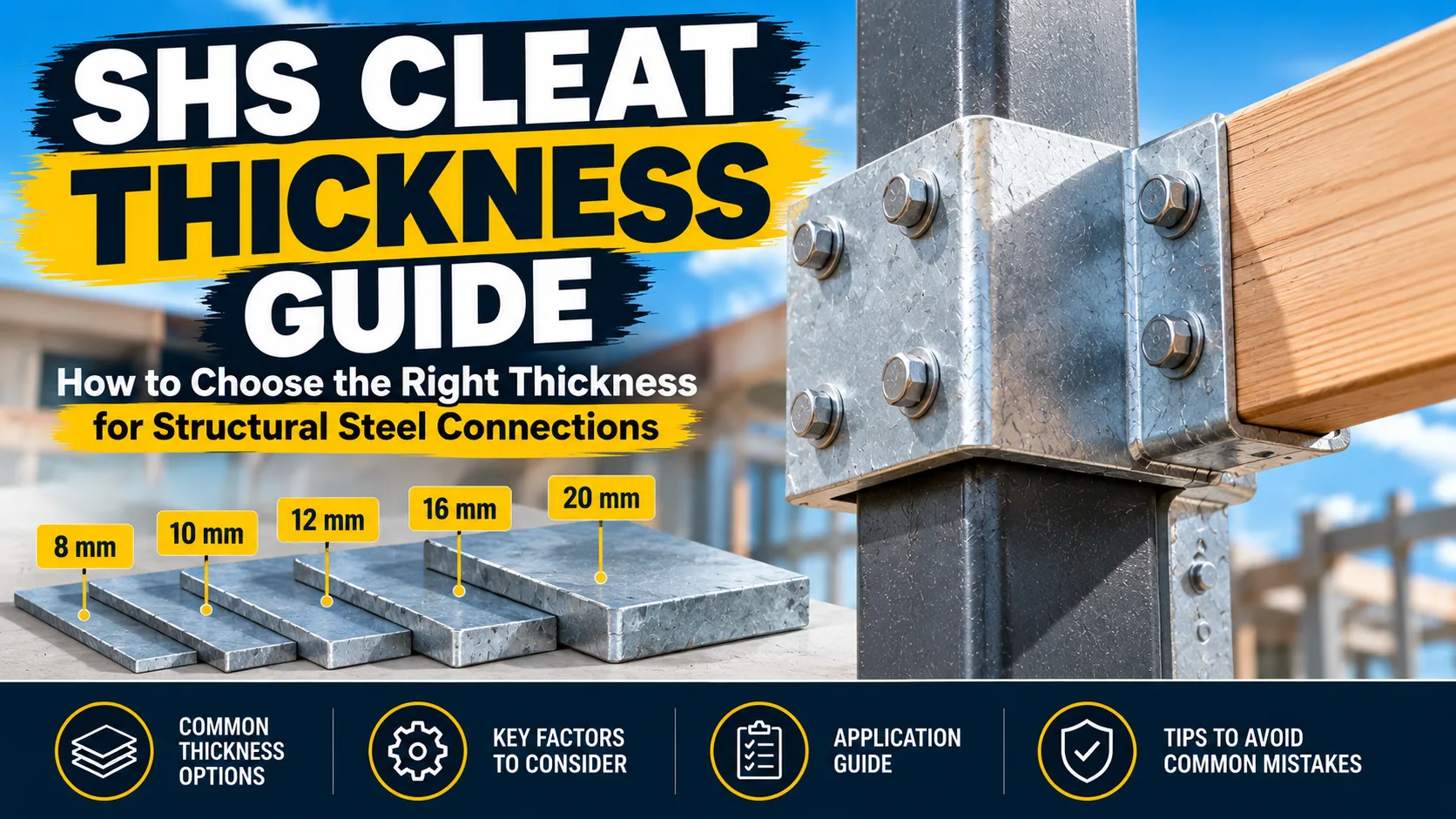
SHS Cleat Thickness Guide: How to Choose the Right Thickness
Choosing the correct SHS cleat thickness is important for structural steel connections. Whether connecting timber beams to SHS posts, supporting floor bearers or joining steel beams, the right specification depends on the connection design, applied loads and installation requirements.
This guide explains common thickness options, key selection factors and mistakes to avoid when choosing SHS cleats for Australian construction projects.
What Is SHS Cleat Thickness?
SHS stands for Square Hollow Section, commonly used for steel posts and columns. An SHS cleat is a steel component designed to connect a post to a beam, bearer, bracing member or another structural element.
Cleat thickness refers to the thickness of the steel plate used in the connection. It is different from the outside dimensions and wall thickness of the SHS post.
For example, a 100 × 100 mm SHS post does not automatically require a specific cleat thickness. The connected beam, loading conditions, bolt arrangement and connection geometry must also be considered.
Common SHS Baseplate Thicknesses
The SHS Cleats website lists these baseplate thickness options:
ThicknessKey consideration8 mmCheck loading and plate dimensions10 mmAssess fixing and connection requirements12 mmVerify the complete connection design16 mmCheck plate behaviour and anchor details20 mmConfirm suitability for the specific applicationThese are listed baseplate options, not universal recommendations for every connection. The correct thickness must be established through the relevant engineering design.
Explore the SHS Baseplates, Top Plates and Single Cleats range for more information.
Factors That Affect Cleat Thickness
1. SHS Post Dimensions
Post dimensions and wall thickness influence connection design, but outside dimensions alone cannot determine the required cleat thickness.
2. Connected Beam Type
Timber beams, PFC steel beams and bracing members have different connection requirements. Selecting a cleat designed for the intended application is essential.
Relevant product categories include:
- SHS Timber Beam Cleats
- SHS Timber Beam Top Plate Cleats
- SHS-PFC Beam Cleats
- SHS Steel Angle Bracing Cleats
3. Applied Loads
Connections may experience shear, tension, compression, bending and uplift. The relevant forces depend on the structure and its intended use. Thickness selection should follow the project's engineering calculations.
4. Bolts and Welds
Bolt size, spacing, hole positions, edge distances and weld details all affect connection performance. A thicker plate does not automatically compensate for inadequate fasteners or welds.
5. Material and Corrosion Protection
Steel grade and material properties influence structural performance. Galvanising or another suitable corrosion protection system may be required depending on the installation environment.
Is a Thicker Cleat Always Better?
No. A thicker plate may improve resistance to certain types of bending, but the complete connection must still be checked.
Potential failure points include bolts, welds, the SHS wall, the connected beam and the supporting foundation. Excessive thickness may also increase material and fabrication costs without providing a necessary benefit.
The goal is to select a thickness that meets the design requirements, not simply to choose the thickest option.
Common Mistakes to Avoid
- Selecting thickness based only on SHS post size.
- Assuming every cleat configuration is interchangeable.
- Ignoring bolt, weld and supporting-member requirements.
- Changing specified fasteners or connection details without approval.
- Treating published product dimensions as universal engineering recommendations.
Checklist Before Selecting SHS Cleats
Before ordering or installing a cleat, confirm:
- SHS dimensions and wall thickness.
- Connected beam or bracing type.
- Required design loads.
- Cleat configuration and plate dimensions.
- Bolt and weld specifications.
- Corrosion protection requirements.
- Product documentation and engineering approval.
These checks help ensure that the selected component matches the intended connection and approved project design.
Frequently Asked Questions
What thickness should an SHS cleat be?
It depends on the loads, connection geometry, material properties, bolts and welds. The appropriate specification should be confirmed through engineering design.
What baseplate thicknesses are available?
The website lists 8 mm, 10 mm, 12 mm, 16 mm and 20 mm baseplate options. Confirm current product specifications before ordering.
Can I select thickness based only on post size?
No. Post dimensions alone are insufficient to determine the required cleat thickness.
Does a thicker cleat guarantee a stronger connection?
No. The bolts, welds, SHS wall, connected members and supporting structure must all be considered.
Conclusion
Choosing the right SHS cleat thickness requires evaluating the complete connection rather than focusing on plate thickness alone. Post dimensions, connected beams, applied loads, fasteners, welds and environmental conditions all influence the specification.
Use the relevant product documentation and approved engineering drawings to confirm suitability. Final selection and installation should comply with applicable Australian Standards and project-specific requirements.