
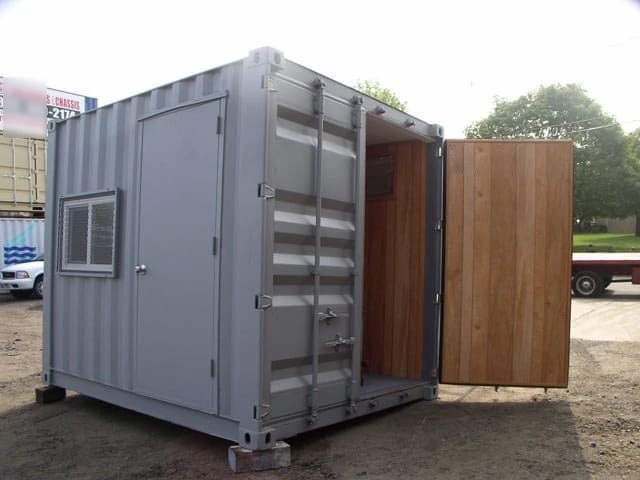
The shipping container office has gone from a curiosity to a genuinely mainstream option for businesses and homeowners looking for functional, distinctive, and cost effective workspace solutions. Whether you are setting up a job site office, a corporate facility, a backyard workspace, or a creative studio, the container form factor offers design possibilities that are both practical and visually compelling.
Here are the design approaches that produce the most successful container office outcomes.
The Open Plan Studio
The most natural floor plan for a single container office is an open studio layout. Without interior partitions, the full width and length of the container is available as flexible workspace. A long desk runs along one wall, with storage above and below. A separate seating area occupies one end for meetings or collaborative work. And the overall impression is of a purposeful, focused workspace that uses every available square foot efficiently.
This layout works particularly well for solo professionals, small teams of two to three people, or creative workers who benefit from a flexible, open environment. The absence of partitions also makes the container feel larger than its dimensions alone might suggest.
The Divided Office
For operations that need both office and storage space, or a private office area alongside an open working area, a divided layout using a lightweight partition creates two distinct zones within the container. This is particularly popular for job site containers that need both secure tool and equipment storage and a professional space for client meetings and administrative work.
Used shipping containers for sale work extremely well as the base for these divided office and storage configurations since the interior is easy to fit out and the exterior durability handles the demands of a working job site environment.
Maximizing Natural Light
One of the most impactful design decisions for any container office is the placement and size of windows. A container office with well placed windows on both the long wall and the end wall receives natural light from multiple angles, reducing reliance on artificial lighting and creating a work environment that is significantly more pleasant than a daylit space.
Skylights cut into the roof are another option that brings overhead natural light into the interior without reducing wall space that might be used for storage or equipment. These work particularly well in container offices where the roof design allows for their installation.
The Two Container Office Complex
For organizations that need more space than a single container provides, two containers positioned end to end or side by side create a compound office facility with substantially more floor area. Side by side containers with the shared wall opened between them create a 16 foot wide interior that feels surprisingly generous and allows for a range of space uses that a single container width cannot accommodate.
This two container configuration is popular for established construction site offices, light industrial facilities, and commercial applications where a single container is too small but a purpose built conventional structure is too expensive or too permanent.
Interior Finishes That Create Professional Quality
The difference between a container that looks like a converted container and one that looks like a proper office comes almost entirely down to interior finish quality. Smooth painted walls or plywood paneling, proper commercial grade flooring, flush mounted lighting, and integrated furniture elements transform the industrial starting point into a genuinely professional workspace.
Conclusion
Container office design has reached a level of maturity where the results consistently meet or exceed the quality of conventional workspace construction at comparable price points. The design principles that work are well established, the modifications are straightforward for experienced builders, and the resulting spaces are genuinely excellent places to work.