Data Verification & Transparency Notice: Shipping rates, transit timelines, and agricultural inspection rules are compiled directly from the Federal Motor Carrier Safety Administration (FMCSA) data portal, active Matson and Pasha Hawaii ocean transit disclosures, and the Hawaii Department of Agriculture (HDOA) regulations.
Moving a vehicle 2,500 miles across the open ocean involves complex multimodal logistics. Whether for corporate relocation, military PCS, or a long-term island move, vehicle transport can feel overwhelming without knowing the proper workflow.
A seamless move starts with this fact: no single carrier drives from the mainland onto an island. Your vehicle’s journey requires coordination between an overland auto transport company and a major Pacific Ocean freight line.
Get an Instant Quote in 59 Seconds
The Two-Leg Logistics Journey
To ensure a secure transit, your vehicle’s journey must be split into two distinct, highly coordinated segments.
1. Mainland Ground Transport
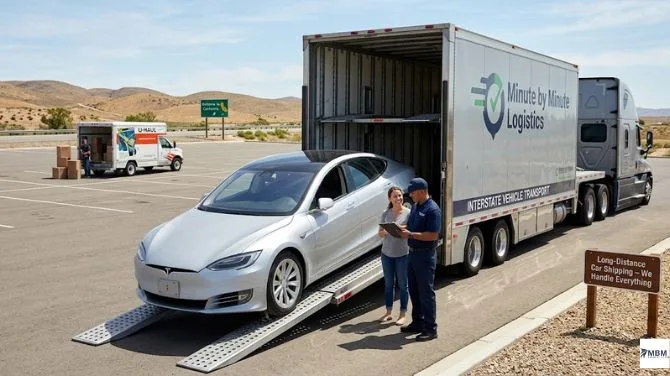
If you don't live near a Pacific port, an overland carrier must move your vehicle from your city to the West Coast. For example, a car leaving Dallas, Texas, or Chicago, Illinois, travels on interstates using a specialized trailer.
- Open Auto Transport: The industry standard and most cost-effective option. Vehicles are secured on dual-deck trailers. Though exposed to weather, over 80% of shipments use this method for its efficiency.
- Enclosed Auto Transport: A premium service where your vehicle is housed inside a hard-sided, weather-proof trailer. This option is strongly recommended for classic cars, exotic vehicles, or low-clearance sports cars.
2. Pacific Ocean Transit
When your vehicle reaches a West Coast port like Los Angeles, Oakland, or Seattle, it is processed by ocean carriers such as Matson or Pasha Hawaii.
The safest, most economical way to ship a standard car is with Roll-On/Roll-Off (RoRo) ships. These function like floating parking garages. Port drivers roll the vehicle up a ramp, secure it with heavy-duty straps, and roll it off at the destination.
Hawaii Car Shipping Cost & Route Breakdown
Port-to-port shipment from a West Coast terminal to Honolulu costs $1,450 to $1,850. For door-to-port service from inland, total costs add trucking, vehicle size, and island routing.
Core Factors That Impact Your Final Rate
- Vehicle Curb Weight & Dimensions: Standard sedans get baseline rates. Oversized SUVs, dual-rear-wheel trucks, or lifted and modified vehicles face surcharges.
- Direct ocean voyages from the mainland land in Oahu (Honolulu Port). For Kahului (Maui), Nawiliwili (Kauai), or Hilo/Kona (the Big Island), your car needs an inter-island Young Brothers barge transfer, with added fees and days.
- Rates and port space tighten during peak military moves (May-August) and the winter "Snowbird" season. Book in early spring or mid-autumn for better rates.
Strict Port Clearance & Quarantine Regulations
Hawaii enforces rigid agricultural and safety standards to protect its ecosystem. Vehicles not meeting the terminal criteria face storage fees and delays.
Step 1: The Quarter-Tank Fuel Rule
Due to strict maritime fire safety laws, combustion vehicles must contain one-quarter (1/4) tank of fuel or less at drop-off. Electric vehicles (EVs) must be dropped off with a battery state of charge between 45% and 50%.
Step 2: Zero Personal Belongings Policy
Your vehicle must be empty. You cannot ship personal items, only the factory spare tire, tire jack, registration, and owner's manual.
Step 3: The Cleanliness & Biosecurity Inspection
The Hawaii Department of Agriculture inspects every car for invasive species and soil. Power-wash the exterior and vacuum the interior—focus on wheel wells, engine bay, and under seats. Dirt or mud causes automatic quarantine holds.
Verifying Carrier Licensing and Trustworthiness
To avoid scams or price hikes, always check federal credentials before giving your keys or deposit.
Expert Tip: All transport brokers or carriers need active FMCSA authority. Always ask for their USDOT and MC Numbers and verify them on the FMCSA Safety Portal.
Trustworthy providers give all-inclusive quotes covering ocean freight, port handling, and fuel charges upfront. This prevents hidden fees at pickup.
Frequently Asked Questions
How long does it take to ship a vehicle to Hawaii?
Dropping off at a California port, ocean transit to Honolulu takes 7–12 days. Starting further inland adds 5–10 days for the main trucking segment.
Can I ship a car that has an active auto loan or lease?
Yes, but it requires a vital authorization step. If your vehicle is financed or leased, you must contact your lender to obtain an official, notarized Lienholder Authorization Letter permitting the vehicle to be taken out of the continental United States. If you own the vehicle outright, a simple copy of the front and back of your title is sufficient.
Are cracked windshields or mechanical issues allowed on RoRo ships?
No. Cars must be fully operable for RoRo shipping—able to steer, brake, and roll, with clear driver visibility. Inoperable cars require cranes or containers, which increase cost.
Is my vehicle insured during the ocean crossing?
Yes. Licensed trucks have cargo insurance; ocean carriers have maritime liability limits. Notify your auto insurer of travel dates to keep full coverage during transit.