Moving across state lines is already overwhelming; moving your vehicle shouldn’t add to the stress.
While driving cross-country sounds like an open-road adventure, the hidden costs add up fast. You face fluctuating highway fuel prices, multi-day hotel bills, and road meals. Adding thousands of miles to your odometer immediately depreciates your vehicle. Driving yourself is rarely the cheapest or safest choice.
Choosing a professional service to ship a car to another state brings safety and convenience. Here is a simple, honest breakdown of how auto shipping works. Learn how to estimate your costs and avoid common industry scams.
Get Your Free Custom Quote Instantly
Open vs. Enclosed Auto Transport: Finding Your Baseline
Every vehicle transport journey comes down to choosing between two basic methods. Your selection depends on your budget and what you drive.
Open Carrier Car Shipping
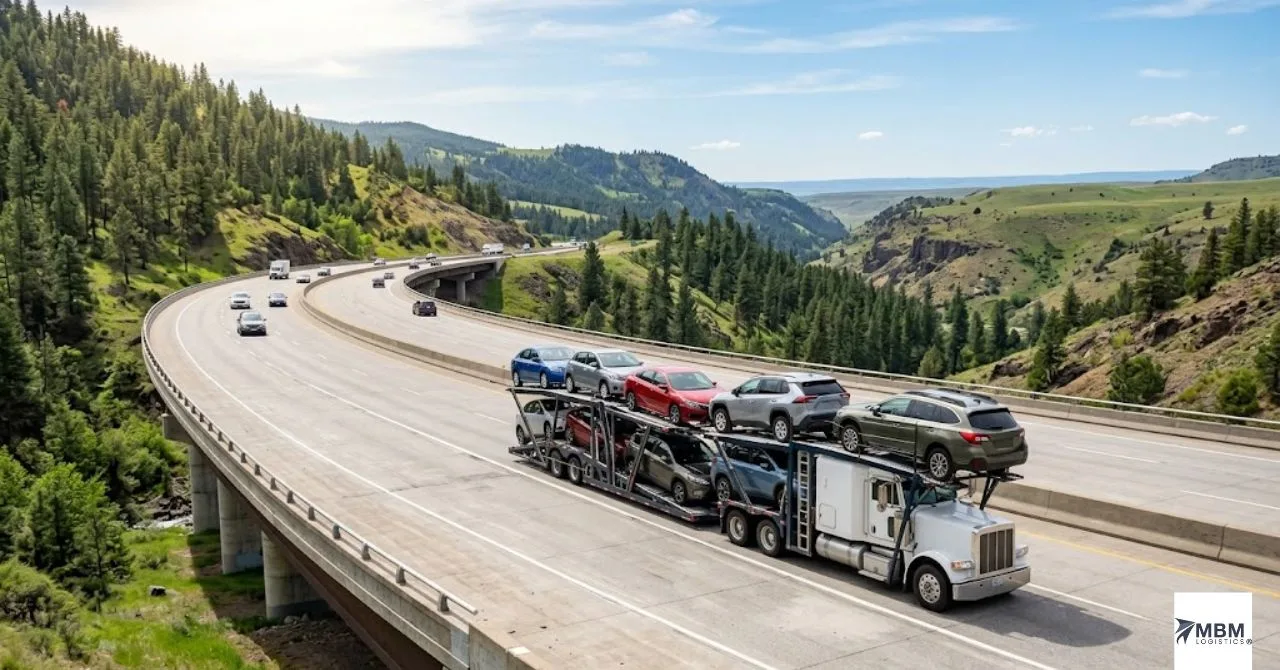
If you have seen an 80-foot, two-level trailer with cars on the interstate, that's an open carrier (an uncovered truck used to transport vehicles long distances). This is the backbone of the vehicle logistics industry. Nearly 80% of all domestic vehicle shipments use open carriers.
- Best For: Daily drivers, standard SUVs, minivans, fleet trucks.
- An open carrier is highly efficient. It is the most affordable car shipping option available. However, your car is exposed to road dust, rain, and debris during transit, just as it would be if you drove it yourself.
Enclosed Car Transport Services
For high-value vehicles needing special care, hard-sided enclosed car transport is an option. It offers a premium, fully protected alternative.
- Best For: Classic, exotic, luxury, and high-end electric cars.
- Your vehicle travels sealed inside a weatherproof trailer, protecting it from rock chips, rain, snow, and dust. This method costs about 30% to 50% more than an open trailer and is ideal for low-clearance vehicles that might scrape on a standard open ramp.
The Ultimate Convenience: Door-to-Door Car Transport
You do not have to waste your day driving to a shipping terminal or busy rail yard. Avoid the hassle of dropping off or retrieving your vehicle in chaotic locations.
When you use door-to-door car transport, the truck driver will pick up and deliver your vehicle at specified addresses, meaning the exact residential or business locations you provide.
A large, fully loaded car hauler cannot legally or physically navigate narrow residential streets. Tight city streets or low-hanging branches block access. If your street has restrictions, the driver will coordinate a nearby drop-off point. Wide locations like supermarket parking lots are ideal for safe loading or unloading.
Crushed for Time? Use Expedited Shipping
A standard interstate transport takes from a few days to over a week. Timing depends on total route mileage. A sudden job relocation or a car bought online might require faster delivery. In such cases, standard timelines will not work.
Expedited vehicle transport puts your car on a priority manifest. This premium service guarantees a fast pickup window. Often, two alternating drivers are involved. One driver sleeps while the other keeps driving, cutting standard transit times in half.
The Consumer Protection Checklist: Spotting Auto Scams
Handing your keys over to a transport company requires explicit trust. The Federal Motor Carrier Safety Administration (FMCSA) warns consumers about fraudulent brokers. Before signing a contract or paying a deposit, protect your investment. Validate these three requirements first.
- Verify the USDOT Number. Every legitimate interstate car hauler must register with the federal government. Ask for the company’s USDOT (U.S. Department of Transportation) or MC (Motor Carrier) number. Check that their operating status is “ACTIVE” on the public FMCSA SAFER (Federal Motor Carrier Safety Administration’s Safety and Fitness Electronic Records) database.
- Confirm active cargo insurance. Never give your keys to a driver who is not fully licensed and insured. Request a Certificate of Insurance (COI). Check that their cargo limit covers your car’s value.
- Audit the Bill of Lading (BOL). When the driver arrives, they will inspect your car and document any scratches or chips using the Bill of Lading, which is a shipping form used to record your vehicle’s condition and acts as a receipt. Walk around the car with the driver and take your own time-stamped, high-resolution photos of all sides. Sign off only when the report is accurate. This document is your main legal protection if any transit damage occurs.
Real Breakdown: Interstate Car Shipping Cost
On average, shipping a car costs $0.50 to $1.50 per mile. Shorter distances have a higher per-mile rate but a lower total bill. Cross-country routes offer a lower per-mile rate but result in a higher total cost.
Your exact car shipping quote is dynamic and dictated by three primary factors:
- Vehicle Size and Weight: Moving heavy trucks and large SUVs costs more than moving a compact sedan. They take up more of the trailer's legal weight capacity.
- Vehicle Condition: If your car does not roll, steer, or start, the carrier will use a winch to load it. This adds a mechanical handling fee of $150 to $300.
- Seasonal Demand: Prices change based on seasonal traffic. For example, during the autumn 'Snowbird' rush, many people ship cars to southern states for the winter.
Can I Leave Personal Items Inside My Car?
It is strongly recommended to remove all personal belongings. Federal weight regulations subject carriers to fines if they transport household goods in vehicles. Carrier insurance does not cover personal items left inside if they are lost or damaged during transit.