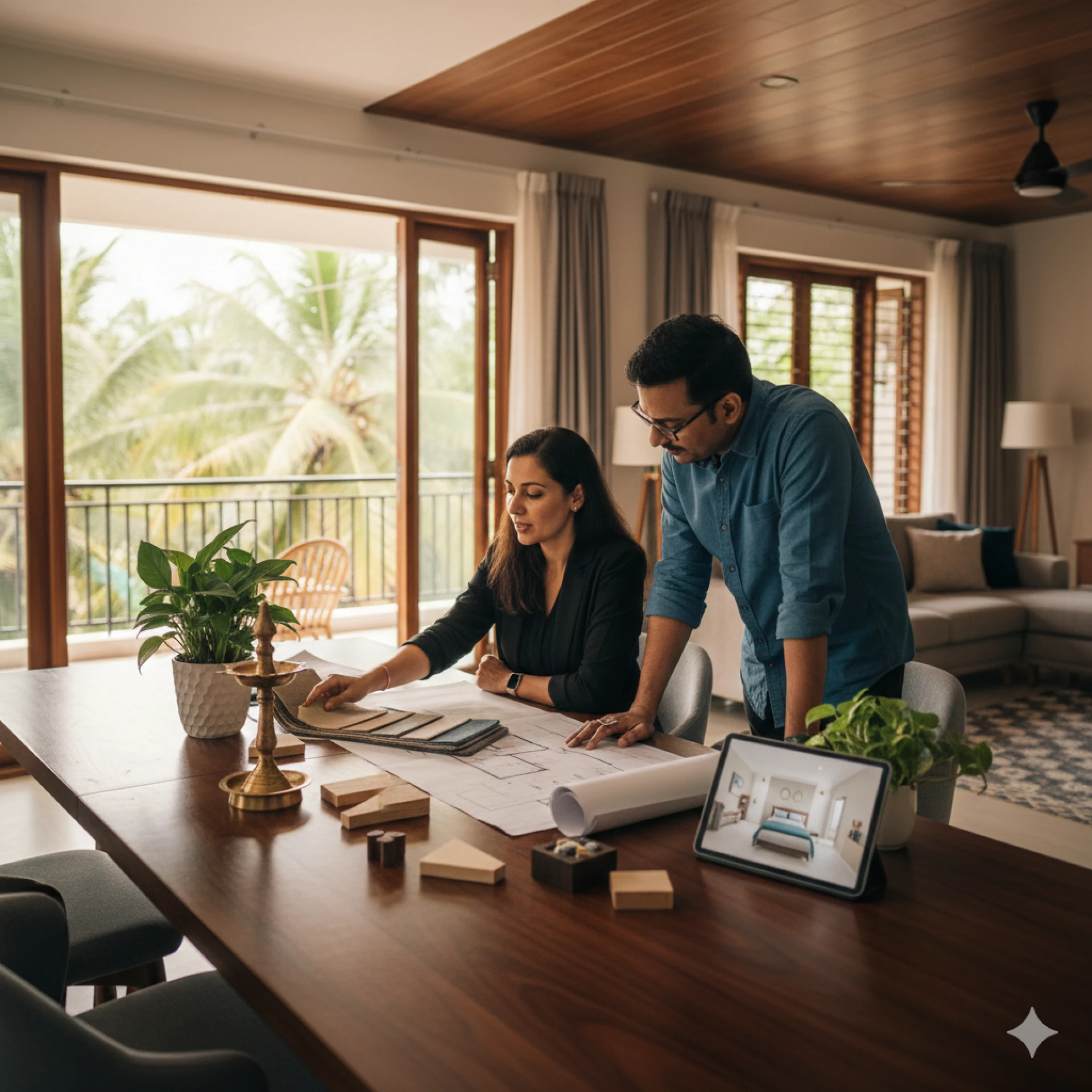
Designing a home is rarely about appearances alone. For most homeowners, it’s a series of decisions tied closely to everyday life—how a space feels in the morning, how it functions during busy evenings, and how it holds up over the years. When you work with a professional interior design team, the experience is less about picking colours and more about shaping a home that supports your lifestyle.
In Kerala especially, homes come with their own set of considerations. Climate, cultural habits, family structures, and even daily routines influence how a space should be planned. Understanding what services are included when you hire a design firm helps set the right expectations and allows homeowners to engage more confidently in the process.
Here’s a closer look at what typically goes on behind the scenes.
Understanding the Home and the People Who Live in It
Every project begins with conversation.
Before a single drawing is made, designers spend time understanding how the home will be used. This includes learning about family members, work-from-home needs, storage habits, privacy requirements, and future plans. In Kerala homes, this stage often involves thoughtful discussions around traditional spaces, guest hospitality, and the balance between openness and privacy.
This early understanding becomes the foundation for every design decision that follows.
Space Planning That Prioritises Comfort and Flow
Once the requirements are clear, attention shifts to space planning. This is where layouts are studied, refined, and reimagined to make better use of available square footage.
Designers look at:
- How people move through the home
- Which areas need openness and which need separation
- How furniture fits without crowding the space
For many homeowners, this stage is an eye-opener. Rooms begin to feel more intentional, and previously overlooked areas gain new purpose.
Design Concepts and Visual Direction
With a solid layout in place, designers develop a visual direction for the home. This is often shared through mood boards, material samples, and digital visuals that help homeowners understand how everything comes together.
Rather than pushing trends, experienced designers focus on creating interiors that feel relevant for years. Colour palettes, textures, and finishes are chosen to suit both personal taste and the practical realities of daily living.
This stage allows homeowners to explore ideas, ask questions, and make changes before execution begins.
Thoughtful Material and Finish Selection
Kerala’s climate plays a major role in interior decisions. High humidity, seasonal rainfall, and coastal air in certain regions require materials that are both durable and easy to maintain.
Designers guide homeowners through choices related to:
- Flooring options that handle moisture well
- Finishes that don’t age poorly in humid conditions
- Materials that balance aesthetics with longevity
This guidance helps avoid common issues such as warping, peeling, or premature wear.
Custom and Modular Furniture Solutions
Most homes include a combination of modular elements and custom-built furniture. From kitchens and wardrobes to storage units and entertainment consoles, designers ensure these pieces are tailored to the space rather than forced into it.
Good design here is subtle—it maximises storage, improves usability, and blends seamlessly with the overall aesthetic of the home.
Lighting, Electrical, and Ceiling Planning
Lighting often determines how a home feels more than any single design element.
Interior designers plan lighting layers that support different moods and activities, while also coordinating electrical layouts and ceiling designs. In Kerala homes, where natural light is abundant, the focus is often on enhancing daylight while creating warm, comfortable lighting for evenings.
Careful planning at this stage prevents cluttered wiring, poor illumination, and awkward switch placements later on.
On-Site Coordination and Execution Support
One of the most valuable services designers provide is coordination.
Rather than homeowners managing multiple vendors, the design team oversees communication between carpenters, electricians, painters, and other trades. This reduces confusion, keeps timelines realistic, and ensures that the design vision is carried through accurately.
Regular site visits and quality checks help maintain consistency between plans and execution.
Final Styling and Finishing Touches
As the project nears completion, attention turns to details that bring warmth to the space. Curtains, upholstery, accessories, and lighting fixtures are selected to complement the design rather than overwhelm it.
These finishing touches transform a house into a home—one that feels personal and lived-in, not staged.
Support Beyond Handover
Good design firms continue to support homeowners even after the project is completed. Minor adjustments, guidance on maintenance, and assistance with future updates are often part of the relationship.
This ongoing involvement reflects a commitment to the long-term satisfaction of the homeowner.
Why This Approach Matters
A home designed with care doesn’t just look better—it functions better. Clear planning, thoughtful material choices, and coordinated execution reduce stress and help avoid costly mistakes.
Working with a professional interior design company in Kerala ensures that the design process is not fragmented, but cohesive—where ideas, execution, and everyday living align naturally.
Final Thoughts
Interior design is not about following trends or creating showpieces. It’s about shaping spaces that support real lives, real families, and real routines. Understanding what services are included allows homeowners to approach the journey with clarity, confidence, and realistic expectations—making the experience as rewarding as the result itself.