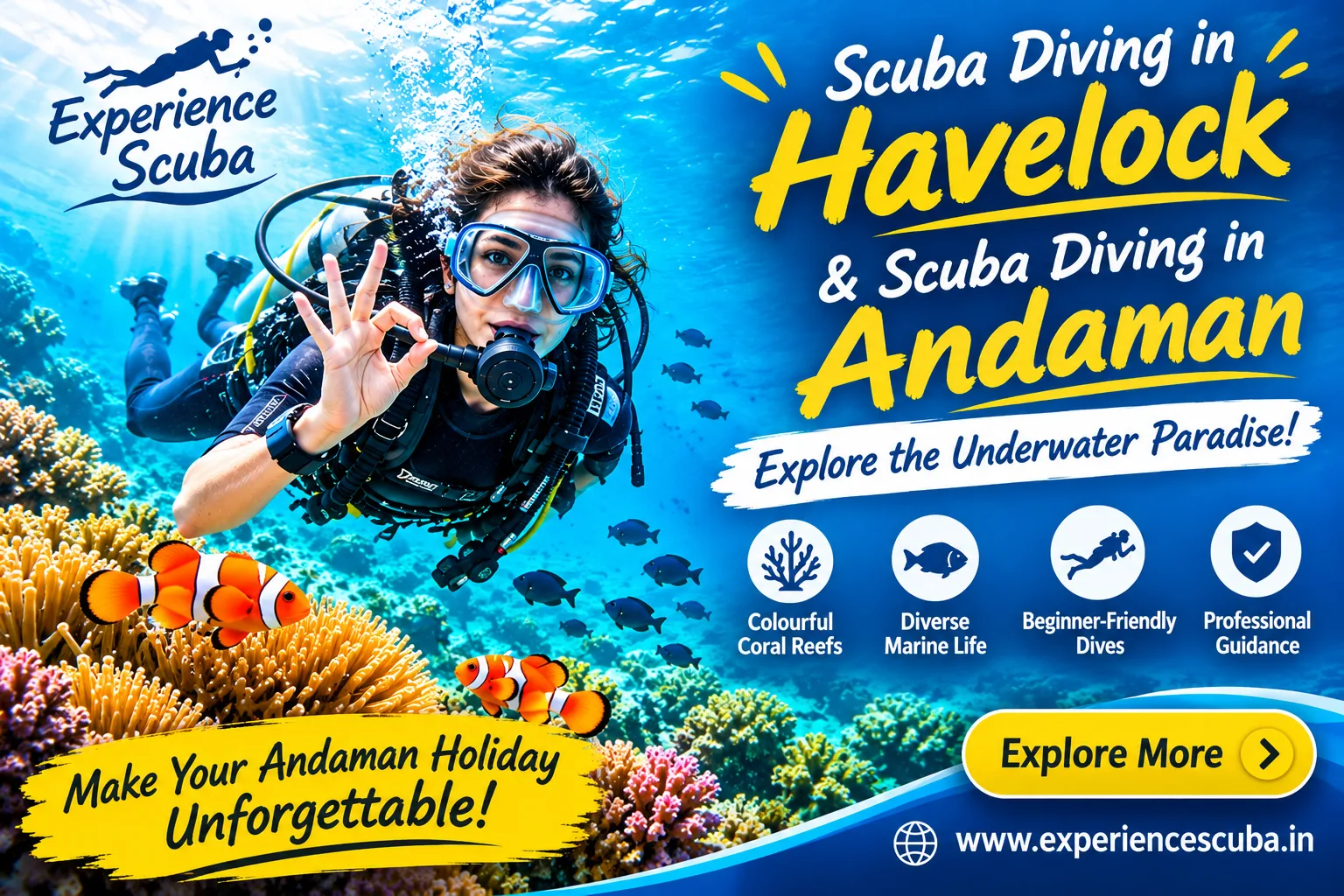
A beautiful underwater photograph can inspire someone to book a scuba dive. But it rarely explains what happens before entering the water, how beginners learn essential skills or why the right diving program matters more than the depth advertised.
These are important questions for travellers visiting the Andaman Islands, especially those experiencing scuba diving for the first time.
Havelock Island, officially known as Swaraj Dweep, offers access to coral reef environments, beginner-oriented diving experiences and boat-accessible dive sites.
Understanding how these experiences differ can help visitors make informed decisions and enjoy their underwater adventure.
Why Havelock Island Is a Popular Scuba Diving Destination
Havelock Island is one of the established recreational diving destinations in the Andaman and Nicobar Islands.
Its surrounding waters contain tropical reef ecosystems, coral formations and different underwater environments.
Some dive sites are accessible directly from the shore, while others require a boat journey.
This variety allows travellers to choose experiences according to their qualifications, interests and comfort levels.
For visitors planning scuba diving in Andaman, Experience Scuba provides information about shore diving at Nemo Reef, guided boat diving experiences and professional PADI training programs.
However, selecting the right experience requires more than choosing a destination.
The diving program should match the participant's abilities, medical suitability and environmental conditions.
What Beginners Should Understand Before Booking
Many first-time visitors focus on three things: price, underwater duration and maximum depth.
Although these factors are useful when comparing packages, they do not provide a complete picture.
A suitable introductory experience should explain how participants prepare, what skills they need to demonstrate and how professional supervision works.
Before booking, ask whether the program requires previous certification, swimming skills or particular medical clearances.
Also confirm the complete duration of the activity, including training and transportation.
A carefully organised beginner program can offer a rewarding experience without requiring participants to reach considerable depths.
Shore Diving at Nemo Reef: A Gradual Introduction
Nemo Reef is a recognised shore-entry diving location on Havelock Island.
Unlike boat diving, shore diving allows participants to enter the water directly from a suitable beach.
For eligible first-time divers, this provides an opportunity to become familiar with scuba equipment before exploring the underwater environment.
Participants typically receive instructions about breathing through a regulator, communicating underwater and following essential safety procedures.
The diving professional assesses whether the participant has demonstrated the required skills before proceeding.
Nemo Reef's underwater environment provides opportunities to observe reef fish and coral formations.
Even a relatively shallow dive can introduce beginners to fascinating marine ecosystems.
How Boat Diving Offers a Different Experience
Havelock Island also has boat-accessible dive locations, including Tribe Gate and Lighthouse.
Boat diving involves travelling to a selected site before entering the water.
Depending on the program, participants may explore different coral formations, reef habitats and underwater landscapes.
Certain introductory boat diving programs accommodate eligible beginners, while others require recognised scuba certification.
Not every location is suitable on every day.
The diving team must consider currents, visibility, weather and participant readiness.
When comparing shore and boat diving, the most important question is whether the experience suits your training and qualifications.
Can Non-Swimmers Experience Scuba Diving?
Some introductory diving programs accept eligible participants who do not know how to swim.
However, participation depends on the specific activity, medical eligibility and comfort in the water.
Introductory scuba diving is different from becoming a certified recreational diver.
Participants receive professional instruction and supervision, but they must still demonstrate the required skills and follow safety procedures.
According to PADI's Discover Scuba Diving guidance, introductory participants should be comfortable in the water and capable of maintaining themselves at the surface.
A full PADI Open Water Diver certification course involves additional training and swimming-related requirements.
If you are a non-swimmer, explain your ability and concerns to the diving centre before selecting a package.
What Happens During the First Scuba Diving Session?
A beginner's underwater experience generally follows several stages.
Medical Screening and Registration
Participants complete the required medical questionnaire and receive information about the selected activity.
Certain medical conditions may require additional evaluation or medical clearance.
Equipment Introduction
The diving professional explains essential equipment, including the mask, regulator, breathing cylinder, fins and buoyancy control device.
Participants learn how the equipment works and how to communicate underwater.
Practical Safety Training
Beginners practise required skills in an appropriate environment.
These may include breathing techniques, basic regulator procedures, mask skills and underwater communication.
Supervised Underwater Exploration
Once participants demonstrate the necessary skills and the diving professional considers them ready, the supervised dive can begin.
The emphasis is on maintaining comfort, following instructions and observing the surrounding environment.
Participants should immediately communicate any discomfort.
There is no need to continue an activity if they are unable to complete the required preparation safely.
What Makes Havelock's Underwater Environment Interesting?
Scuba diving provides opportunities to observe marine life in its natural habitat.
The reef ecosystems around Havelock Island support different tropical fish and marine organisms.
Depending on the location and environmental conditions, divers may encounter clownfish, butterflyfish, angelfish, parrotfish and schools of smaller reef fish.
Coral formations also contribute to the diversity of underwater habitats.
However, every dive is different.
Marine life sightings depend on currents, visibility, weather and natural animal behaviour.
Responsible divers should avoid touching coral, feeding marine creatures or collecting underwater objects.
Learning to observe these environments without disturbing them is an important part of becoming a responsible underwater explorer.
Choosing a Diving Centre That Matches Your Needs
Professional guidance is one of the most important considerations when booking a diving experience.
A reliable centre should explain the selected activity, eligibility requirements, safety preparation and equipment arrangements.
Before booking, confirm whether transportation, underwater photography and other services are included.
Also ask about cancellation procedures when weather conditions are unsuitable.
Experience Scuba is a PADI dive centre based at Vijaynagar Beach No. 5 on Havelock Island.
Travellers considering scuba diving in Havelock can explore its introductory shore diving, guided boat diving and scuba certification programs before selecting an experience.
Rather than choosing an activity based only on promotional photographs or advertised depth, compare the programs according to your experience and comfort level.
Planning Your Dive Around Your Andaman Holiday
Scuba diving requires appropriate planning, particularly when your itinerary includes ferries, sightseeing and flights.
October to May is generally a favourable period for many diving activities around the Andaman Islands.
However, sea conditions and visibility vary throughout the year.
Allow sufficient time for registration, preparation, training and transportation.
It is also important to consider flying-after-diving precautions.
According to Divers Alert Network, the recommended minimum preflight interval is 12 hours following a single no-decompression dive and 18 hours following multiple dives or multiple days of diving. Longer intervals may be necessary.
These minimum intervals do not guarantee safety, so follow professional guidance appropriate to your dive.
Frequently Asked Questions
Is scuba diving in Andaman suitable for first-time visitors?
Yes. Introductory scuba diving programs are available for eligible beginners without previous diving certification.
Why is Havelock Island popular for scuba diving?
Havelock Island offers established diving facilities, shore-entry locations and boat-accessible reef environments suitable for different diving experiences.
Which diving site is popular among beginners?
Nemo Reef is a well-known shore-entry diving location used for introductory experiences.
Can someone who cannot swim try scuba diving?
Some supervised introductory programs accommodate eligible non-swimmers. Participation depends on medical requirements, water comfort and professional assessment.
Is scuba diving certification necessary for a first dive?
Certain introductory programs do not require previous certification. More advanced recreational diving activities generally require appropriate training and qualifications.
Can diving plans change because of weather?
Yes. Diving operators may modify, postpone or cancel activities when sea conditions are unsuitable.
Final Thoughts
Scuba diving offers a fascinating opportunity to discover the underwater beauty of the Andaman Islands.
From shore-entry experiences at Nemo Reef to boat-accessible reef environments, Havelock Island offers different ways to explore marine ecosystems.
However, the quality of an underwater experience depends on much more than the selected location.
Understanding the training requirements, choosing a suitable diving program and planning around environmental conditions are essential.
Whether you are considering your first introductory dive or exploring new locations as a certified diver, careful preparation and responsible underwater behaviour can make the experience more rewarding.
The best diving experience is one that matches your abilities and allows you to appreciate the ocean responsibly.