
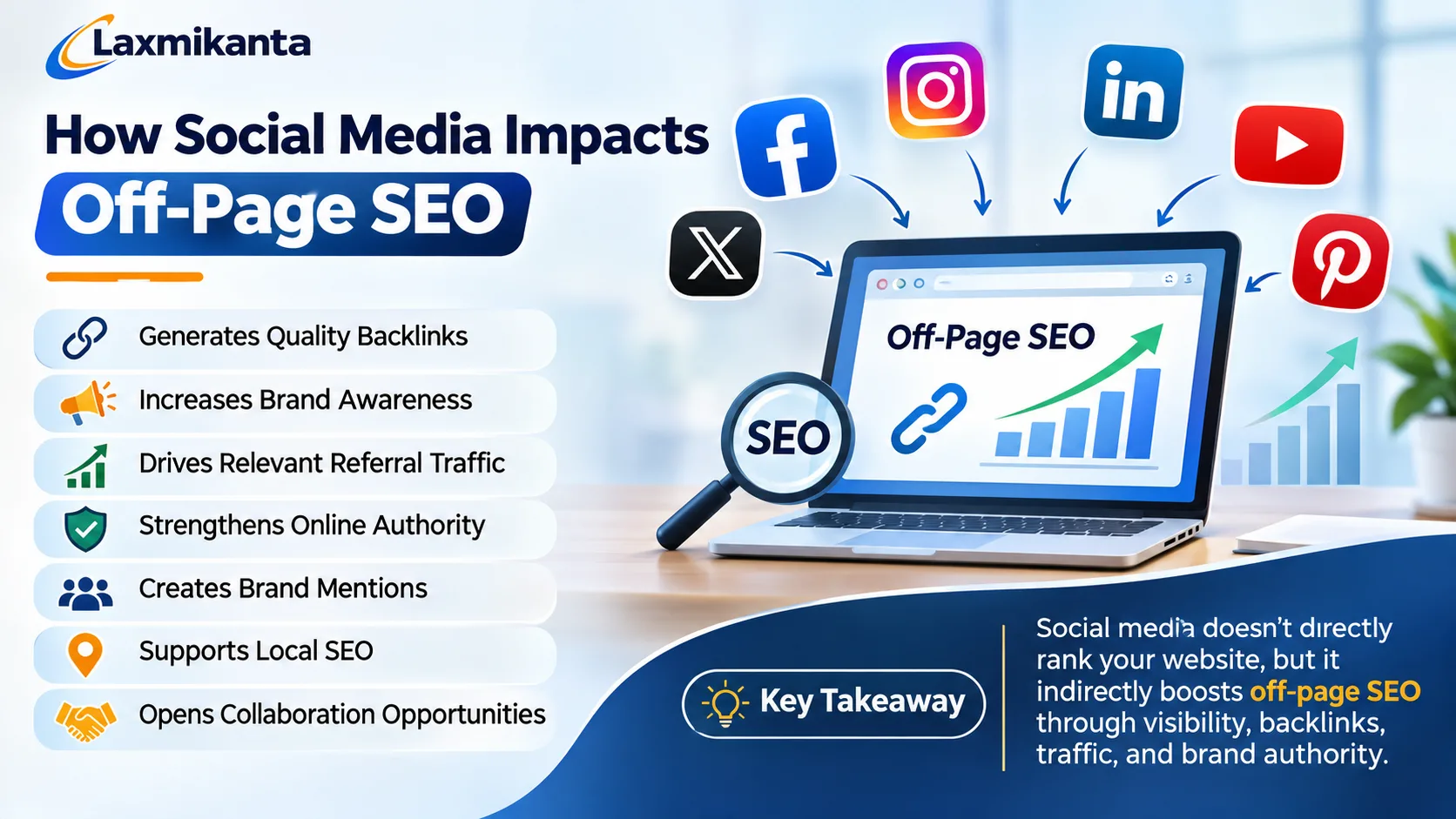
How Social Media Impacts Off-Page SEO
Search engine optimization is no longer limited to keyword research, website optimization, and traditional link-building activities. As digital platforms continue to evolve, social media has become an important part of building online visibility, brand credibility, and website authority.
Businesses that actively maintain their presence on Facebook, Instagram, LinkedIn, YouTube, Pinterest, and other social platforms have more opportunities to connect with potential customers and distribute valuable content.
Although social media engagement is not a confirmed direct Google ranking factor, it can indirectly support organic search performance. From generating quality backlinks to increasing branded searches, social media contributes to several important aspects of off-page SEO.
Understanding how social media impacts off-page SEO helps businesses develop a more comprehensive Freelancer SEO Expert that extends beyond traditional search engines.
What Is Off-Page SEO?
Off-page SEO refers to all the optimization activities performed outside a website to improve its credibility, authority, reputation, and visibility in search engine results.
Unlike on-page SEO, which focuses on website content, keywords, headings, and internal linking, off-page SEO focuses on developing a strong digital reputation across external platforms.
Some important off-page SEO activities include:
- Building high-quality backlinks from relevant websites.
- Promoting valuable content through social media.
- Generating brand mentions and online citations.
- Managing online reviews and business reputation.
- Collaborating with industry experts and content creators.
Social media supports these activities by creating additional opportunities for businesses to reach their target audience and establish industry authority.
Does Social Media Directly Affect SEO Rankings?
One of the most common questions among digital marketers is whether social media engagement directly influences Google rankings.
Likes, shares, comments, and follower counts are not confirmed direct Google ranking factors. A social media post receiving thousands of likes does not automatically improve the ranking of its associated website.
However, Google recognizes social media promotion as a way to increase content discovery. Its ranking systems also use link analysis alongside numerous other factors.
10 Ways Social Media Impacts Off-Page SEO
1. Increases Website Visibility
Social media allows businesses to introduce their website content to audiences who may not discover it through traditional search engines.
Whenever a business publishes a blog, case study, industry report, or service page, promoting it across relevant social platforms can increase its exposure.
For example, an SEO consultant sharing an informative article on LinkedIn may attract business owners, marketing professionals, and industry publications.
This additional exposure creates opportunities for content discovery, backlinks, and brand recognition.
2. Helps Generate High-Quality Backlinks
Backlinks remain an important component of off-page SEO. However, earning relevant and authoritative backlinks requires businesses to create content that other websites consider valuable.
Social media provides a distribution channel for such content.
When journalists, bloggers, researchers, and industry professionals discover useful information through social media, they may reference the original website in their articles.
Although social media links themselves may be treated differently from traditional editorial backlinks, the natural links generated through content exposure can contribute to SEO performance.
3. Improves Brand Awareness
Consistent social media activity helps businesses become more recognizable within their target market.
When users repeatedly encounter a brand through informative posts, educational videos, industry updates, and discussions, they become familiar with its products, services, and expertise.
This familiarity may encourage users to search for the brand directly on Google.
An increase in branded searches can indicate growing brand awareness and customer interest, although it does not automatically improve non-branded keyword rankings.
4. Drives Relevant Referral Traffic
Social media can become a valuable source of website traffic when businesses share relevant content with the right audience.
Unlike organic search traffic, referral and social traffic originates from external platforms rather than traditional search results.
For example, a digital marketing agency sharing an SEO checklist on LinkedIn can attract business owners interested in improving their websites.
Although referral traffic is not a confirmed direct ranking factor, it can increase content readership, lead generation, conversions, and opportunities to earn backlinks.
5. Strengthens Online Brand Authority
Building authority requires more than publishing optimized website content.
Businesses must demonstrate their expertise, experience, and credibility across multiple digital platforms.
Social media helps brands communicate their knowledge through educational content, professional insights, industry discussions, customer testimonials, and practical recommendations.
A consistent and credible presence can strengthen the reputation of a business while supporting the broader principles of experience, expertise, authoritativeness, and trustworthiness (E-E-A-T).
6. Increases Content Distribution and Discovery
Even a well-researched and professionally written article may struggle to reach its intended audience without effective promotion.
Social media helps businesses distribute their content beyond their existing website visitors.
A single blog post can be repurposed into an infographic, short video, LinkedIn article, carousel, or educational post.
This approach extends the lifespan of the original content and increases the opportunities for people to discover, reference, and share it.
7. Generates Brand Mentions
Brand mentions occur when individuals, businesses, publications, or online communities discuss a company, product, or professional.
These mentions may include a website link or simply reference the brand name.
Social media encourages conversations that can generate organic brand mentions across different platforms.
Although unlinked mentions should not be considered equivalent to backlinks, they can improve public awareness, strengthen brand reputation, and create opportunities for future editorial coverage.
8. Supports Local SEO Performance
Social media can be particularly useful for businesses targeting customers within a specific geographical area.
Local businesses can publish location-specific content, participate in community discussions, showcase customer experiences, and promote local events.
Maintaining consistent business information across social profiles and other digital platforms also helps customers identify and contact the business.
When combined with Google Business Profile optimization, genuine customer reviews, and relevant local citations, social media can support a comprehensive local marketing strategy.
9. Creates Influencer and Industry Collaboration Opportunities
Social media provides direct access to industry professionals, content creators, journalists, and potential business partners.
Building genuine relationships with relevant professionals can lead to interviews, guest articles, podcasts, collaborative content, and editorial references.
These activities can introduce businesses to new audiences while creating opportunities to earn relevant backlinks.
However, collaborations should focus on delivering genuine audience value rather than manipulating search engine rankings through artificial link-building practices.
10. Expands Visibility Beyond Traditional Search Engines
Modern consumers no longer rely exclusively on Google to discover information.
They also use YouTube, Instagram, LinkedIn, Pinterest, online communities, and AI-powered discovery platforms to research products, services, and solutions.
This shift makes Search Everywhere Optimization increasingly important.
Google has also introduced Search Console platform properties that help eligible creators understand how social and video content performs in Google Search and Discover.
How Different Social Media Platforms Support Off-Page SEO
Every social media platform serves a different audience and marketing purpose. Businesses should select platforms according to their industry, content format, and target customers.
| Social Media Platform | Primary SEO Benefit | Recommended Content |
| Community engagement and website traffic | Blogs, business updates and customer stories | |
| Brand awareness and visual discovery | Reels, carousels and infographics | |
| Professional authority and B2B visibility | Case studies, research and industry insights | |
| YouTube | Video search visibility | Tutorials, interviews and educational videos |
| Long-term visual content discovery | Infographics, guides and visual resources | |
| X (Twitter) | Industry networking and content exposure | News, expert opinions and discussions |
| Community awareness and audience insights | Helpful answers and authentic discussions |
Rather than maintaining an inactive presence on every platform, businesses should prioritize the channels where their potential customers are most active.
What Are Social Signals in SEO?
Social signals refer to measurable interactions that content receives across social media platforms. These include likes, comments, shares, saves, reposts, and other forms of engagement.
High engagement may indicate that a particular piece of content is relevant or interesting to its audience.
However, social signals should not be confused with direct Google ranking signals. Their primary SEO value comes from increasing content exposure, encouraging discussions, and creating opportunities for people to reference the original content.
Businesses should focus on attracting meaningful engagement instead of purchasing followers, likes, or artificial interactions.
Best Social Media Strategies to Improve Off-Page SEO
An effective social media SEO strategy requires consistency, audience understanding, and high-quality content.
The following practices can help businesses maximize the indirect SEO benefits of social media:
- Optimize social media profiles: Use relevant keywords, accurate business information, consistent branding, and appropriate website links.
- Create shareable content: Publish original research, practical guides, case studies, educational videos, and useful industry resources.
- Maintain a consistent publishing schedule: Share valuable information regularly without overwhelming your audience.
- Build industry relationships: Engage with relevant professionals, journalists, business owners, and content creators.
- Monitor content performance: Track website visits, brand mentions, earned backlinks, conversions, and audience engagement.
Social media should complement technical SEO, on-page optimization, content marketing, and ethical link-building rather than replace them.