
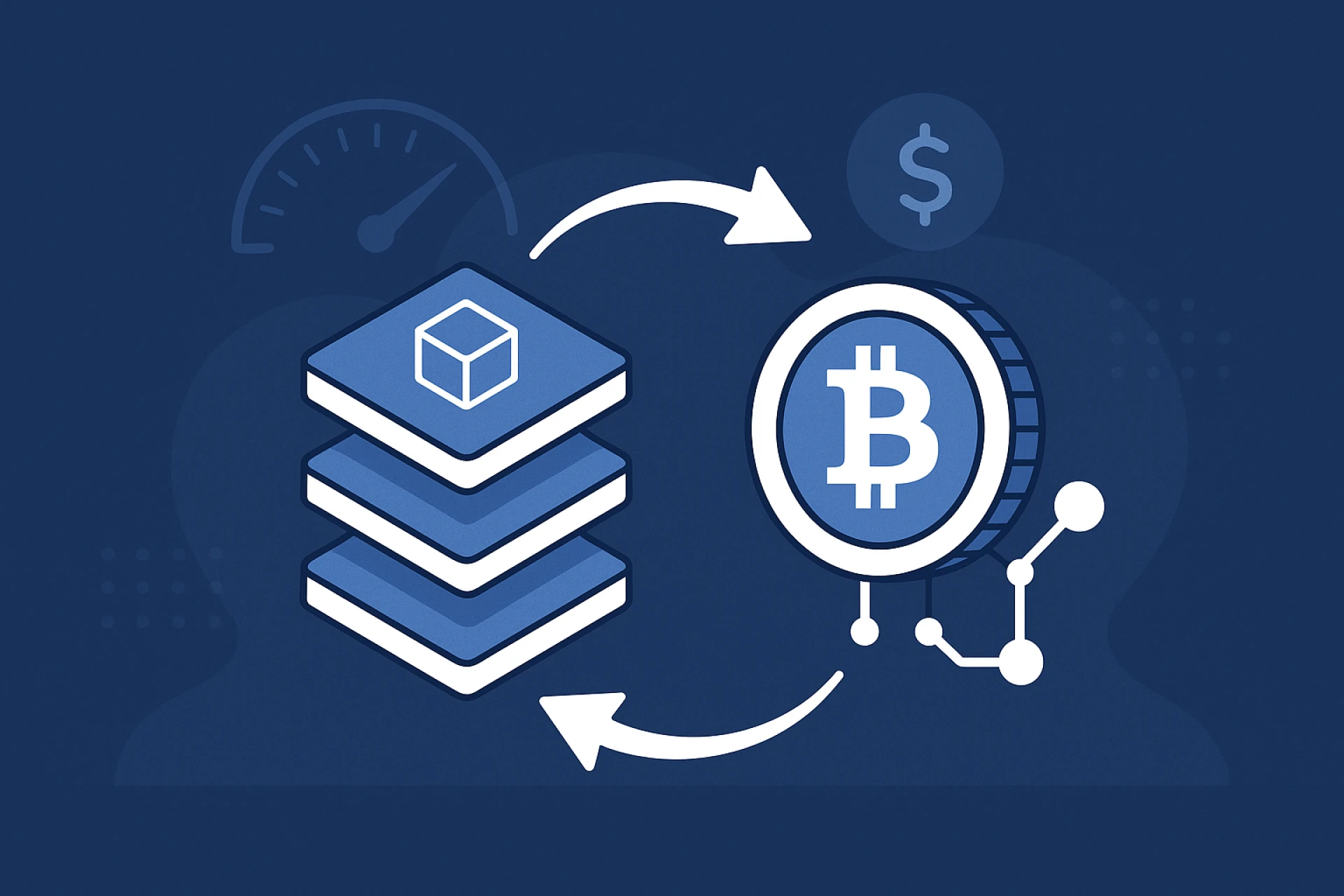
The evolution of blockchain technology has reached a critical juncture where scalability and efficiency are becoming essential for mass adoption. While layer 1 blockchains provide the foundation of decentralization and security, they often face challenges in transaction throughput and network congestion, limiting their ability to support complex decentralized applications at scale. Layer 2 networks have emerged as a pivotal solution, offering mechanisms to increase transaction capacity, reduce costs, and enhance user experience without compromising security. By building on existing blockchains, these solutions maintain the integrity of the base layer while providing new possibilities for developers, enterprises, and end-users to leverage blockchain in more practical and impactful ways. Layer 2 blockchain development is now at the forefront of innovation, driving a more scalable and accessible decentralized ecosystem.
Understanding Layer 2 Networks
Layer 2 networks are secondary frameworks built on top of existing blockchains that aim to resolve the scalability and efficiency challenges faced by layer 1 networks. They operate by processing transactions off-chain, which reduces congestion on the main network while still benefiting from the underlying security of the blockchain. These networks act as a bridge between scalability and decentralization, enabling a more practical implementation of decentralized applications for real-world use. Layer 2 blockchain development has become critical for creating systems that handle high transaction volumes efficiently, making blockchain technology accessible and functional for developers, businesses, and end-users alike.
- Off-Chain Processing: Conducting transactions outside the main blockchain reduces computational load, allowing higher throughput and lower fees without sacrificing decentralization.
- Security Preservation: Transactions are ultimately verified on the main chain, ensuring that the core principles of blockchain security remain intact.
- Improved Transaction Speed: Layer 2 networks dramatically increase transaction speed, making blockchain applications more practical for real-world use.
- Resource Efficiency: Moving processing off-chain reduces energy consumption and network strain, contributing to a more sustainable ecosystem.
Key Types of Layer 2 Solutions
Layer 2 networks utilize various technological frameworks to enhance blockchain functionality. Each type of solution is designed to address specific challenges, from transaction speed to cost efficiency, and offers unique approaches to scaling. By understanding these distinctions, developers and businesses can choose the most appropriate model for their application needs. Solutions like state channels, rollups, sidechains, and plasma chains all bring different trade-offs in terms of speed, security, and decentralization. Integrating these solutions effectively is at the heart of modern layer 2 blockchain development, enabling networks to support complex applications while maintaining reliability and user trust.
- State Channels: Enable multiple off-chain transactions with only the final state committed to the main blockchain, reducing fees and latency.
- Rollups: Bundle multiple transactions into a single proof for submission to the main chain. Optimistic rollups assume validity, while zero-knowledge rollups use cryptographic proofs.
- Sidechains: Independent chains running alongside the main blockchain facilitate fast cross-chain transactions while syncing periodically with the base layer.
- Plasma Chains: Smaller chains anchored to the main network execute complex transactions off-chain and periodically commit snapshots to maintain security.
Benefits of Layer 2 Blockchain Development
Layer 2 blockchain development introduces multiple advantages that directly improve the usability and adoption of blockchain networks. By enabling off-chain transaction processing, it enhances scalability, reduces costs, and improves user experience, all without compromising security. Developers gain the flexibility to design applications that require high throughput, while businesses and end-users benefit from faster and more economical interactions. The reduced network congestion and enhanced efficiency offered by layer 2 solutions position blockchain as a viable technology for enterprise-level applications, decentralized finance, and large-scale decentralized networks, demonstrating its potential beyond niche projects.
- Enhanced Scalability: Moving transactions off-chain significantly increases the network’s capacity, supporting large-scale decentralized applications.
- Lower Transaction Costs: Reduced on-chain congestion translates into lower fees, making blockchain interactions more accessible.
- Seamless User Experience: Faster transaction processing results in smoother interactions, enhancing engagement for end-users.
- Developer Flexibility: Developers can design high-throughput applications without compromising blockchain security.
Transaction Speed and Efficiency
Transaction speed is a critical aspect of any blockchain network, especially for applications requiring real-time interaction. Layer 2 networks optimize this by handling most computations off-chain while settling final results on the main chain. This approach drastically reduces confirmation times, enabling near-instant transactions even during periods of high network activity. Faster transaction speed not only improves the end-user experience but also allows decentralized applications to operate on a scale comparable to traditional centralized systems. Layer 2 blockchain development focuses on optimizing throughput without undermining security, ensuring efficiency and reliability for developers and users alike.
- Batch Processing: By grouping multiple transactions together, layer 2 networks reduce the time required to settle each transaction individually.
- Instant Finality: Some layer 2 networks allow transactions to be considered final almost immediately, improving usability for decentralized applications.
- Reduced Network Congestion: Off-chain processing alleviates stress on the main blockchain, preventing delays and high fees during peak periods.
- Optimized Resource Usage: Faster transactions require less computational energy, making the network more efficient overall.
Cost Reduction in Blockchain Operations
Reducing operational costs is one of the most significant advantages of layer 2 networks. By processing transactions off-chain, they dramatically lower fees associated with blockchain activity, making participation more accessible for users and developers. This reduction enables practical microtransactions and supports applications that require frequent interactions, such as gaming, finance, and content distribution. For businesses, cost efficiency opens the door to scalable blockchain adoption without prohibitive overhead. Layer 2 blockchain development plays a crucial role in maintaining this balance, ensuring that networks remain both economically viable and capable of supporting large-scale decentralized applications.
- Lower Gas Fees: By performing transactions off-chain, layer 2 networks reduce fees associated with base-layer operations.
- Scalable Microtransactions: Low transaction costs enable practical use of microtransactions in gaming, content, and financial applications.
- Efficient Resource Allocation: Developers can deploy more complex applications without incurring prohibitive costs.
- Economic Incentives for Users: Reduced transaction fees encourage broader participation in decentralized applications.
Real-World Applications
The implementation of layer 2 networks has extended blockchain’s practical usability across multiple industries. From decentralized finance to gaming and enterprise solutions, these networks enable faster, cost-effective, and scalable interactions. Layer 2 technology allows for innovative models like instant payments, low-cost NFT transactions, and real-time in-game economies. Enterprises also benefit from secure, transparent, and auditable blockchain applications without being burdened by high transaction fees or network delays. Layer 2 blockchain development is, therefore, instrumental in transforming blockchain from a theoretical concept into functional, widely adopted solutions across diverse sectors.
- Decentralized Finance (DeFi): High-speed, low-cost transactions enable efficient trading, lending, and liquidity provision.
- Non-Fungible Tokens (NFTs): Faster transaction times and lower minting costs allow creators to reach larger audiences while maintaining blockchain security.
- Gaming: Layer 2 networks support in-game economies with instant transactions, improving player experience and engagement.
- Enterprise Solutions: Businesses can implement supply chain tracking, secure payments, and identity verification while maintaining transparency and auditability.
Developer Opportunities with Layer 2 Blockchain Development
Developers are at the forefront of leveraging layer 2 networks to build scalable, high-performance applications. The flexibility provided by these solutions allows experimentation with new protocols, integration of cross-chain functionality, and development of applications that require high transaction throughput. Layer 2 solutions create opportunities to enhance user engagement, optimize network efficiency, and deploy innovative applications with lower operational costs. By enabling developers to overcome the limitations of base-layer blockchains, layer 2 blockchain development opens the door to a new era of decentralized solutions that are both functional and accessible on a global scale.
- Flexible Application Design: Developers can focus on building high-performance applications without worrying about base-layer bottlenecks.
- Improved Experimentation: Low transaction costs and faster speeds allow developers to test new ideas efficiently.
- Cross-Chain Integration: Developers can design applications that interact with multiple chains for enhanced functionality.
- Community Engagement: By leveraging layer 2 networks, developers can provide users with more interactive and rewarding experiences.
Security and Reliability Considerations
Ensuring security and reliability is a central concern in layer 2 blockchain development. Although transactions are processed off-chain, they are ultimately anchored to the main blockchain, maintaining transparency and immutability. Advanced cryptographic techniques and validation protocols prevent fraudulent activities and secure user assets. Continuous monitoring and redundancy mechanisms provide additional reliability, ensuring that networks operate smoothly even under high demand. Security considerations are not just technical requirements; they also build user trust and confidence, which is crucial for widespread adoption of decentralized applications supported by layer 2 solutions.
- Anchored Security: Transactions are periodically committed to the main chain to ensure transparency and immutability.
- Fraud Prevention: Cryptographic proofs and validation mechanisms reduce the risk of malicious activity.
- Network Monitoring: Continuous monitoring of layer 2 solutions ensures reliability and trustworthiness.
- Redundancy Measures: Multiple fail-safes are implemented to protect user assets and maintain network stability.
Conclusion
Layer 2 networks represent a transformative shift in blockchain technology, providing practical solutions to scalability challenges that limit the potential of decentralized systems. By improving transaction speed, reducing costs, and offering developers enhanced flexibility, layer 2 blockchain development is unlocking opportunities across finance, gaming, enterprise, and beyond. As adoption increases, these networks are essential for building a more accessible, scalable, and secure decentralized future.