You remember the early days clearly. A few vehicles, a small team, and deliveries that felt manageable. Every order had your attention, every route made sense, and customers were happy. Growth felt exciting, until it didn’t.
As your delivery business scales, complexity grows faster than revenue. Orders multiply, delivery windows tighten, fuel costs rise, and customers expect real-time updates at every step. Suddenly, what once worked effortlessly now feels chaotic. You find yourself reacting instead of planning, handling delays, missed routes, driver issues, and unhappy customers. Scaling no longer feels like progress; it feels like pressure.
This is the reality many growing delivery businesses face today. Expansion exposes the cracks in operations, especially when technology doesn’t evolve alongside growth. To scale sustainably, you need more than more vehicles, you need smarter systems that can keep up with your ambition.
Why Traditional Fleet Operations Fail at Scale
At a small scale, manual fleet management feels sufficient. You can track vehicles by phone calls, manage routes on spreadsheets, and rely on driver experience. But as your fleet grows, these methods start to break down.
You struggle with limited visibility. Without real-time tracking, you don’t know where your vehicles are or why deliveries are delayed. Dispatching becomes reactive, not strategic. Routes aren’t optimized, leading to higher fuel consumption and longer delivery times. Maintenance issues appear unexpectedly, causing breakdowns that disrupt schedules.
Communication gaps widen between dispatchers, drivers, and customers. A single delay can trigger a chain reaction, missed delivery windows, increased costs, and frustrated clients. Most importantly, you lack reliable data. Without insights into performance, fuel usage, or driver behavior, decision-making becomes guesswork.
Traditional fleet operations simply weren’t built to handle the speed, scale, and expectations of modern delivery ecosystems, especially in last-mile delivery environments where precision matters most.
The Role of Fleet Management Software Development in Business Growth
This is where Fleet Management Software Development changes the story for you.
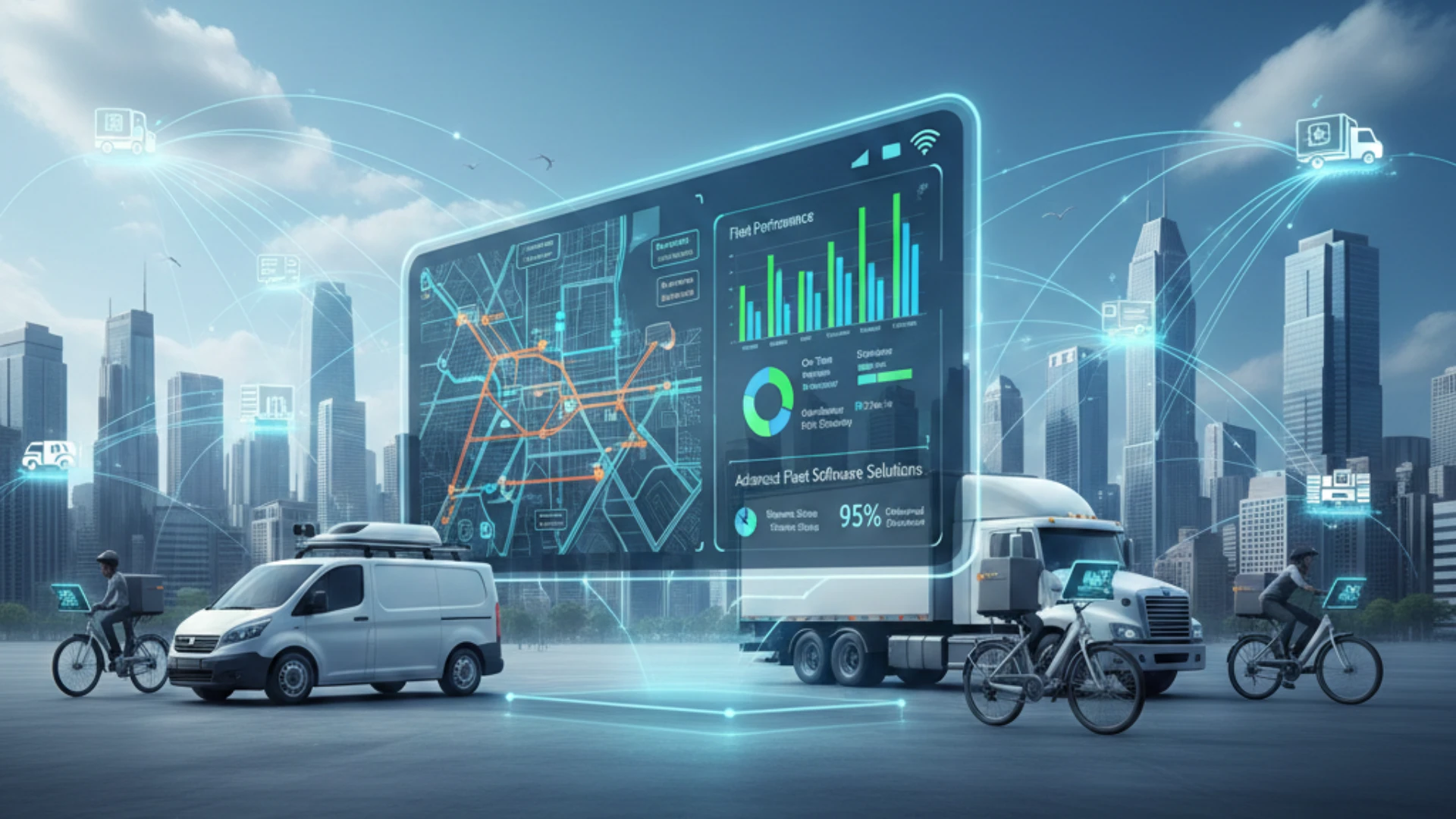
Instead of juggling disconnected tools and manual processes, you gain a centralized system that gives you complete control over your fleet. Real-time tracking lets you monitor vehicles instantly. Intelligent route optimization helps you reduce delivery times and fuel costs.
Automated dispatching ensures the right driver is assigned to the right job every time.
With advanced analytics, you finally see what’s happening behind the scenes. You can identify inefficiencies, predict maintenance needs, and measure driver performance. This data-driven approach allows you to scale confidently without losing operational efficiency.
Most importantly, when combined with smart Last-Mile Delivery Solutions, fleet software helps you meet rising customer expectations. Faster deliveries, live tracking, accurate ETAs, and smoother communication turn logistics into a competitive advantage, not a bottleneck.
Optimizing Last-Mile Delivery Solutions for Competitive Advantage
When your delivery network grows, the last mile becomes your biggest battlefield. You’re no longer competing on price alone, you’re competing on speed, visibility, and reliability. Optimized Last-Mile Delivery Solutions allow you to dynamically assign routes, avoid traffic bottlenecks, and keep customers informed in real time. Instead of reacting to delays, you anticipate them.
Every optimized route saves fuel, reduces idle time, and improves delivery accuracy. More importantly, your customers feel confident because they know exactly when their order will arrive, and that trust keeps them coming back.
Key Features of Advanced Fleet Software That Enable Scaling
Scaling your fleet without the right tools is like driving blind. Advanced Fleet Management Software Development gives you full operational visibility. Real-time GPS tracking lets you monitor vehicle movement instantly. Automated dispatching reduces human error and speeds up decision-making. Predictive maintenance alerts help prevent unexpected breakdowns that could disrupt your schedule. Performance dashboards transform raw data into actionable insights, allowing you to continuously refine routes and driver efficiency. These features don’t just support growth, they create a system where expansion feels controlled, predictable, and efficient.
Business Benefits of Smart Fleet and Last-Mile Solutions
When your fleet operates intelligently, the impact reaches every part of your business. You reduce operational costs through better fuel management and optimized routing. Delivery cycles become faster and more consistent, boosting customer satisfaction. Drivers experience less stress because their routes are clear and automated. Meanwhile, you gain strategic insight into performance metrics that guide smarter expansion decisions. Instead of scaling through trial and error, you scale with confidence, knowing your infrastructure can support demand.
Implementation Strategy: Scaling Without Disruption
You’re staring at your delivery dashboard late in the evening, watching orders pile up faster than your fleet can handle. Drivers are calling in for updated routes, customers are asking for delivery ETAs, and your team is juggling spreadsheets to keep things moving. Growth is happening, but it feels chaotic. That’s the moment you realize scaling isn’t just about adding more vehicles. It’s about adding intelligence.
Scaling your delivery business without disruption starts with clarity. Instead of overhauling everything overnight, you begin by identifying operational bottlenecks, delayed dispatching, inefficient routing, or communication gaps. A modern fleet software solution lets you automate these weak points gradually, keeping your daily operations stable while introducing smarter workflows.
You don’t need a risky “big bang” implementation. You phase in features like automated scheduling, real-time tracking, and performance analytics. Your drivers adapt naturally, your dispatch team gains confidence, and your leadership sees measurable improvements. Training becomes part of the workflow, not an interruption. The result is controlled growth, where every improvement strengthens your delivery ecosystem rather than disrupting it.
Future Trends in Fleet and Delivery Technology
Once your operations run smoothly, you begin looking ahead. The delivery landscape is evolving rapidly, and staying competitive means anticipating what’s next.
Imagine routes optimized automatically by AI that learns from traffic patterns, weather conditions, and delivery history, reducing delays before they happen. IoT-enabled vehicles provide real-time performance insights, helping you prevent maintenance issues instead of reacting to breakdowns. Sustainability tracking tools guide smarter fuel usage, lowering costs while aligning with environmental goals.
Soon, predictive logistics will help you forecast demand spikes and allocate resources proactively. Autonomous and semi-autonomous delivery technologies may reshape how fleets operate, but even today, smart analytics are already transforming decision-making. By embracing innovation early, you position your business as agile, forward-thinking, and ready for scale.
Conclusion
Scaling your delivery operation isn’t about working harder, it’s about working smarter. When you implement advanced fleet technology strategically, you create a system that supports growth instead of struggling against it.
With automation reducing friction, real-time insights guiding decisions, and future-ready tools enhancing efficiency, your fleet becomes more than a logistics asset, it becomes a growth engine. Every optimized route, faster delivery, and data-driven decision moves you closer to predictable, sustainable expansion.