
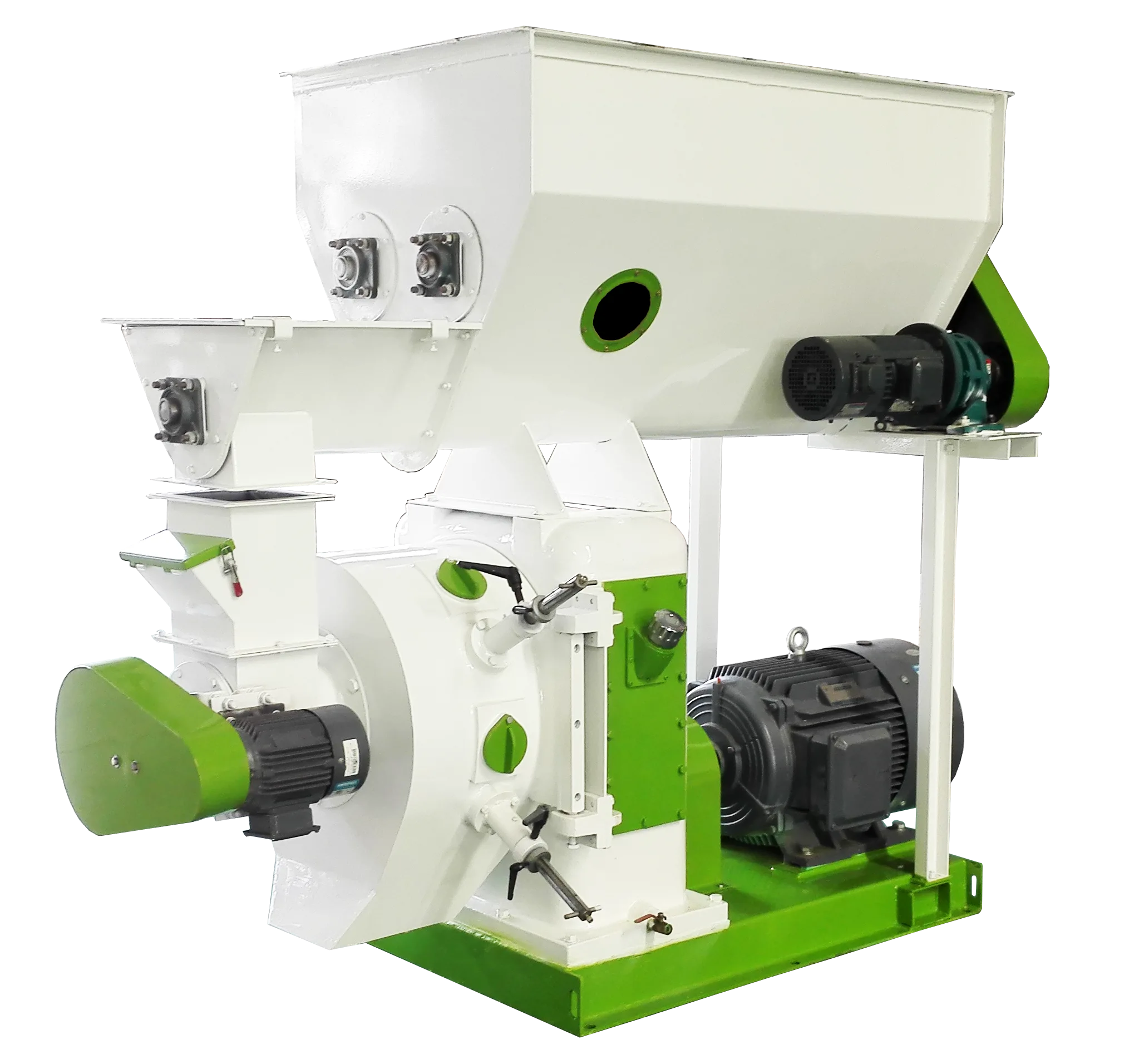
Sawdust is one of the most commonly processed materials for biomass pellet production. It is already relatively fine compared with wood chips or logs, so the preparation process can be simpler when the raw material has suitable particle size and moisture content.
However, choosing equipment based only on the machine's advertised output can lead to an unsuitable configuration. Production capacity, moisture, pellet diameter, feeding conditions, and downstream handling should all be considered before purchasing.
Start with the Raw Material
The first step is to understand the sawdust available for production.
Sawdust can come from furniture factories, sawmills, wood-processing plants, and other woodworking operations. Its particle size and moisture content can vary depending on the source and processing method.
If the material is already fine and uniform, a large chipper may not be necessary. If it contains larger wood pieces or irregular particles, additional crushing may be required.
Moisture is equally important. Sawdust that is too wet may need drying before pelletizing, while excessively dry material may also require process adjustment.
Determine the Required Capacity
Production capacity should be based on the actual amount of raw material available and the expected pellet demand.
A small workshop may only need a few hundred kilograms per hour, while a commercial biomass fuel supplier may require several tons per hour.
When looking at sawdust pellet machine for sale options, buyers should compare the rated capacity with the expected production conditions. The same machine may achieve different output levels depending on raw material moisture, particle size, pellet diameter, and operating conditions.
It is also useful to consider how many hours the plant will operate each day rather than selecting capacity based only on hourly output.
Pellet Size
The required pellet diameter should be determined before selecting the die.
Common biomass pellet sizes vary according to the intended application and customer requirements. Smaller pellets may be used for certain residential or specialized applications, while larger pellets can be suitable for industrial fuel use.
The die specification affects the final pellet diameter, so buyers should confirm whether the selected equipment can produce the required size.
Complete System or Single Machine?
A pellet mill does not always need to be purchased as part of a complete production line.
If a sawmill already has suitable crushing, drying, and conveying equipment, adding a pellet mill may be sufficient.
A new project starting with raw sawdust may require a more complete system, such as:
- Raw material hopper
- Crusher or hammer mill
- Dryer when necessary
- Pellet mill
- Cooler
- Screening machine
- Conveyors
- Storage system
- Packing equipment
The final configuration should be based on the actual condition of the feedstock.
Vertical and Horizontal Pellet Mills
Different pellet mill structures can be used for biomass processing.
Vertical ring-die equipment places the die and roller assembly in a vertical configuration. This structure can be suitable for various biomass materials and continuous production applications.
Other pellet mill designs use different mechanical arrangements. The appropriate choice depends on production capacity, raw material characteristics, maintenance requirements, and project conditions.
Instead of choosing a machine simply because it has a particular structure, buyers should compare the complete operating requirements.
Energy and Auxiliary Equipment
The main motor is not the only factor affecting energy consumption.
A complete biomass system may also include motors for grinding, feeding, drying, cooling, conveying, and screening. If a dryer is required, its heat source can become an important part of the project's operating cost.
For this reason, energy consumption should be evaluated at the plant level rather than by looking only at the pellet mill motor.
A 10T/H wood pellet mill can also be considered when comparing equipment designed for sawdust and other woody biomass materials.
What Should Be Included in a Quotation?
Before purchasing, buyers should check exactly what is included in the supplier's quotation.
Important items include:
- Pellet mill model
- Rated capacity
- Main motor power
- Die specifications
- Feed hopper
- Control cabinet
- Spare parts
- Conveyors
- Cooler
- Screening equipment
- Installation support
- Warranty
Two machines with similar prices may represent very different configurations if auxiliary equipment and services are not included.
Planning for Commercial Production
For commercial projects, material storage and finished-pellet handling should be considered from the beginning.
A stable supply of sawdust is essential for continuous operation. Storage capacity should be sufficient to prevent frequent interruptions in production.
Finished pellets also need appropriate storage conditions to reduce exposure to moisture before transportation or sale.
As production increases, automated conveying and packing can be added to reduce manual material handling.
Conclusion
Selecting sawdust pellet equipment requires more than comparing machine prices. Raw material condition, moisture, capacity, pellet size, equipment structure, energy consumption, and auxiliary systems all influence the final configuration.
A clear understanding of the feedstock and production target allows buyers to compare equipment more accurately and avoid purchasing unnecessary or insufficient machinery.
For additional information about biomass pellet equipment and production systems, resource can provide useful background before making a final decision.