Leaves collected from parks, gardens, farms, and landscaping activities can become useful raw materials for biomass pellet production. Processing them into pellets can make storage, transportation, and handling more convenient.
However, leaves are not always easy to pelletize. Their moisture content, fiber structure, particle size, and seasonal variations can affect production. When evaluating a leaf pellet mill, buyers should first understand the characteristics of their raw materials and the requirements of the finished pellets.
1. Check the Condition of Your Leaf Materials
The first step is to identify the type and condition of leaves available for processing. Different plant species can have different fiber structures and physical properties, which may influence crushing, feeding, and pellet formation.
Freshly collected leaves often contain considerable moisture. They may also include branches, stones, soil, and other unwanted materials. These impurities should be removed before the material enters the main processing equipment.
Before requesting a quotation, prepare information about:
- Leaf varieties and their sources.
- Initial moisture content.
- Particle size and fiber characteristics.
- Impurity levels.
- Daily or seasonal raw material availability.
If the factory receives mixed garden waste, explain the material composition to the supplier. This helps determine whether additional sorting or preparation equipment is necessary.
2. Determine the Required Preparation Process
Leaves usually need to be prepared before pelletizing. Directly feeding large, wet, or uneven materials into a pellet mill may cause unstable feeding and inconsistent production.
Depending on the raw material condition, the preparation process may include sorting, crushing, drying, and screening.
Crushing reduces the material to a more manageable size. Drying helps bring moisture into a suitable range for pellet formation. Screening can remove unwanted particles and improve material consistency.
Not every project needs the same equipment. If the leaves are already dry and have a suitable particle size, the production process may be simpler. The supplier should recommend the preparation stages according to the actual material rather than automatically including every machine.
3. Compare Pellet Mill Specifications
After determining the preparation requirements, buyers can evaluate the main pelletizing equipment.
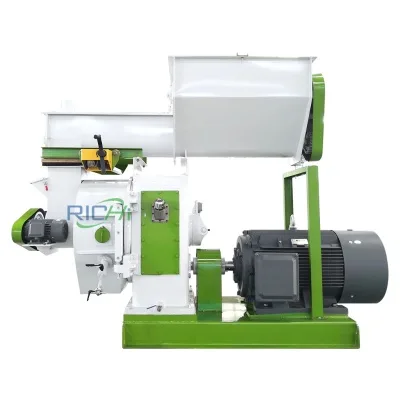
Important specifications include motor power, die configuration, feeding structure, transmission system, and compatible pellet diameter range.
Ask the supplier to explain how the rated capacity was determined. Output can vary according to leaf type, moisture content, particle size, and machine configuration.
Also check the materials used for the ring die and rollers. These components are directly involved in compression and may require regular inspection or replacement.
If possible, arrange a test using your own leaf materials. The resulting samples can help you assess pellet shape, consistency, and durability before confirming the purchase.
4. Match Capacity to Seasonal Material Supply
Leaf availability may change throughout the year. Some businesses receive large quantities during autumn, while others collect smaller amounts throughout the year through landscaping and agricultural activities.
This seasonal pattern should influence equipment selection.
Consider how much material you can collect, how long the factory will operate each day, and whether raw materials can be stored for later processing.
A machine that is too small may create a processing backlog during peak collection periods. An oversized system may increase investment without providing sufficient benefits during periods of low material supply.
It is also useful to leave room for future expansion if your business plans to process additional agricultural or garden residues.
5. Evaluate the Complete Production Line
The pellet mill is only one part of a leaf biomass production system. Depending on the material and target output, a complete line may include:
- Raw material receiving and sorting.
- Crushing and size reduction.
- Drying when required.
- Screening and conveying.
- Pelletizing.
- Cooling and finished pellet screening.
- Packaging and storage.
The capacity of each machine should be coordinated. For example, if the dryer cannot supply enough prepared material, the pellet mill may not reach its expected production rate.
Before purchasing, request a process flow diagram and a detailed equipment list. Confirm which machines, conveyors, electrical components, and installation services are included in the quotation.
6. Check Maintenance and Supplier Support
Leaf materials can vary considerably, so operators need to understand how changes in raw material conditions affect machine operation.
Ask the manufacturer about routine cleaning, lubrication, inspection, and wear-part replacement. Confirm whether spare parts are available and whether technical assistance is provided after installation.
For businesses also processing 5T/H silage feed pellet machine applications, it is important to recognize that livestock feed and biomass fuel production have different processing requirements. Equipment should be selected according to the intended finished product rather than assumed to be interchangeable.
You can review richimanufacture biomass pellet equipment supplier information when comparing manufacturers, equipment configurations, and technical support arrangements.
Conclusion
Choosing a leaf pellet mill requires careful consideration of raw material characteristics, preparation requirements, seasonal supply, and production capacity.
By evaluating the complete processing line and testing representative leaf materials, buyers can make a more informed decision and reduce the risk of selecting unsuitable machinery.
For further information about biomass processing equipment and project solutions, read this article as part of your equipment research.