
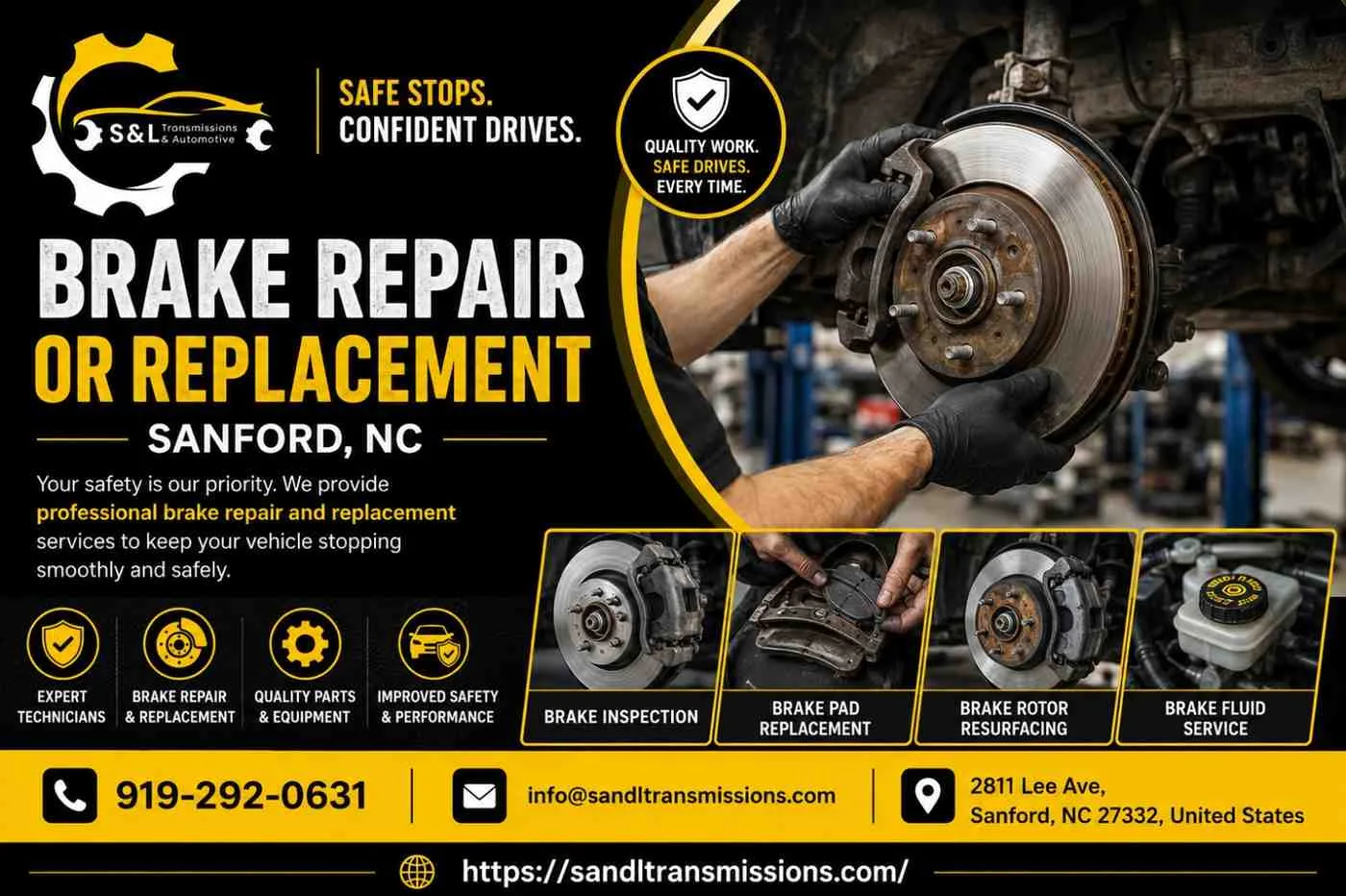
Your Brakes Are Talking—Are You Listening?
Every time you press the brake pedal, you're trusting one of the most important safety systems in your vehicle. But when your brakes begin making strange noises, feel less responsive, or cause vibrations, it's easy to wonder:
Can I keep driving? Should I repair them? Or is it time for a complete brake replacement?
For drivers searching for auto brake repair Sanford NC, making the right decision early can save hundreds of dollars while keeping you and your family safe.
This guide explains how to recognize brake problems, understand when repairs are enough, and know when replacement is the smarter investment.
Why Brake Maintenance Matters
Your braking system works harder than almost any other part of your vehicle.
It includes:
- Brake pads
- Brake rotors
- Brake calipers
- Brake fluid
- Brake lines
- Master cylinder
Each component wears differently, meaning not every brake problem requires replacing the entire system.
Routine inspections can identify minor issues before they become expensive repairs. Modern repair shops also use advanced diagnostic equipment to accurately determine whether your vehicle needs brake pad replacement, rotor resurfacing, or more extensive repairs.
Common Warning Signs You Should Never Ignore
1. Squeaking or Screeching Brakes
High-pitched noises usually mean:
- Brake pads are wearing thin
- Wear indicators are contacting the rotor
This is your vehicle's early warning system.
Ignoring it can lead to rotor damage.
2. Grinding Noise
Grinding usually means:
- Brake pads are completely worn out
- Metal is contacting metal
At this stage, you'll likely need:
- New brake pads
- Rotor replacement
- Possible caliper inspection
3. Vibrating Brake Pedal
A shaking steering wheel or pulsating brake pedal often indicates:
- Warped brake rotors
- Uneven rotor wear
Many drivers notice this while braking at highway speeds.
4. Soft or Spongy Brake Pedal
This could signal:
- Air in brake lines
- Brake fluid leak
- Master cylinder issues
This problem requires immediate attention.
5. Vehicle Pulls to One Side
Possible causes include:
- Sticking caliper
- Uneven brake pad wear
- Brake hose restriction
Driving with uneven braking reduces stopping control.
Brake Repair vs Brake Replacement
When Brake Repair Is Enough
You may only need repairs if:
- Brake pads still have usable thickness
- Rotors can safely be resurfaced
- Brake fluid simply needs replacement
- Minor hardware needs servicing
These repairs restore braking performance while minimizing costs.
When Replacement Is the Better Choice
Replacement is recommended when:
- Brake pads are worn below safe limits
- Rotors are cracked or too thin
- Calipers have failed
- Brake lines are leaking
- Components show severe corrosion
Replacing worn components helps restore maximum braking performance and long-term reliability.
Brake Pad Lifespan
Most brake pads last:
30,000–70,000 miles
Actual lifespan depends on:
- Driving habits
- Stop-and-go traffic
- Vehicle weight
- Brake pad quality
- Terrain
Frequent city driving usually shortens brake life.
How Rotors Wear Out
Rotors experience:
- Heat
- Friction
- Moisture
- Corrosion
Over time they may develop:
- Deep grooves
- Heat spots
- Warping
- Cracks
Sometimes resurfacing is possible.
Other times replacement is safer.
Can You Drive with Bad Brakes?
Sometimes.
Should you?
Usually not.
Driving with worn brakes increases:
- Stopping distance
- Rotor damage
- Tire wear
- Accident risk
- Repair costs
Waiting too long often turns a simple brake pad replacement into a complete brake system repair.
What Happens During a Professional Brake Inspection?
A quality brake inspection typically includes:
Brake Pad Measurement
Technicians measure remaining pad thickness.
Rotor Inspection
They check for:
- Warping
- Thickness
- Cracks
- Grooves
Brake Fluid Check
Brake fluid is tested for:
- Moisture contamination
- Fluid condition
- Proper level
Caliper Inspection
Technicians verify:
- Smooth operation
- Leaks
- Sticking pistons
Road Test
Many repair shops perform a road test to confirm braking performance before and after service. Comprehensive inspections and clear explanations are commonly highlighted by reputable Sanford repair facilities.
Repair Costs vs Waiting Too Long
Here's a simple comparison:
Repair TodayCost Later if IgnoredBrake PadsPads + RotorsRotor ResurfacingNew RotorsBrake Fluid FlushMaster Cylinder DamageCaliper ServiceFull Brake System RepairsSmall repairs almost always cost less than delayed repairs.
How Often Should Brakes Be Inspected?
Experts recommend:
- Every oil change (quick visual inspection)
- Every 12 months
- Before long road trips
- Anytime unusual noises appear
Preventive maintenance catches issues early.
Benefits of Professional Brake Service
Professional brake repair provides:
- Accurate diagnostics
- Quality replacement parts
- Manufacturer-recommended procedures
- Proper torque specifications
- Safe brake fluid handling
- Reliable road testing
Many trusted shops also back repairs with nationwide warranties, giving drivers added confidence after service.
Tips to Make Your Brakes Last Longer
You can extend brake life by:
- Avoiding aggressive braking
- Keeping proper following distance
- Removing unnecessary vehicle weight
- Scheduling regular inspections
- Flushing brake fluid as recommended
- Addressing warning signs early
These habits reduce wear while improving safety.
Why Sanford Drivers Choose Local Brake Specialists
Local repair shops understand the demands of:
- Daily commuting
- Highway driving
- Seasonal weather
- Family vehicles
- Fleet maintenance
Experienced technicians use modern diagnostic tools and explain repairs clearly so customers understand what their vehicles actually need instead of recommending unnecessary services.
Frequently Asked Questions
How do I know if I need new brake pads?
If you hear squealing, notice reduced braking performance, or see a brake warning light, it's time for an inspection.
Can rotors be resurfaced instead of replaced?
Sometimes.
If they're still within manufacturer specifications and free from major damage, resurfacing may be an option.
Is brake fluid replacement necessary?
Yes.
Brake fluid absorbs moisture over time, reducing braking efficiency and increasing corrosion risk.
How long does brake service take?
Most brake pad replacements take between 1–3 hours, depending on your vehicle and the extent of repairs.
Is it safe to drive with squeaky brakes?
Not always.
Squeaking may simply indicate worn pads, but delaying service can lead to more expensive rotor damage.
Final Thoughts
Your brakes are one of your vehicle's most critical safety systems, and ignoring early warning signs can quickly turn a simple repair into a costly replacement. Whether you're hearing squeaks, feeling vibrations, or noticing reduced stopping power, addressing the issue promptly helps protect both your wallet and everyone on the road.
If you're searching for break repair or replacement sanford nc, choose a trusted local shop that offers thorough inspections, transparent recommendations, experienced technicians, and quality workmanship. Catching brake issues early is the smartest way to ensure safe, confident driving every mile.