Running can feel great until pain starts showing up on the outside of your knee. At first, it may be a small ache after a long run. Then it can become sharp, annoying, and hard to ignore. Many runners try to push through it, hoping it will go away. Often, that only makes the problem harder to manage. If you are searching for shockwave therapy for it band syndrome near me, it is important to first understand what may be causing the pain.
One common cause of outer knee pain is iliotibial band syndrome, often called IT band syndrome. It is an overuse problem linked to repeated movement, training changes, muscle weakness, and running mechanics. Recent research supports a well-rounded approach that includes exercise and other conservative care rather than relying on one treatment alone.
Why IT Band Pain Can Stop a Good Run
The IT band is a strong strip of tissue that runs along the outside of your thigh toward the knee. During running, the hip and knee move again and again. When your body is not handling that load well, the tissues around the outside of the knee may become irritated.
The pain is often worse during longer runs, downhill running, or activities that require many repeated knee bends. A sudden jump in mileage can also play a role. Older research and newer reviews both point to factors such as training load, muscle weakness, and running mechanics as possible contributors.
Common signs runners notice
- Pain on the outside of the knee
- Pain that appears during or after running
- Tenderness near the outer knee area
- More discomfort when running downhill
- Pain after a sudden increase in distance
- A feeling that the pain gets worse as the workout continues
These signs can look similar to other knee problems, so getting the right assessment matters. The goal is not simply to reduce pain. It is also to understand why the pain started in the first place.
Why Simply Resting May Not Be Enough
Rest can give irritated tissues a break, but it does not always fix the reason the problem developed. Imagine a runner who stops for two weeks, feels better, and then goes right back to the same mileage. The pain may return because the body was not prepared for that level of stress.
That is why treatment often focuses on strength, movement, training changes, and a gradual return to running. A 2024 systematic review of runners with IT band syndrome found that hip abductor strengthening was one of the most common strategies and reported improvements in pain and function across several studies.
A recovery plan may include
- Reducing painful running for a short period
- Slowly building distance again
- Strengthening the hips and glutes
- Improving lower-body control
- Reviewing running form and training habits
- Using hands-on or other supportive therapies when appropriate
This approach helps turn recovery into a process instead of a quick fix.
Where Shockwave Therapy May Fit In
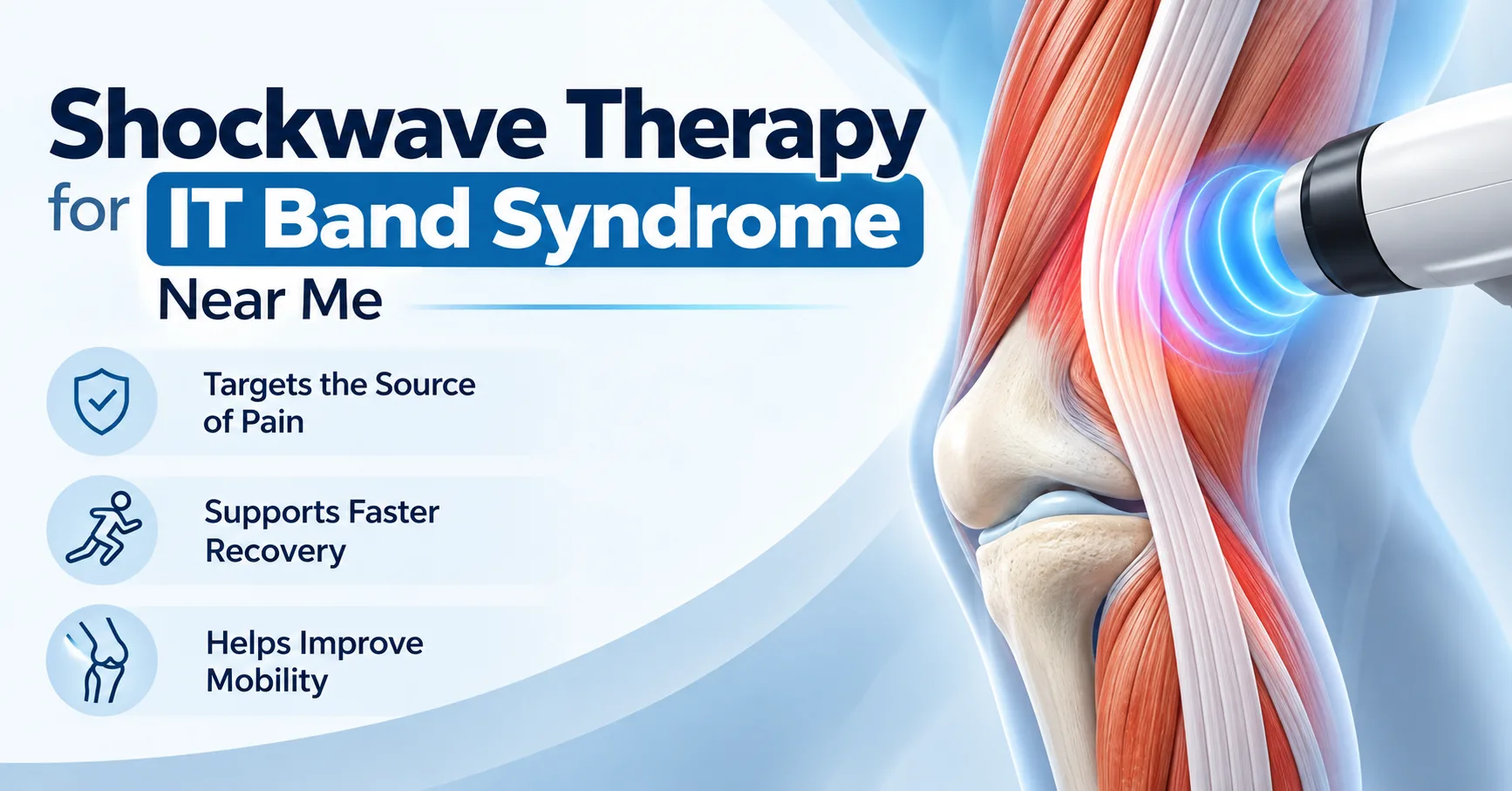
For runners who still struggle with pain, shockwave therapy is gaining attention as one possible non-surgical option. It uses sound waves delivered to a targeted area. The aim is to create a treatment stimulus that may help with pain control and tissue recovery.
Research on shockwave therapy is not the same for every condition. A broad 2024 systematic review found that results varied across different types of tendinopathy, showing why treatment should be matched to the person and the problem rather than treated as a one-size-fits-all solution.
Potential reasons a clinician may consider it
- It is non-surgical
- It targets a specific painful area
- Sessions are usually done in an outpatient setting
- It may be used alongside exercise
- It can be considered when symptoms continue
- Treatment can be adjusted based on comfort and response
For people searching for shockwave therapy for it band syndrome, it is important to know that the evidence is still developing. A 2024 review focused on runners found that two studies using shockwave therapy alongside exercise or stretching reported improvements, but the authors also noted that more high-quality research is needed.
What Happens During a Session?
Many people feel nervous when they hear the word “shockwave.” The name can sound intense. In practice, the treatment is delivered with a handheld device over the target area. The clinician controls the settings based on the treatment plan and the person’s tolerance.
You may feel tapping, pressure, or brief discomfort during the session. The exact experience can vary. A good provider should explain what you may feel and adjust the treatment when needed.
Before and during treatment, a provider may
- Review your symptoms and activity history
- Check the painful area
- Assess hip, knee, and leg movement
- Discuss your recent running load
- Explain the treatment settings
- Pair treatment with a rehab exercise plan
The assessment is important because outer knee pain does not always come from the same source.
Shockwave Therapy Works Best as Part of the Bigger Picture
It can be tempting to look for one treatment that solves everything. Recovery from a running injury is rarely that simple. The strongest plan often combines symptom management with changes that help your body handle running better.
For treatment for it band syndrome, a clinician may look at the full picture instead of focusing only on the painful spot. This can include strength, training volume, recovery time, footwear, running surface, and movement patterns. Current evidence suggests that exercise, especially hip-focused strengthening, is an important part of conservative care.
Helpful habits during recovery
- Do not suddenly increase your weekly mileage
- Give your body enough recovery time
- Follow your strength program consistently
- Return to running in small steps
- Pay attention to pain during and after activity
- Keep your provider updated about changes in symptoms
Small changes can make a big difference when repeated over time.
When Should You Get Professional Help?
A little soreness after exercise is one thing. Pain that keeps returning, changes your running pattern, or stops normal activity deserves more attention. Waiting too long can lead to more frustration and make it harder to return to the activities you enjoy.
A sports medicine professional, physical therapist, chiropractor, or other qualified clinician can help determine what is causing your symptoms. They can also decide whether shockwave therapy makes sense for your situation.
Consider an assessment when
- Pain lasts for several days or keeps coming back
- You cannot run without changing your form
- Stairs or walking become painful
- Your pain is getting worse over time
- Rest helps only for a short period
- You want a safe plan for returning to running
Getting help early can give you a clearer path forward.
What Runners Should Know Before Choosing Shockwave Therapy
Shockwave therapy is not a magic button. Some people may respond well, while others may need a different approach. Research on tendinopathy shows mixed results across conditions, and reviews have pointed out limitations in the quality of the evidence.
The best question is not simply, “Does this treatment work?” A better question is, “Does this treatment fit my injury, my symptoms, and my recovery plan?”
Ask your provider these questions
- What is causing my outer knee pain?
- Is shockwave therapy suitable for me?
- What exercises should I do with it?
- How will we measure progress?
- When can I start running again?
- What should I avoid during recovery?
These questions can help you understand the plan before you begin.
Getting Back to the Runs You Love
IT band pain can be frustrating, especially when running is part of your routine, your stress relief, or your personal goals. But pain does not always mean you have to give up running forever.
A smarter recovery plan looks at the whole body, not just the painful area. Exercise, training changes, movement work, and supportive treatments may all have a role. For some runners, shockwave therapy for it band syndrome may be considered as part of that larger plan, especially when symptoms continue despite other conservative steps. Current research suggests potential value, but it also shows that more strong research is needed.
The goal is simple: reduce pain, rebuild strength, improve movement, and return to running in a controlled way. Instead of racing back too soon, give your body the time and support it needs to build a stronger foundation.