You are staring at a cracked, stained garage floor or a gym surface that shows every scuff and impact mark. You know it needs to be upgraded, but every search leads you to two options that seem completely different in price, installation, and purpose. Rubber coatings and epoxy are both serious flooring solutions used in garages and gyms around the world, but they are not interchangeable. Choosing the wrong one for your specific use case costs you money, time, and performance. In this guide, you will learn exactly how each option works, where each performs best, how they compare on cost and durability, and which one fits your space, budget, and goals.
What Is Epoxy Flooring and How Does It Work
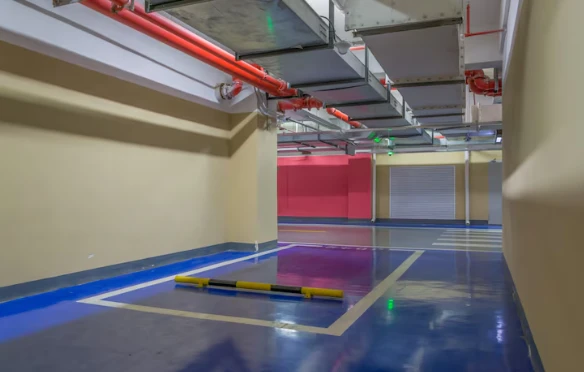
Epoxy flooring is a two-part resin system that bonds chemically with a properly prepared concrete substrate. When the two components are mixed and applied, a chemical reaction occurs that creates an extremely hard, glossy surface that becomes part of the floor rather than just a coating on top of it.
Epoxy is known for its exceptional hardness, chemical resistance, and high-gloss finish. It is widely used in garages, commercial kitchens, warehouses, and industrial facilities where a clean, durable, easy-to-clean surface is a priority. A properly applied epoxy floor can last 10 to 20 years with correct maintenance and minimal traffic abuse.
What Are Rubber Coatings and How Do They Differ
Rubber flooring comes in rolls, interlocking tiles, or poured liquid form. It is made from either virgin rubber or recycled rubber, with recycled content being the more common and affordable option used in commercial gyms and fitness facilities.
Unlike epoxy, rubber does not bond chemically with the concrete substrate in the same rigid way. It provides cushioning, impact absorption, and slip resistance that epoxy cannot match. Rubber surfaces flex under load rather than resisting it rigidly, which makes a significant difference when the application involves dropped weights, heavy equipment, or people training for extended periods.
Where Each Product Performs Best
Understanding the primary strengths of each product is the clearest way to determine which one belongs in your space.
Epoxy excels in these environments:
- Residential and commercial garages where oil, chemical spills, and vehicle traffic are common
- Showroom floors where appearance and reflectivity are priorities
- Food service, medical, or industrial spaces requiring seamless, hygienic surfaces
- Spaces where heavy rolling equipment or forklifts are used regularly
Rubber performs best in these environments:
- Home and commercial gyms where weights, equipment, and foot traffic create constant impact
- CrossFit facilities, weightlifting platforms, and fitness studios
- School athletic areas, sports courts, and multipurpose training spaces
- Any space where standing for long periods requires fatigue reduction and joint protection
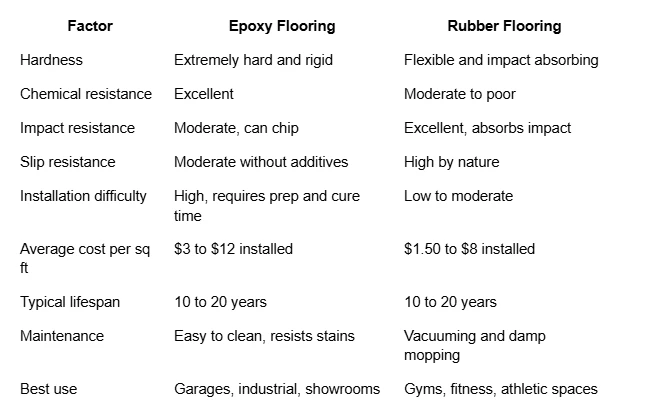
Head-to-Head Comparison: Rubber vs Epoxy
The Importance of Surface Preparation for Both Products
Surface preparation is critical regardless of which product you choose. Both epoxy and rubber applications require a clean, sound substrate to perform as expected.
For epoxy, the concrete must be mechanically ground or acid etched to open the surface for proper adhesion. Any existing coatings, sealers, or contaminants must be completely removed. Moisture testing is essential because epoxy applied over a damp slab will delaminate. Surface profile requirements are specific and non-negotiable for a professional result.
For rubber tile or roll installation, the floor must be flat, clean, and free of significant cracks or high spots. Adhesive-installed rubber requires a clean, dry surface for proper bonding. Floating rubber tile systems are more forgiving but still perform better over a level substrate.
Can You Combine Both Products in the Same Space
Yes. Many commercial and home gym owners use both products strategically. Epoxy is applied in non-lifting areas like walkways, locker rooms, and reception spaces where appearance and chemical resistance matter. Rubber tiles or rolls are used in the actual training zones where equipment and dropped weights create impact stress.
This combined approach gives you the visual appeal and cleanability of epoxy in visible areas while providing the safety and durability of rubber where the real physical demands occur. Planning the layout of your space before choosing materials allows you to maximize the strengths of both products without forcing either into an environment where it will underperform.
Key Takeaways
- Epoxy bonds chemically with concrete and excels in garages, industrial, and showroom applications
- Rubber flooring absorbs impact and provides fatigue reduction, making it ideal for gyms and athletic spaces
- Using epoxy in a weightlifting gym leads to premature cracking and failure
- Surface preparation is critical for both products and cannot be shortened without affecting performance
- Both products offer lifespans of 10 to 20 years when used in the correct application
- Combining epoxy and rubber strategically in the same facility maximizes the strengths of each material
Choose the Right Flooring for Your Garage or Gym
Selecting between rubber coatings and epoxy is not about which product is better overall. It is about which product is better for your specific space, use case, and performance expectations. Garages, industrial spaces, and showrooms consistently benefit from epoxy. Gyms, training facilities, and athletic spaces consistently perform better with rubber. Getting this match right from the start saves you the cost and frustration of replacing a failed floor years before it should need attention.
The team at Adonis Concrete has the expertise and experience to help you evaluate your space, match the right product to your needs, and deliver a professional installation that performs exactly as expected from day one. Contact the team today to discuss your project and get started on the right foundation.
Frequently Asked Questions
Q1: Can epoxy flooring be installed in a home gym? Epoxy works in home gyms used for cardio equipment, light weights, and general fitness.
Q2: How long does epoxy flooring take to cure before use? Most epoxy systems require 24 hours before light foot traffic and 72 hours before vehicle traffic or heavy use.
Q3: Is rubber flooring difficult to clean in a commercial gym? No. Rubber flooring is maintained with regular vacuuming and damp mopping using a neutral pH cleaner.
Q4: Does epoxy flooring get slippery when wet? Standard high-gloss epoxy can become slippery when wet.
Q5: What thickness of rubber flooring is recommended for weightlifting areas? For general weightlifting and gym use, 8mm thick rubber is the minimum recommended thickness.