
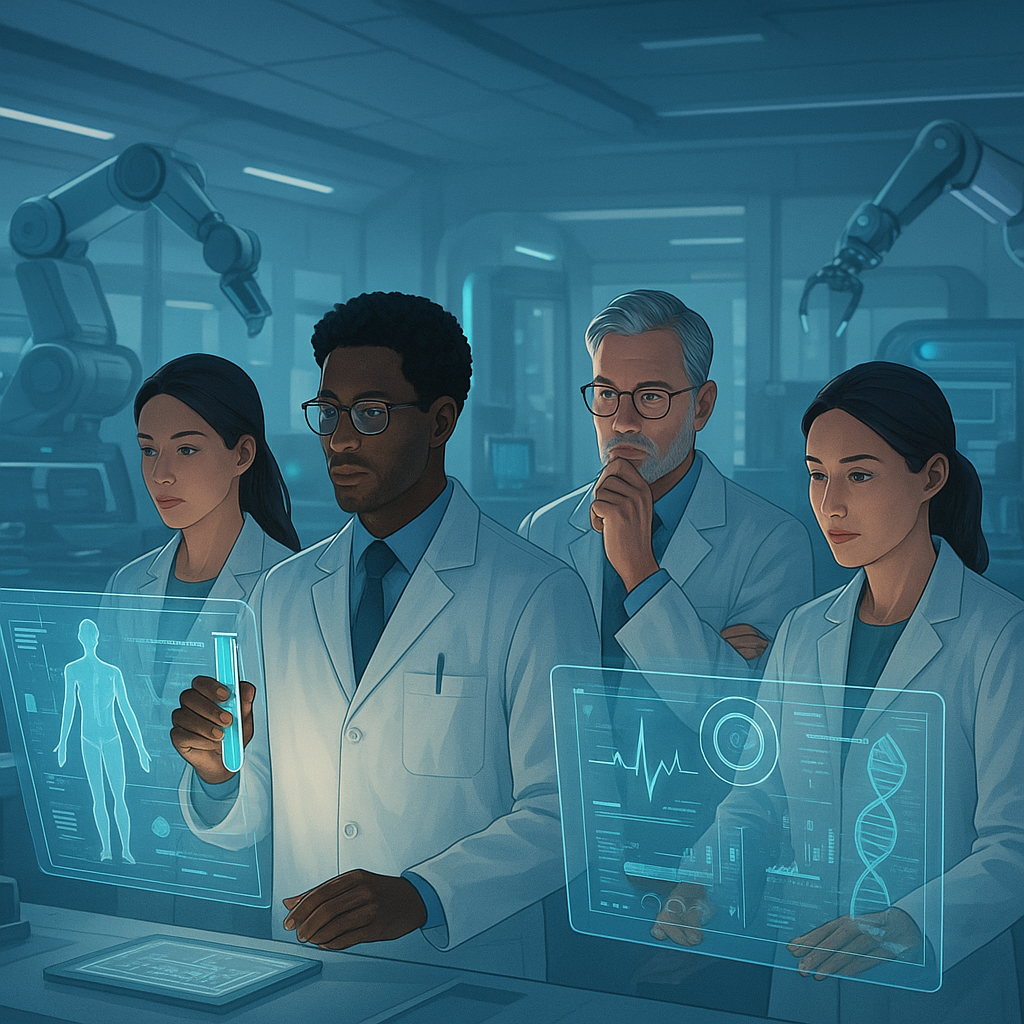
Unlocking the Future: A New Dawn in Medical Research
Imagine a world where diseases that once devastated populations can be halted before symptoms appear, where personalized treatments eliminate trial and error, and where global health crises are swiftly contained through rapid scientific response. This vision is no longer a distant hope but a fast-approaching reality, thanks to the breakthroughs in medical research in recent years. In 2026, the global community stands at a critical juncture: medical research is accelerating at an unprecedented pace, fueled by technological advancements, data analytics, and international collaboration.
Consider the remarkable success of recent gene therapies that have transformed the prognosis for rare genetic disorders, or the novel vaccine platforms that adapted within weeks to emergent pathogens. These are not isolated incidents but part of a larger narrative of how medical research is reshaping health and wellness worldwide. However, this progress comes with complex challenges around ethics, funding, and equitable access.
“Medical research today is not just about understanding diseases but about redefining what health means in the 21st century.” – Dr. Elaine Morrison, Director of Genomic Medicine, Global Health Institute
This article delves deep into the mechanisms driving medical research today, explores the data behind recent innovations, and assesses what the future holds for patients, practitioners, and policymakers alike.
Tracing the Trajectory: How Medical Research Evolved to Today’s Landscape
The roots of modern medical research trace back to the 19th century when germ theory revolutionized our understanding of infectious diseases. Over the decades, incremental discoveries laid the foundation for the genomic era, marked by the 2003 completion of the Human Genome Project. That milestone unlocked a new dimension of medical inquiry, enabling researchers to explore diseases at the molecular level.
Subsequent decades saw the emergence of biotechnology firms, the rise of clinical trial networks, and the integration of computational biology. By the 2010s, the convergence of big data and artificial intelligence began to unlock insights from mountains of clinical and genetic data that were previously impossible to analyze.
Funding mechanisms also evolved. Governments, private foundations, and venture capitalists increasingly prioritized translational research that bridges laboratory discoveries with clinical application. The COVID-19 pandemic of the early 2020s acted as a catalyst, speeding up vaccine development timelines and demonstrating the potential of global scientific cooperation.
- The Human Genome Project (completed 2003) laid the groundwork for personalized medicine.
- CRISPR gene-editing technology (emerged early 2010s) enabled precise genetic manipulation.
- AI-powered drug discovery accelerated candidate identification by up to 50%.
- Global COVID-19 response showcased rapid vaccine development and data sharing.
Understanding this historical context helps explain how we arrived at the current state, where medical research is both highly specialized and deeply interconnected across disciplines.
Data-Driven Breakthroughs: Analyzing 2026’s Medical Research Landscape
The year 2026 marks a period of extraordinary innovation. According to recent data from the World Medical Research Consortium, global investment in medical research has surpassed $250 billion annually, with a compound annual growth rate of 6.3% over the past five years. This surge is concentrated in several key areas:
- Genomic and Precision Medicine: Targeted therapies now account for over 40% of new drug approvals worldwide.
- Artificial Intelligence and Machine Learning: AI algorithms assist in diagnostics, predicting treatment outcomes with up to 90% accuracy in certain cancers.
- Regenerative Medicine: Stem cell therapies and tissue engineering have moved from experimental to clinical phases for multiple conditions.
- Global Health and Infectious Disease Research: Enhanced surveillance and rapid pathogen sequencing technologies enable swift outbreak responses.
For example, the recent approval of a bioengineered organ transplant technique has reduced rejection rates by 70%, according to a multinational clinical trial published in early 2026. Meanwhile, AI-driven platforms have shortened the average clinical trial phase by nearly 25%, improving the speed at which treatments reach patients.
“Integrating AI into medical research is not just an efficiency tool; it’s fundamentally altering how we identify disease markers and tailor therapies.” – Prof. Arjun Patel, Biomedical Informatics Specialist
However, the rise in data-intensive research raises new questions about patient privacy, data security, and the ethical use of AI in decision-making. These issues have prompted regulatory bodies worldwide to update frameworks, creating a dynamic interplay between innovation and governance.
Emerging Trends and Technologies Shaping 2026
Several cutting-edge trends dominate medical research in 2026, reflecting both technological leaps and shifting priorities. Among these, three stand out:
- Quantum Computing in Drug Discovery: Quantum algorithms are beginning to simulate molecular interactions with unprecedented precision, potentially reducing the drug discovery timeline from years to months.
- Microbiome Therapeutics: The growing understanding of the human microbiome has led to therapies targeting gut health, autoimmune diseases, and even mental health conditions, with several products in late-stage clinical trials.
- Decentralized Clinical Trials: Enabled by wearable devices and telemedicine, decentralized trials increase patient diversity and reduce costs, generating more robust data sets.
Additionally, the field of epigenetics is gaining momentum, with research exploring how environmental factors influence gene expression and disease risk. This holistic approach is fostering new preventive strategies, shifting the focus from treatment to health maintenance.
The integration of these trends is poised to redefine medical research paradigms. For example, combining AI with quantum computing could revolutionize molecular design, while decentralized trials democratize participation and accelerate data collection.
These developments are not purely theoretical. Leading institutions such as the Broad Institute and the European Molecular Biology Laboratory have launched joint initiatives to harness these technologies collaboratively, signaling a new era of international scientific synergy.
Expert Perspectives: The Global Impact and Ethical Dimensions
Experts emphasize that while the promise of medical research is vast, it must be balanced with thoughtful consideration of ethical, social, and economic impacts. Dr. Miriam Chen, Chair of the Global Bioethics Council, highlights the challenge of equitable access: "Innovations risk widening disparities if new treatments remain unaffordable or unavailable to marginalized populations." This concern is echoed by many in the field, prompting calls for inclusive policies and public-private partnerships.
Furthermore, the rapid evolution of AI and gene-editing tools has sparked debate about regulatory oversight. Leading voices advocate for dynamic frameworks that adapt to technological shifts while safeguarding patient rights and safety.
“The ethical compass of medical research must evolve as fast as its technology to ensure trust and social justice.” – Dr. Miriam Chen
Industry leaders also recognize the changing role of patients, who are increasingly active participants in research design and decision-making. Patient advocacy groups have influenced trial protocols and data-sharing policies, embedding lived experience into scientific inquiry.
From a global health perspective, the COVID-19 experience underscored the importance of transparent data sharing and collaborative problem-solving. Organizations such as the World Health Organization and Gavi continue to promote equitable vaccine distribution models, which have informed frameworks for future medical research endeavors.
These perspectives underscore the need for a multidisciplinary approach that integrates science, ethics, policy, and community engagement.
Looking Ahead: What the Future Holds for Medical Research
As we peer into the future, several actionable takeaways emerge for stakeholders in medical research. First, continued investment in interdisciplinary collaboration will be crucial. Technologies such as AI, quantum computing, and gene editing are most effective when integrated across fields.
Second, fostering equitable access remains a priority. Innovative financing models and global partnerships can help bridge gaps between high-income and low-income regions.
Third, regulatory systems must evolve rapidly to keep pace with technological advances without stifling innovation. Flexible, transparent frameworks that involve diverse stakeholders will be essential.
- Enhance global infrastructure for data sharing and privacy protection.
- Promote education and training to build a skilled medical research workforce.
- Encourage patient-centered research designs and participatory governance.
- Support sustainable funding models balancing public and private interests.
Finally, public trust is the cornerstone of successful medical research. Transparent communication, ethical rigor, and social responsibility will drive acceptance and adoption of new therapies.
For those interested in the broader societal implications, you might enjoy exploring how mental health awareness is transforming societies and systems, which complements the holistic health approach emerging from medical research innovations. Additionally, innovations in nutritional science, highlighted in Unlocking Nutritional Truths, showcase how science shapes wellness beyond clinical settings.
In sum, medical research in 2026 is a beacon of hope and complexity. Its trajectory will profoundly influence global health outcomes, economic stability, and ethical norms. Staying informed, engaged, and proactive offers the best path forward.