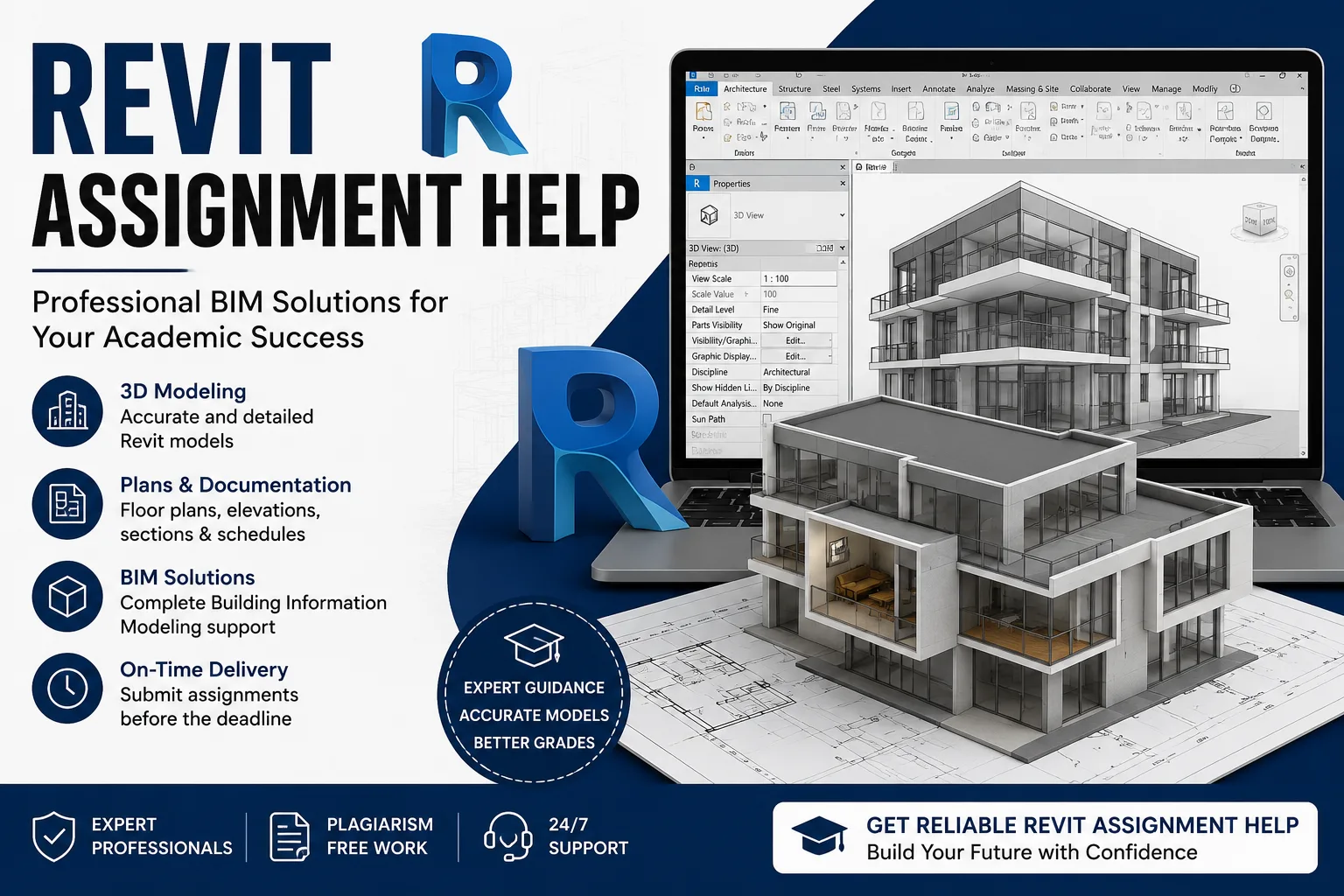
The architecture, engineering, and construction (AEC) industry has rapidly embraced digital design tools, and Autodesk Revit has become one of the most important software applications for creating intelligent 3D building models. Whether you are pursuing architecture, civil engineering, interior design, or construction management, learning Revit is an essential part of your academic journey.
However, completing Revit assignments can be challenging. Students often struggle with creating accurate Building Information Modeling (BIM) projects, understanding complex tools, managing deadlines, and following university guidelines. This is where Revit Assignment Help becomes valuable.
In this guide, we'll explore why Revit assignments are difficult, the benefits of professional guidance, and practical tips to improve your Revit skills.
What Is Autodesk Revit?
Autodesk Revit is a Building Information Modeling (BIM) software used by architects, structural engineers, mechanical engineers, and construction professionals to design, visualize, and manage building projects.
Unlike traditional CAD software, Revit allows users to create intelligent 3D models where every component is interconnected. A change made in one view is automatically reflected throughout the entire project, making the design process faster, more accurate, and highly efficient.
Students use Revit for:
- Architectural modeling
- Structural design
- MEP (Mechanical, Electrical & Plumbing) systems
- Interior space planning
- Construction documentation
- Building visualization
- Quantity estimation
- BIM project development
Why Students Need Revit Assignment Help
Learning Revit involves much more than understanding its interface. Students are expected to apply theoretical knowledge while producing technically accurate digital models.
Some common challenges include:
1. Complex Software Features
Revit contains hundreds of tools and commands. Beginners often find it overwhelming to understand families, parameters, constraints, schedules, and worksharing.
2. Time-Consuming Projects
A detailed BIM model requires careful planning, precise measurements, and multiple revisions. Completing everything before the deadline can be difficult.
3. Limited Practical Experience
Many students have theoretical knowledge but lack hands-on experience with real-world building projects.
4. Strict Academic Standards
Universities expect assignments to include:
- Accurate modeling
- Proper documentation
- Correct dimensions
- Professional layouts
- BIM standards
- Organized project files
Meeting these expectations requires both technical expertise and attention to detail.
Topics Covered in Revit Assignment Help
Professional Revit assignment assistance generally covers a wide variety of academic topics.
These include:
- Building Information Modeling (BIM)
- Architectural Revit Projects
- Structural Revit Modeling
- MEP Design
- Floor Plans
- Elevations
- Sections
- Roof Design
- Wall Modeling
- Doors and Windows
- Stair Design
- Curtain Walls
- Family Creation
- Parametric Components
- Rendering
- Lighting Analysis
- Material Management
- Construction Documentation
- Sheet Creation
- Schedules
- Quantity Takeoff
- Clash Detection
- Site Modeling
- Project Templates
- Revit Collaboration
Benefits of Revit Assignment Help
Better Understanding of BIM
Receiving expert guidance helps students understand how BIM works in practical construction projects instead of simply memorizing software commands.
Improved Assignment Quality
Well-structured models, organized documentation, and proper annotation improve academic performance and make assignments more professional.
Saves Valuable Time
Students often manage multiple subjects simultaneously. Assistance with complex Revit projects helps them meet deadlines without compromising quality.
Learning Through Practical Examples
Working with properly developed models helps students understand industry-standard workflows and best practices.
Error-Free Documentation
Revit assignments require consistent dimensions, views, schedules, and annotations. Professional guidance helps reduce common modeling mistakes.
Common Revit Assignment Types
Students may receive different kinds of assignments throughout their academic programs.
Some examples include:
Residential Building Design
Creating complete 3D models of houses with walls, roofs, floors, windows, doors, and furniture layouts.
Commercial Building Modeling
Developing offices, shopping centers, or institutional buildings with detailed architectural elements.
Structural Projects
Designing foundations, beams, columns, slabs, and reinforcement layouts.
MEP Projects
Modeling HVAC systems, electrical layouts, plumbing networks, and service coordination.
Construction Documentation
Generating professional drawings, schedules, and printable construction sheets.
Essential Skills Required for Revit Assignments
Students should gradually develop the following skills:
- 3D modeling
- BIM concepts
- Technical drawing
- Architectural planning
- Structural modeling
- Project management
- Family creation
- Material assignment
- Rendering techniques
- Construction documentation
Developing these abilities not only improves grades but also prepares students for future careers.
Tips to Score Higher in Revit Assignments
If you want to perform well in your Revit coursework, follow these practical suggestions:
Plan Before Modeling
Understand the project requirements before opening Revit. A clear plan reduces unnecessary revisions.
Keep Your Model Organized
Use proper naming conventions for families, views, sheets, and levels to make your project easier to manage.
Use Reference Levels Correctly
Correct levels improve accuracy throughout the project.
Learn Keyboard Shortcuts
Keyboard shortcuts can significantly improve productivity while modeling.
Save Multiple Versions
Keep backup copies of your project to avoid losing work due to unexpected software issues.
Review Before Submission
Check dimensions, annotations, schedules, and sheet layouts carefully before submitting your assignment.
Why Revit Skills Matter for Your Career
Revit has become one of the most widely used BIM software applications worldwide. Employers increasingly seek professionals who can create intelligent building models rather than simple 2D drawings.
Strong Revit skills can open career opportunities such as:
- BIM Modeler
- Architectural Designer
- Structural Engineer
- Interior Designer
- MEP Engineer
- BIM Coordinator
- Construction Planner
- Project Engineer
- Design Consultant
Learning Revit during your academic studies provides a strong foundation for entering the AEC industry.
How Revit Assignment Help Improves Learning
The goal of assignment assistance should not only be completing coursework but also improving your understanding of the software.
By reviewing professionally structured projects, students can learn:
- Efficient modeling workflows
- Better project organization
- Industry-standard BIM practices
- Accurate documentation techniques
- Professional presentation methods
- Practical problem-solving approaches
These skills remain useful long after graduation.
Frequently Asked Questions (FAQs)
What is Revit Assignment Help?
Revit Assignment Help provides academic guidance for students working on Autodesk Revit projects, including BIM modeling, architectural design, structural modeling, MEP systems, and construction documentation.
Who can benefit from Revit Assignment Help?
Architecture, civil engineering, construction management, interior design, and engineering students can benefit from additional guidance when working on Revit assignments.
What topics are included?
Support may cover architectural modeling, structural projects, BIM workflows, family creation, rendering, documentation, schedules, quantity takeoff, and MEP systems.
Is Revit difficult to learn?
Revit has a learning curve, but regular practice, tutorials, and project-based learning can help students become proficient over time.
Why is BIM important?
Building Information Modeling improves collaboration, reduces design errors, enhances project visualization, and streamlines construction workflows.
Conclusion
Revit is much more than a 3D modeling application—it is a comprehensive Building Information Modeling platform that has transformed the architecture, engineering, and construction industry. While mastering Revit requires dedication and practice, understanding its tools and workflows can significantly improve both academic performance and career prospects.
Seeking Revit Assignment Help can make complex projects more manageable by providing guidance on BIM concepts, modeling techniques, project organization, and documentation standards. Combined with consistent practice and a willingness to learn, students can develop the confidence and technical expertise needed to excel in their coursework and prepare for successful careers in the modern construction industry.