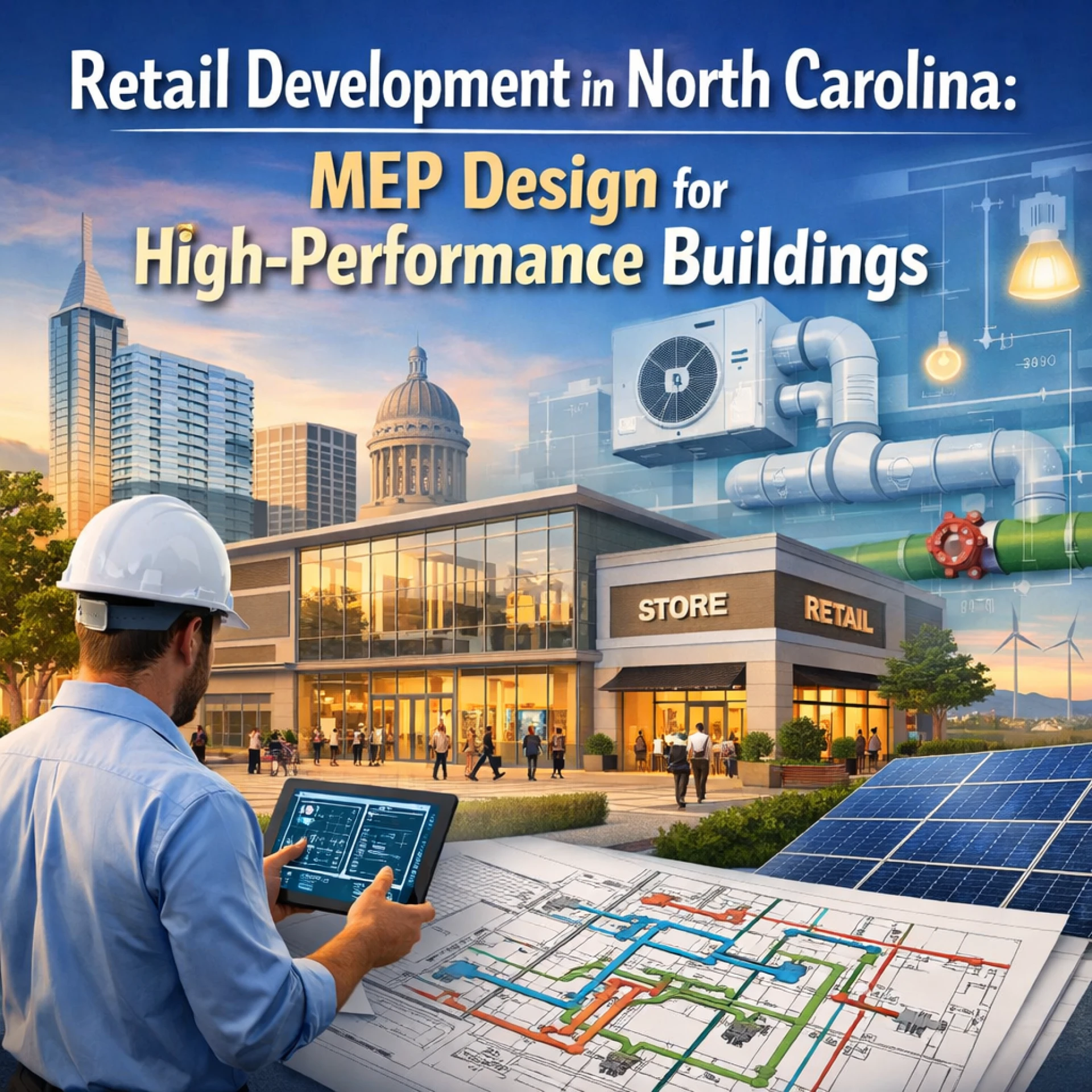
The retail sector in North Carolina is rapidly changing as mixed-use developments, urban infill projects, and urgent tenant fit-outs emerge across markets like Charlotte and Raleigh.
Against this backdrop, understanding how MEP (Mechanical, Electrical, and Plumbing) systems influence project outcomes is crucial for delivering retail spaces on schedule and within budget.
According to market research, Charlotte’s retail vacancy rate was just 2.9% in 2025, showing strong demand for well-designed retail space statewide.
This tight real estate environment makes effective MEP planning essential for successful retail projects.
Here’s a look at MEP design solutions for retail buildings in North Carolina that truly work.
Retail Market Dynamics in North Carolina
North Carolina’s retail landscape is among the most active in the Southeast. Urban areas like South End (Charlotte) and North Hills (Raleigh) are drawing high foot traffic with walkable retail districts.
Suburban power centers anchored by grocery tenants continue to expand, and mixed-use projects that combine retail with residential and office space are increasingly common. Developers are also turning to adaptive reuse and fit-outs as vacant land becomes scarcer.
From large regional malls to neighborhood retail centers, North Carolina retail projects run the gamut.
Accelerated construction timelines — driven by lease commitments or phased rollouts — put pressure on early design coordination, particularly for MEP systems that must be integrated before construction begins.
According to the North Carolina Economic Report – 2025 Third Quarter, taxable retail sales grew 6.8% year-over-year in 2025, reinforcing strong consumer demand and sustained interest in retail development.
The Impact of MEP Strategy on Retail ROI
MEP design in Retail plays a major role in a project’s long-term success. Poorly designed mechanical, electrical, or plumbing systems can unnecessarily reduce leasable space by consuming valuable area with oversized shafts or mechanical rooms.
Delayed MEP revisions also lead to costly redesigns and schedule disruptions.
Beyond construction, inefficient systems create high operating and maintenance expenses, affecting tenant comfort and overall brand experience.
Thoughtful MEP planning improves energy performance, reduces downtime, and enhances tenant satisfaction in a competitive market.
Common Real-World Retail MEP Issues
- Ceiling conflicts: Lack of early coordination between architectural and MEP teams can result in ductwork that clashes with ceiling finishes, causing redesigns and schedule setbacks.
- Electrical overloads: When tenant electrical loads are underestimated, retrofits or panel upgrades late in the process can delay openings, especially for energy-intensive uses like food retailers.
- Utility layout inefficiencies: Properly coordinated utility paths can enable quicker tenant fit-outs and future changes with minimal disruption.
Navigating Regulations in North Carolina
Retail projects must comply with a complex set of state and local codes that influence MEP design.
The North Carolina State Building Code governs mechanical, electrical, and safety systems, while energy and mechanical codes continue to evolve, pushing designers toward higher efficiency and performance standards.
Electrical and plumbing compliance also requires careful planning to meet utility service capacities, accessibility, and inspection protocols.
MEP engineers and project teams often face varying code interpretations across jurisdictions, along with plan review revisions and coordination issues between HVAC, fire protection, and architectural elements.
Early engagement with MEP specialists and local Authorities Having Jurisdiction (AHJs) can minimize redesigns and expedite approvals.
Best Practices for Early MEP Planning
Successful mep design starts long before final construction documents. Architects should collect key project data early, including tenant mix (as HVAC and electrical needs vary), load expectations for utilities, expansion plans, and ceiling or aesthetic goals to prevent clashes downstream.
Early coordination includes multidisciplinary workshops and schematic mapping of ducts, piping, and wiring to identify potential conflicts ahead of time.
Advanced techniques like clash detection through BIM tools provide visual insight that saves time and money compared with field corrections. Nearby Engineers’ Building Information Modeling Services can support this process by resolving issues before construction begins.
Core Retail MEP Challenges and Solutions
1. Building Code & Permitting
Problem: Multiple overlapping codes and late identification of requirements can cause plan review comments and revisions.
Solution: Conduct North Carolina code research early, integrate compliance across systems, and produce permit-ready drawings to streamline reviews and approvals.
2. Limited Ceiling Heights
Problem: Open retail layouts demand clean lines, but ducts and MEP elements often compete for space.
Solution: Use low-profile ductwork and coordinated layouts that align with architectural intent, reducing clashes and rework.
3. Plumbing Challenges
Problem: Tight restroom and service areas can complicate plumbing and drainage.
Solution: Design efficient, code-compliant plumbing systems with proper pressure and coordination with architectural plans.
4. Fast Timelines
Problem: Retail openings are tied to leases and seasonal demands, making schedule adherence critical.
Solution: Deliver fast-track MEP design, produce permit-ready sets, and offer responsive support during review and construction phases.
5. Electrical Capacity Limits
Problem: Older retail suites often have limited electrical capacity.
Solution: Optimize electrical designs for efficiency, prepare clear Electric Load Letters, and explore alternatives like lighting optimization or solar feasibility where appropriate.
6. HVAC for Seasonal Performance
Problem: HVAC design systems must perform through hot North Carolina summers and cold winters.
Solution: Use accurate HVAC load calculations to size systems correctly and maintain indoor air quality, improving comfort and reducing operating costs.
Value Engineering and Cost Management
Balancing cost and performance is a major concern for retail developers as labor and material costs continue rising.
Smart value engineering emphasizes efficiency rather than elimination of essential systems. Early MEP decisions result in fewer change orders, less waste, and fewer on-site conflicts, protecting project budgets.
Engaging MEP expertise at the start also allows for informed decisions about system selection and infrastructure design, avoiding costly redesigns later.
Early MEP Planning: Your Competitive Edge in 2026
In North Carolina’s competitive retail market, proactive and integrated MEP planning gives architects and developers a clear advantage.
It preserves design intent, controls costs, and ensures long-term performance that appeals to tenants and end users.
Contact Nearby Engineers today for expert guidance and detailed proposals that help your next retail development thrive in 2026 and beyond.