Every PhD journey begins with a research proposal, yet this stage often creates confusion and delays for many scholars. A strong idea alone is not enough to move forward in doctoral research. Universities expect a well-structured proposal that clearly defines the research problem, identifies a genuine research gap, sets focused objectives, and presents a practical methodology. Many researchers spend weeks refining their proposals due to challenges in topic clarity, research gap identification, and methodological alignment.

In 2026, academic expectations are more advanced than ever. Universities now focus more on originality, interdisciplinary approaches, ethical research standards, and practical real-world impact. In this changing academic landscape, Research Proposal Assistance supports scholars in shaping their initial ideas into well-structured, approval-ready research proposals.
Why a Strong Research Proposal Matters?
A research proposal is not just a formal requirement; it is the foundation of the entire PhD journey. It explains what the researcher will study, why the topic is important, and how the research will be conducted.
A strong proposal helps scholars:
- Define a clear research direction
- Justify the importance of the study
- Build a structured research framework
- Plan realistic academic outcomes within deadlines
Without this clarity, even good research ideas may face rejection or multiple revisions.
Key Challenges Faced by PhD Scholars
Identifying a Research Gap
One of the most difficult tasks is finding an original and meaningful research gap. Scholars must review recent journals, papers, and theses to understand what has already been studied and what still needs exploration. Without proper analysis, research topics may become repetitive or less impactful.
Defining Clear Objectives
Research objectives often become too broad in early stages. Strong objectives must be specific, measurable, and directly linked to the research problem. This ensures consistency throughout the proposal.
Choosing the Right Methodology
Selecting the correct methodology is critical. Whether qualitative, quantitative, or mixed methods, the approach must match research goals, available data, and feasibility. A weak methodology can reduce proposal quality.
How Research Proposal Assistance Helps
Research Proposal Assistance improves the structure, clarity, and academic strength of proposals. It is not only writing support but also research guidance.
With proper support, researchers can:
- Improve literature review and justification
- Refine research questions
- Develop practical methodologies
- Reduce revisions during submission
This structured approach increases confidence and improves approval chances.
Characteristics of a Strong Proposal
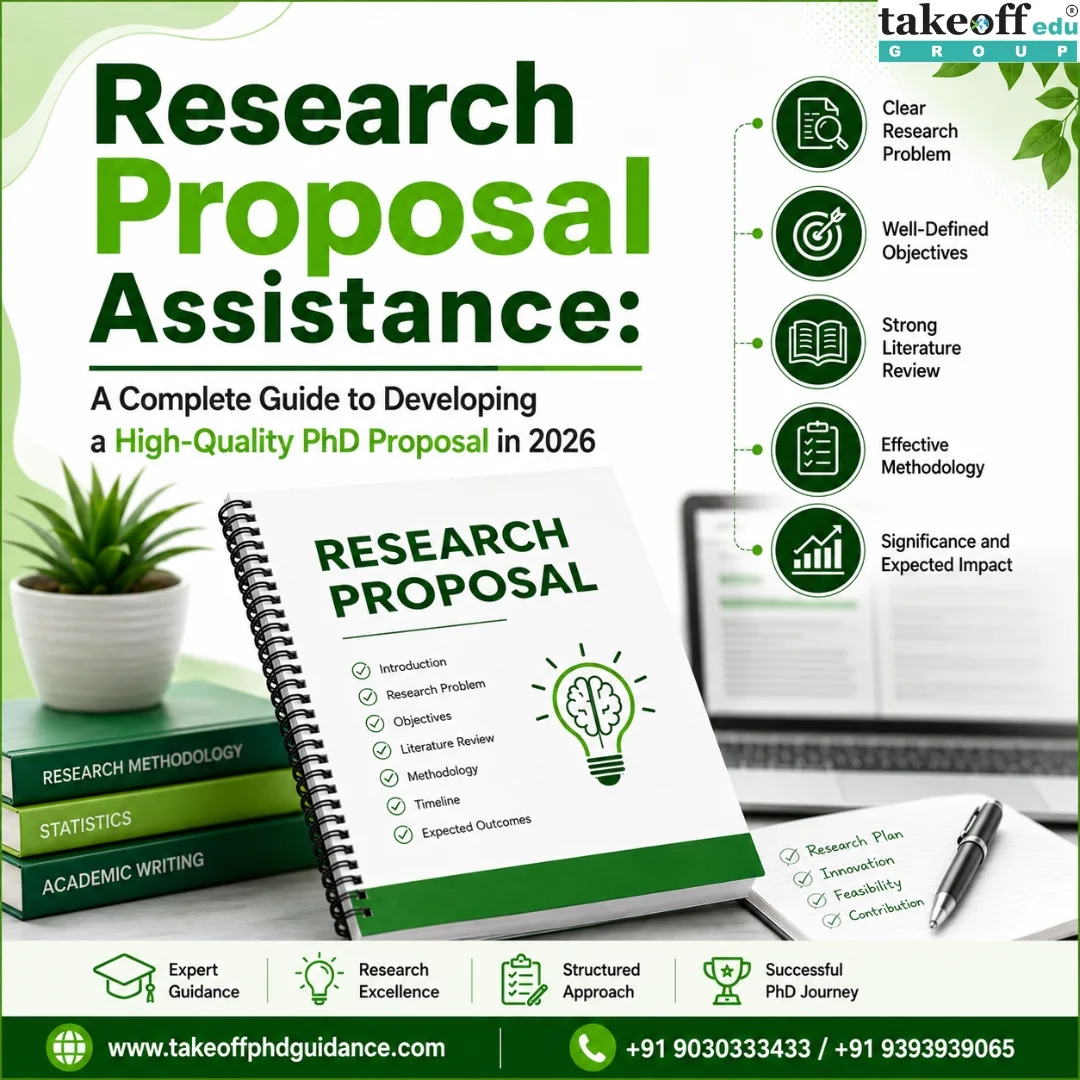
A high-quality research proposal includes:
- Clear research problem
- Defined research gap
- Focused objectives and questions
- Strong literature review
- Justified methodology
- Ethical compliance
- Clear research contribution
These elements help evaluators understand the value and feasibility of the study.
Practical Tips for 2026 Researchers
Before submission, scholars should:
- Study recent research trends
- Select relevant and real-world topics
- Align objectives with the research problem
- Choose practical methodologies
- Revise multiple times with feedback
- Follow university guidelines strictly
Proper planning saves time in later PhD stages like data collection and thesis writing.
Conclusion
A well-prepared research proposal is the first step toward successful doctoral research. It provides direction, clarity, and confidence throughout the PhD journey. Researchers who dedicate time and effort to developing a strong research proposal are better equipped to handle academic challenges and achieve long-term success in their scholarly journey.
If you are looking for Research Proposal Assistance, expert academic support can help you convert your idea into a structured, high-quality proposal that meets university standards and supports your PhD success in 2026.