Forklifts are vital in industries where heavy goods are, such as logistics, manufacturing, and stockrooms for retailers. Forklifts are not only efficient at moving goods but also improve the spatial economy of warehousing, factories, and distribution centers. Just because forklifts are effective, however, doesn’t mean they aren’t responsible for thousands of injuries (and deaths) and countless work disruptions due to stoppages from forklift accidents every year.
With constant advancements to facilities and facility environments, industries are increasingly in need of improved safety systems that go beyond standard best practices. The combination of Artificial Intelligence (AI), specifically computer vision, has now demonstrated potential to change forklift collision avoidance systems. In fact, the deployment of AI in this context is a use of intelligent combination of real-time visual analysis and intelligent-machine decision-making that can help mitigate risk without the need for human operator engagement.
The Ever-Present Struggle of Ensuring Everybody is Safe from Forklifts
Forklifts can appear small, but they are capable of weighing more than 10,000 pounds, causing serious injury, and possibly death. Forklift injury incidents can typically lead to broken bones, soft tissue damage or possible fatalities. Even with administrative controls in place (to help manage pedestrian traffic) such as pedestrian and forklift zones and pedestrian walkway markings, the simple fact is that these controls have not been effective enough in many high-risk areas.
Dangerous scenarios for pedestrians near forklifts:
- Narrow aisles: a lack of space to limit the ability for a pedestrian to remain safe and out of reach by a forklift.
- Blind corners: an operator or pedestrian turning the corner, and walking straight into the other, creates hazardous encounters.
- Forklifts backing up: Restricted rear view increases collision risk.
- Workers are distracted: unfocused or distracted workers having no notion they are walking into dangerous zones.
The standard approaches are modifications and new devices. Industries are now finding new technology, such as computer vision technology, that provides real-time awareness of people on a site or in an area. Unlike older systems, which only measure distances using proximity sensors or mirrors, AI-based systems recognize environments both visually and contextually.
How Computer Vision Improves Forklift Collision Avoidance
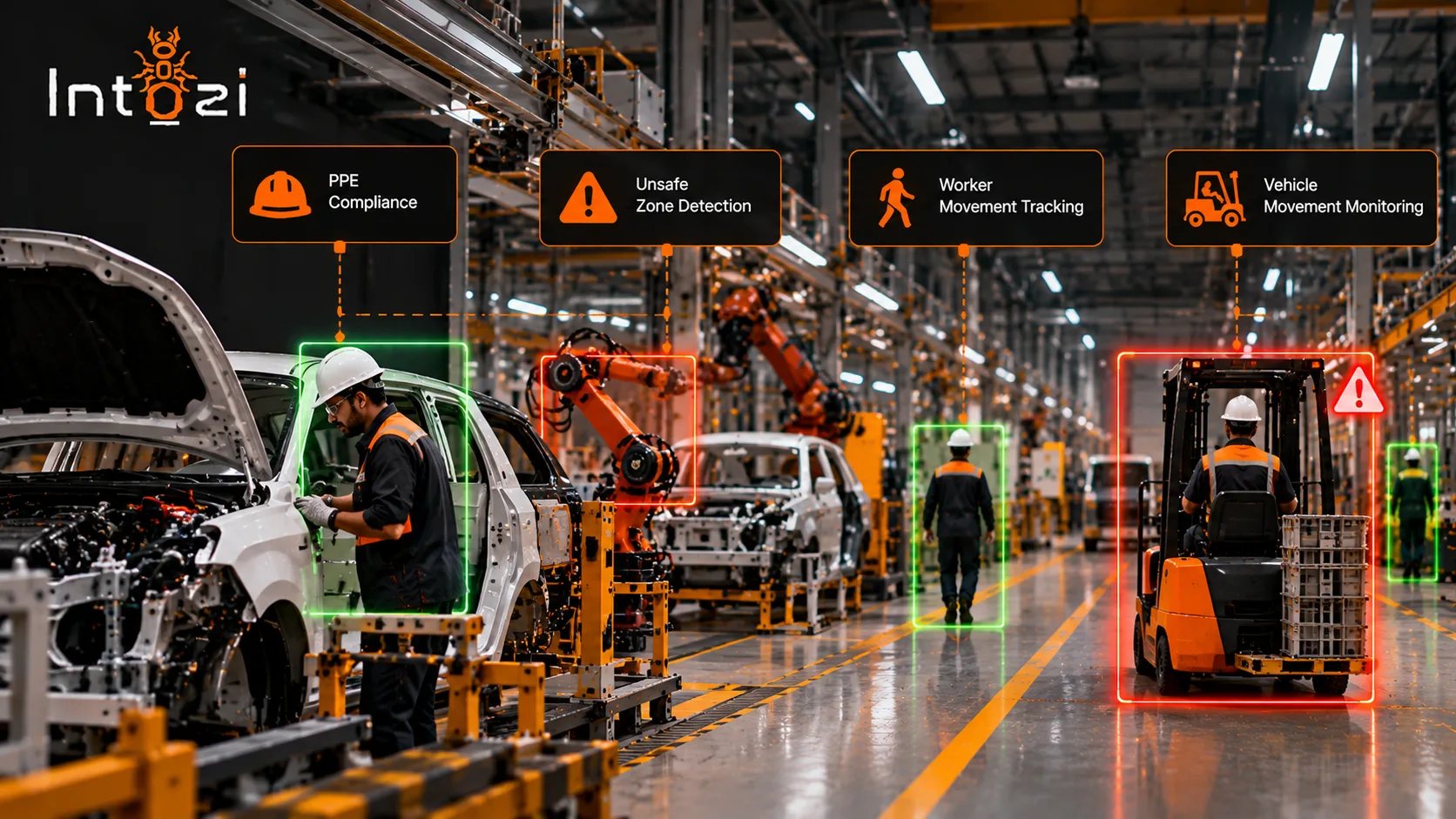
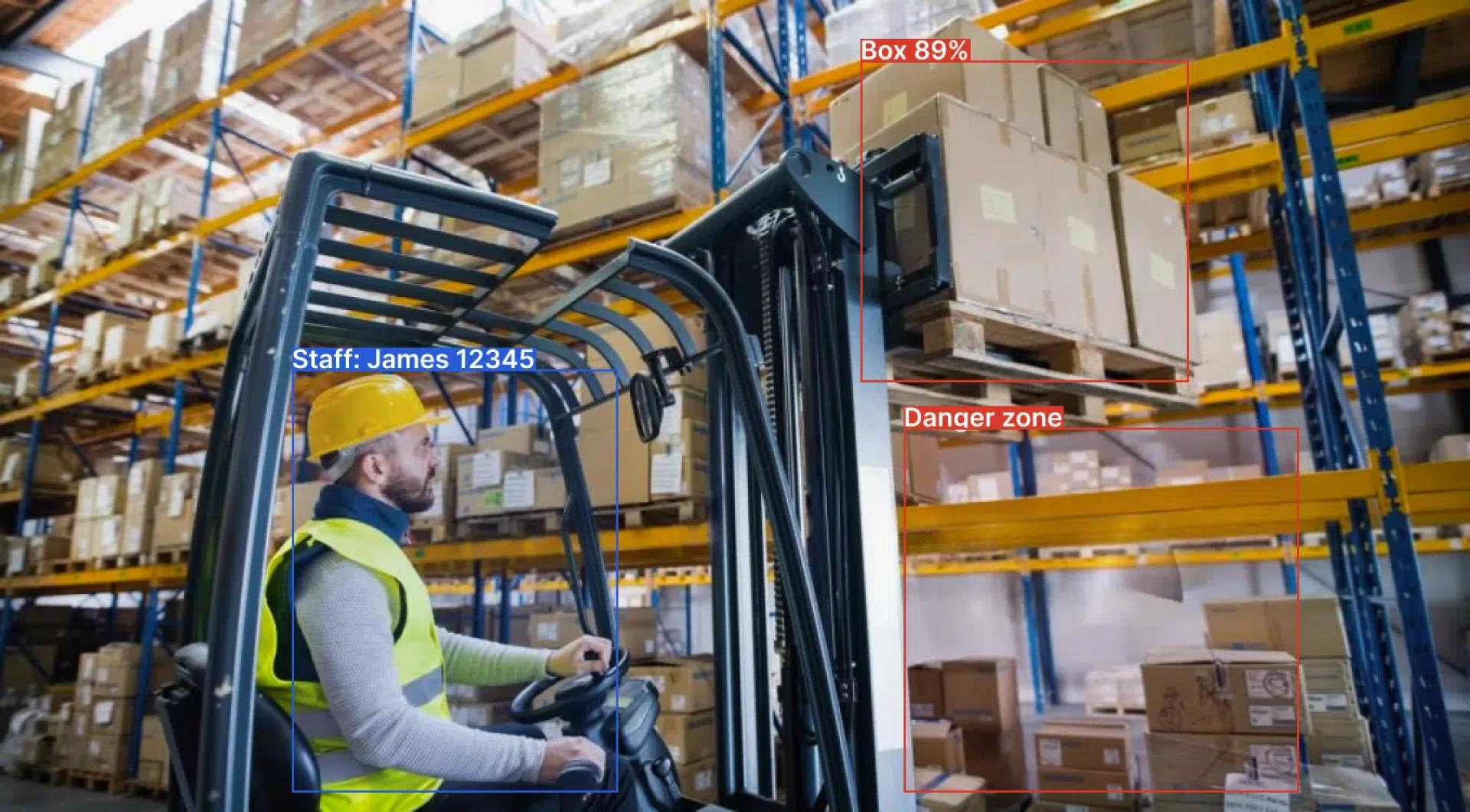
Computer vision is the technology that powers modern forklift safety systems. This means AI-powered algorithms use cameras and deep learning models to provide deep insights into the real-time environment. A computer vision-enabled system sees people, pallets, vehicles, racks, and other infrastructure of the environment and then uses machine learning to classify and separate them.
Computer Vision for Forklift Safety goes beyond basic distance measurements. It continuously monitors the operational environment for the forklift in real-time. If an unsafe condition occurs, like a person walking into a restricted area or another forklift driving toward the blind spot, the forklift operator can be instantly alerted by the computer vision system, or the system can take automatic actions to prevent a situation from developing into an accident.
Nextbrain’s AI-Enabled Forklift Accident Prevention System
Nextbrain’s cutting-edge forklift safety system is designed to help environment, health and safety teams manage their risks. In doing so, the forklift operator benefits, and it eliminates unplanned downtime.
How an Advanced AI-System Changes Safety Management
1. Real-time video-based alerts of intrusion
The system uses AI-based video analytics systems to monitor the restricted zone for intrusion. If the protected area is breached by a person or another forklift, the team gets an instant alert and can avoid taking any unwarranted risks.
2. Detection of Unsafe Proximity
The system uses advanced computer vision to constantly check for proximity between pedestrians and forklifts. When a pedestrian comes too close, an alert is activated and messaging is sent to supervisors or operators.
3. Systematic Glitch Detection
Some unsafe behaviors and faults are not overt and can be overlooked in day to day operations. AI-based heatmaps demonstrate repetitive unsafe incidents or behaviors, allowing management to redirect the behavior before an occurrence happens.
4. Behavior Recognition Using Heatmaps
Vision AI can create visual heatmaps which trail the movements of forklifts and pedestrians within a facility. This enables the facility to establish behavior patterns that could lead to collisions and allow for process re-engineering.
5. Continuous Safety Through Data
The system captures large amounts of data on forklift-pedestrian interactions. This allows facility management to analyze data to confirm existing safety practices as well as identify areas of concern and implement sustainable improvements.
Why Industries Are Choosing Vision AI to Support Forklift Safety
Traditional sensor-based systems — motion or heat sensors, ultrasonic sensors, or proximity alarms — have challenges with false positives, limited detection zone and are being reactive. AI-enabled computer vision is a best-in-class proactive and holistic safety solution.
Benefits of Vision AI Applications:
✔Real-Time Image Recognition
AI systems operate on high-resolution visual data and are able to analyze a wide net of risk with depth due to the ability to look at full motion images, versus motion/heat sensors.
✔ Decreased Product Damage
Being able to recognize an accurate point of detection signals an automatic stop for a forklift before incident impacts the field of destruction. Meaning that damage to products and or inventory will be less.
✔ Compliance with Safety Regulations
Monitor workplace adherence to compliance standards set in place by OSHA and ISO, and use data logs for regulation documentation purposes.
Vision AI Advantages for Forklift Operations
1. Improved Workplace Safety
AI computer vision enforces strict safety protocols and puts operators on notice about their surroundings. This minimizes injuries and builds a culture of safety in the employees.
2. Awareness
Operators do not always rely on some instinct and the rear-view mirrors. With the real-time feeds and alerts, the operator is fully aware of their environment.
3. Downtime
When the system prevents incidents before they happen, the facility can avoid shutdowns, delays, and expensive repairs.
4. It gathers actionable insights
The system provides actionable insights that can be optimized for the forklift’s path, and layout, and improve pedestrian traffic, safety, and efficiency.
The Future of Forklift Safety is AI-Driven.
Forklift safety is advancing from the classic high visibility vests and safety signs. AI-enabled collision mitigation systems are changing the way industries think about safety. These systems provide an additional layer of intelligence — not only is the forklift aware of machines, but people are now in its view as well.
Adopting computer vision and AI into forklift operations is a step towards a smarter, safer, and more efficient industrial workforce. As more companies begin to adopt the latest technology, these companies will be ahead of both safety and regulatory requirements as well as developing a more efficient workforce and ability to be resilient and adaptive.
Are You Positioned to Disrupt Your Forklift Safety Processes?
At Nextbrain we are in the business of building AI-driven safety systems based on your individual facility requirements. Our vision-based forklift accident prevention solution is built to keep your workforce safeguarded, reduce risks, and increase efficiencies.
Connect with our experts today to discuss how our intelligent safety systems can transform your operations.
Frequently Asked Questions (FAQs)
1. What is a forklift collision avoidance system that uses computer vision AI?
It’s a safety system that bundles AI-powered cameras that can analyze a live video feed streaming from the cameras. It identifies people, obstacles and hazards and activates alerting mechanisms, or should it decide to, automatic actions to halt or change direction to avoid a collision.
2. What are examples of hazards that AI computer vision will identify?
Pedestrian proximity, forklift-to-forklift risks, structural hazards, speeding in narrow aisles, and potential collisions with blind spots.
3. How does the system prevent a collision?
It uses AI video analytics software that continually views the camera feeds and creates alerts in real-time using visual or audio alerting mechanisms. In some cases, it can even automatically decelerate or stop the forklift.
4. How does this technology lower the risk of an accident?
It gives organizations a proactive safety monitoring system to supplement human-built safety systems. It reduces opportunities for human error, creates a safety first environment, which leads to less accidents and will help organizations improve compliance.
5. What industries benefit from AI-powered forklift safety systems?
Many industries can utilize AI-powered safety systems in the workplace. Industries that benefit the most include automotive, logistics, manufacturing, construction, retail, and food & beverage.