Choosing a plastic surgery hospital in Lucknow is only the first step in a longer journey. What happens after surgery — how the wound is cared for, how activity is managed, how any concern is caught early — often shapes the final result as much as the procedure itself. Yet recovery is where patient education tends to be the thinnest. This guide, informed by the patient-care philosophy at Kayakriti, explains what to expect from recovery and aftercare at a modern plastic surgery hospital in Lucknow, how long healing typically takes, what influences the outcome, and why structured follow-up matters for both cosmetic and reconstructive procedures.
Why Recovery Deserves the Same Attention as Surgery
A well-executed operation can still deliver a disappointing outcome if aftercare is neglected. Tissues need time to settle; scars need months to mature; and complications — when they occur — usually announce themselves with subtle early signs that are easier to manage when caught in time. A responsible plastic surgery clinic treats recovery as an integrated part of the treatment plan, not an afterthought. Whether the case involved cosmetic refinement or complex reconstructive surgery, healing is a shared responsibility between the surgical team and the patient, and it deserves clear guidance, honest expectations and steady support.
What Recovery Support Is Provided After Plastic Surgery?
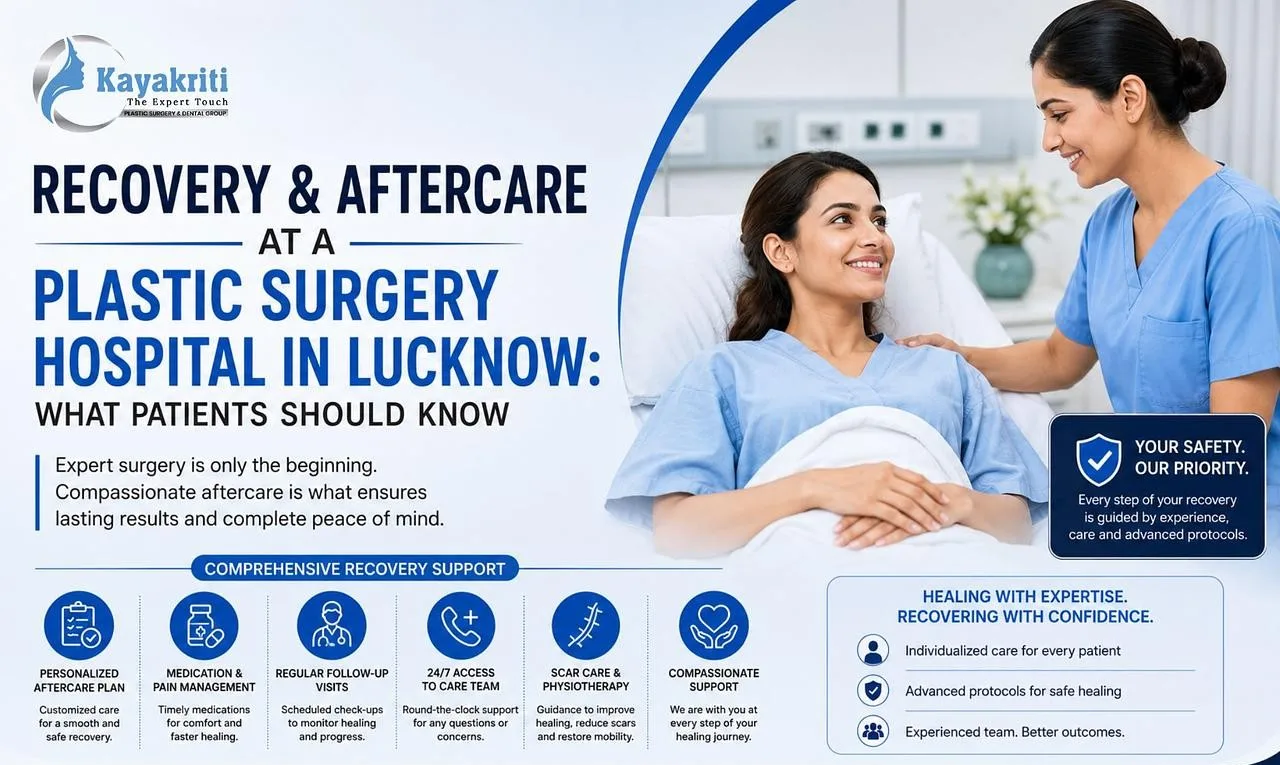
Recovery support after plastic surgery typically includes clear wound-care instructions, pain management, medication schedules, physiotherapy or scar-care guidance when needed, and structured follow-up appointments. A modern plastic surgery hospital in Lucknow will also provide round-the-clock access to its care team for post-surgery queries, so patients feel supported throughout healing.
At a well-organised clinic for plastic surgery, patients typically receive:
- Written aftercare instructions covering wound care, medication, diet, activity and warning signs.
- Prescribed medication and dressings with clear timings, so recovery is not left to guesswork.
- Scheduled follow-up visits, from the first dressing change to longer-term reviews at three and six months.
- Direct access to the care team for questions between visits — reassuring, especially in the first two weeks.
- Scar-management guidance, such as silicone gel or massage, once the wound has closed.
How Long Does Post-Surgical Recovery Typically Take?
Post-surgical recovery time depends on the procedure. Most cosmetic surgeries require one to two weeks of initial downtime and three to six months for final results, while larger reconstructive surgeries may need six weeks to twelve months of gradual healing. Individual pace is influenced by age, health and aftercare.
For minor and non-surgical treatments, most patients return to routine within a week and see the final settled result over four to six weeks. Common cosmetic procedures such as rhinoplasty, breast surgery and liposuction usually involve one to two weeks of initial downtime, two to four weeks before returning to normal activities, and a gradual refinement of the result over three to twelve months. Complex reconstructive surgery — such as microsurgical flaps, brachial plexus repair or major post-trauma reconstruction — often needs six to twelve weeks of recovery before routine activity and up to a year for tissues to fully mature. These are general guides; your surgeon will provide a personalised timeline for your specific procedure and health profile.
What Factors Influence Healing and Recovery Outcomes?
Healing outcomes are influenced by the patient's overall health, age, nutrition, sleep, adherence to aftercare instructions, smoking status and management of conditions such as diabetes or hypertension. Surgical technique, the sterile operating environment and the responsiveness of the aftercare team also play a decisive role in final results.
Some of these factors sit with the patient, and some with the hospital. On the patient side, avoiding smoking, keeping blood sugar controlled, eating well and following activity limits genuinely change healing speed and scar quality. On the hospital side, a serious plastic surgery clinic invests in infection control, single-use disposables and international sterilisation protocols to reduce complications. A leading best plastic surgery hospital in Lucknow also monitors patients closely during the first days after surgery, when complications, if they occur, are best detected and addressed.
What Follow-Up Care Is Generally Recommended After Surgery?
Follow-up care generally includes scheduled review visits, wound and dressing checks, suture removal where required, scar-management guidance, gradual resumption of activity and long-term monitoring for larger procedures. Consistent follow-up allows the surgical team to catch concerns early and support the tissues as they mature.
A typical follow-up rhythm after plastic surgery starts with an early review within the first week, a second visit around two to three weeks for suture removal or dressing changes, and further check-ins at six weeks, three months and often six or twelve months for larger cases. At a well-run clinic for plastic surgery, these visits are not routine formalities; they are structured checkpoints where photographs are compared, scar quality is assessed and any small concern is caught before it grows. For reconstructive cases, follow-up may extend well beyond a year, since function and appearance continue to refine as the tissues remodel.
Signs That You Should Contact Your Surgeon
Most recoveries are uneventful, but knowing what is normal and what is not is empowering rather than alarming. Some tenderness, mild swelling, bruising and a firm feeling in the operated area are all expected during healing. However, certain symptoms deserve prompt review by your surgical team:
- Sudden or increasing pain that is not controlled by the prescribed medication.
- Fever above 38°C, chills or feeling generally unwell in the first two weeks.
- Redness, warmth or discharge from the wound that appears new or worsens.
- Sudden swelling or bruising on one side that is markedly different from the other.
- Any breathing difficulty, chest discomfort or calf pain — call urgently.
A reputable best plastic surgery hospital in Lucknow, such as Kayakriti Clinic, encourages patients to reach out early rather than wait it out, because early attention almost always makes management simpler and outcomes better.
Why the Right Plastic Surgery Hospital Makes a Difference
Recovery is where the difference between an average and an excellent centre becomes most visible. A leading best plastic surgery hospital in Lucknow is defined not only by the skill of its surgeons in the operating theatre but also by the discipline of its aftercare – protocolised follow-up, an accessible care team, sterilised instruments and clear documentation at every stage. This ethos is central to how Kayakriti delivers care across cosmetic and reconstructive surgery, including 24/7 patient support for pre-op queries, follow-up reminders and post-surgery questions.
Dr. Amit Agarwal, Chief Plastic, Aesthetic and Reconstructive Surgeon at Kayakriti Clinic, holds FRCS (Edinburgh, UK), American Board certification, and M.Ch and DNB in Plastic Surgery, along with international fellowships in Microsurgery, Hand and Brachial Plexus Surgery, and Aesthetic Surgery. With more than 16 years of experience and over 15,000 patients treated across 150-plus procedures, the team is widely recognised as a trusted best plastic surgeon in Lucknow for both cosmetic and reconstructive care. Patients considering a plastic surgery hospital in Lucknow benefit not just from the surgeon's expertise but from the structured aftercare culture that follows every operation.
Frequently Asked Questions
Q1. How soon can I return to work after plastic surgery?
Answer: For most cosmetic procedures, patients return to desk-based work within one to two weeks. Physically demanding roles usually need three to four weeks. Larger reconstructive cases can require six weeks or more. Your surgeon at a trusted plastic surgery clinic will give you a personalised timeline based on your specific procedure.
Q2. Is follow-up included in the cost at a plastic surgery hospital?
Answer: At most reputable centres, the initial follow-up visits are included in the procedure cost, with any additional consultations or long-term reviews clarified upfront in writing. When comparing a clinic for plastic surgery, ask what aftercare is included — this transparency itself is a good sign of quality.
Q3. Can I speed up healing with supplements or home remedies?
Answer: There is no proven shortcut to healing. What genuinely helps is not smoking, eating a balanced diet, sleeping well and following your surgeon's instructions. A best plastic surgeon will discourage unverified supplements, some of which can increase bleeding. The best plastic surgeon in Lucknow will always recommend evidence-based aftercare over shortcuts.
Conclusion
Recovery is not the ending of a plastic surgery journey; it is the phase where the result is quietly protected and refined. A modern plastic surgery hospital in Lucknow supports patients with clear instructions, structured follow-up and a responsive care team, so healing feels guided rather than uncertain. Whether the procedure involved cosmetic enhancement or complex reconstructive surgery, disciplined aftercare transforms a good operation into a genuinely satisfying outcome. To understand what safe, well-supported recovery looks like at a trusted plastic surgery hospital in Lucknow, explore the aftercare approach at Kayakriti Clinic, where Dr. Amit Agarwal is widely regarded as the best plastic surgeon in Lucknow.
Disclaimer
This blog is intended for general educational purposes only and does not constitute medical advice, a treatment plan or a recommendation for any specific procedure. Recovery timelines and aftercare requirements vary from person to person; always follow the personalised instructions provided by your qualified plastic surgeon, and contact your surgical team promptly if you have any concerns about your healing.