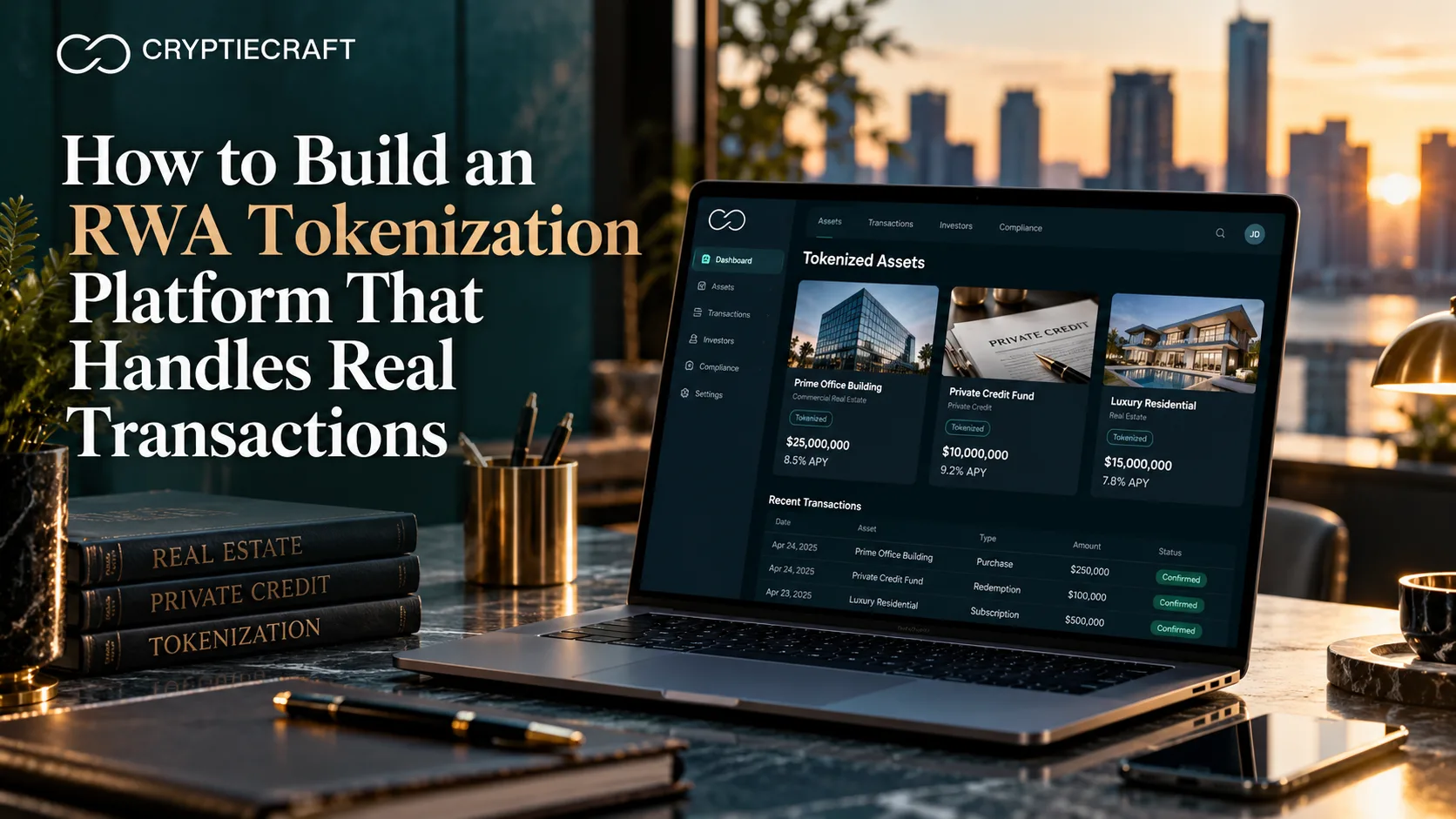

Real World Asset Tokenization has moved far beyond pilot projects and niche blockchain communities. In 2026, it stands at the center of a structural transformation in global finance. What began as an innovation driven by crypto-native startups is now being embraced by institutional investors, asset managers, private equity firms, sovereign funds, and traditional banks. The conversation has shifted from whether tokenization will work to how fast it can be deployed at scale.
Institutional adoption is not happening in isolation. It is being driven by macroeconomic pressure, liquidity constraints, demand for operational efficiency, and regulatory clarity emerging across major financial hubs. As a result, RWA Tokenization is redefining how assets are issued, traded, managed, and accessed across borders.
This blog explores why 2026 has become the tipping point, how institutions are integrating tokenized assets into their strategies, what technology and compliance frameworks are enabling this shift, and how Real world asset tokenization platform development is becoming a strategic priority for financial enterprises worldwide.
Understanding Real World Asset Tokenization in a 2026 Context
Real World Asset Tokenization refers to the process of representing tangible and intangible real-world assets such as real estate, bonds, private equity, infrastructure projects, commodities, and receivables as digital tokens on a blockchain network. These tokens represent ownership rights, revenue participation, or asset-backed claims.
In 2026, the scope of Real World Asset Tokenization Services has expanded significantly. It now includes:
Asset identification and structuring
Legal and regulatory alignment
Smart contract engineering
Token issuance and distribution
Secondary market enablement
Custody and compliance integration
Institutional investors are increasingly partnering with a RWA Tokenization Company to structure compliant digital securities that can be seamlessly integrated into traditional portfolios.
Unlike the early years of token experimentation, 2026 tokenization models are built around regulated frameworks. They are designed to integrate with existing capital market infrastructure rather than disrupt it entirely.
Why 2026 Marks the Institutional Adoption Wave
Several converging factors explain why institutional participation has accelerated in 2026.
Regulatory Clarity Across Major Markets
Over the past few years, regulators in North America, Europe, the Middle East, and parts of Asia have introduced clearer frameworks around digital securities and asset-backed tokens. Licensing structures, custody guidelines, and compliance mandates have matured.
This clarity has allowed traditional financial institutions to engage with Real World Asset Tokenization without facing ambiguous legal risks. As regulatory guardrails strengthen, risk committees within banks and asset management firms have become more comfortable approving tokenization initiatives.
Liquidity Optimization in a Tight Capital Environment
Global capital markets in 2026 continue to experience liquidity fragmentation. Private assets remain attractive but often suffer from long lock-in periods and limited secondary market activity.
RWA Tokenization addresses this problem by enabling fractional ownership and digital trading infrastructure. Tokenized assets can be divided into smaller units, broadening investor participation while enhancing potential liquidity pathways.
Institutions see tokenization not as a speculative tool but as a capital efficiency mechanism.
Operational Efficiency and Cost Compression
Traditional asset issuance involves multiple intermediaries such as transfer agents, custodians, clearing houses, and reconciliation systems. These layers increase settlement times and operational costs.
With RWA token development and blockchain-based settlement systems, many back-office processes are automated through smart contracts. This reduces reconciliation errors, shortens settlement cycles, and lowers transaction costs.
For institutional players operating at scale, even marginal efficiency gains translate into significant cost savings.
The Expanding Universe of Tokenized Assets
In earlier years, tokenization focused heavily on real estate and venture capital. In 2026, the range of tokenized asset classes has diversified dramatically.
Private Equity and Venture Capital
Private funds are using tokenization to structure feeder vehicles and fractional participation units. This approach broadens access while maintaining regulatory compliance.
Real World Asset Tokenization Offerings in this space often include programmable distribution models and automated reporting frameworks, which simplify investor communication.
Fixed Income and Bonds
Tokenized bonds are among the fastest-growing segments in institutional adoption. Governments and corporations are exploring blockchain-based issuance models that streamline settlement and reduce counterparty risk.
RWA Tokenization Services for fixed income assets often include automated coupon payments and real-time ownership tracking.
Infrastructure and Energy Projects
Large-scale infrastructure developments require massive capital commitments. Through tokenization, projects can raise capital from a global investor base while ensuring transparent allocation and reporting.
A Real world asset tokenization platform company can design systems where token holders receive revenue shares tied directly to project performance.
Commodities and Trade Finance
Trade finance instruments and commodity-backed tokens are also gaining traction. These tokens can represent warehouse receipts, supply chain invoices, or commodity reserves, providing improved transparency and auditability.
Institutional Strategy: Why Traditional Finance Is Embracing Tokenization
Institutional adoption is not driven by hype. It is driven by strategic necessity.
Portfolio Diversification and Access
Tokenized assets provide institutions with exposure to previously illiquid markets while improving portfolio granularity. Fractionalization allows capital allocation to be more precise.
Large funds are using RWA Tokenization to diversify across geographies and sectors without the operational burden of managing direct asset ownership structures.
Improved Transparency and Reporting
Blockchain-based infrastructure provides immutable transaction records and real-time data access. This level of transparency aligns with institutional requirements for auditability and compliance.
A rwa tokenization development company can integrate analytics dashboards and reporting layers directly into the platform, ensuring seamless regulatory disclosures.
Cross-Border Investment Simplification
Traditional cross-border investments often involve complex legal entities and currency conversions. Tokenization platforms can embed compliance rules and investor eligibility checks directly into smart contracts.
This programmable compliance framework reduces friction in international capital flows.
Technology Infrastructure Powering the 2026 Wave
Institutional adoption requires enterprise-grade infrastructure. The technology behind rwa tokenization platform development has matured significantly.
Smart Contracts and Programmability
Smart contracts automate dividend distributions, voting rights, lock-up periods, and compliance checks. These programmable features reduce manual oversight while enhancing operational integrity.
Interoperability with Traditional Systems
Modern Real world asset tokenization platform development focuses on integration with banking APIs, custodial systems, and regulatory reporting platforms.
Institutions demand systems that work alongside their existing enterprise resource planning tools and risk management frameworks.
Secure Custody Solutions
Digital asset custody has evolved with institutional-grade security models. Multi-signature wallets, hardware security modules, and regulated custodians provide safeguards that align with institutional risk standards.
A rwa tokenization platform development company typically partners with licensed custodians to ensure compliance.
The Role of Specialized Tokenization Companies
As adoption accelerates, institutions rarely build systems from scratch. Instead, they collaborate with a Real World Asset Tokenization Services provider or a specialized RWA Tokenization Company.
These companies offer:
End-to-end structuring and compliance advisory
Blockchain architecture design
Smart contract engineering
Token issuance management
Secondary market enablement
Post-issuance support and reporting
A RWA tokenization development company often functions as both a technology integrator and a strategic consultant, guiding institutions through legal, technical, and operational complexities.
Risk Considerations and Mitigation Strategies
Despite rapid adoption, institutions remain cautious. Risk management frameworks are critical.
Regulatory Risk
Compliance requirements vary across jurisdictions. Institutions must ensure tokenized assets meet securities laws and investor protection standards.
Partnering with experienced Real World Asset Tokenization Offerings providers reduces legal exposure.
Technology Risk
Smart contract vulnerabilities and cyber threats remain concerns. Comprehensive code audits and penetration testing are now standard components of RWA token development.
Market Risk
Tokenized assets are still subject to underlying asset volatility. Institutions must conduct traditional due diligence before investing in tokenized offerings.
Tokenization enhances structure and accessibility but does not eliminate market fundamentals.
Case for In-House Platform Development
While many institutions collaborate with external providers, some are exploring in-house Real world asset tokenization platform development.
Reasons include:
Control over intellectual property
Customization of compliance frameworks
Integration with proprietary trading systems
Data ownership and analytics capabilities
However, building in-house requires deep blockchain expertise and regulatory understanding. For this reason, hybrid models are emerging where institutions work closely with a rwa tokenization platform company to co-develop infrastructure.
Market Outlook: Capital Flow Projections for 2026 and Beyond
By 2026, industry analysts estimate that trillions of dollars worth of assets are either tokenized or in the pipeline for tokenization. Institutional capital inflow is accelerating as early projects demonstrate performance stability and operational efficiency.
Large asset managers are launching dedicated digital asset divisions. Banks are integrating tokenization desks into their capital markets operations. Sovereign funds are experimenting with infrastructure-backed tokens.
The institutional adoption wave is no longer theoretical. It is actively reshaping asset management strategies worldwide.
Competitive Landscape and Consolidation Trends
As demand grows, the number of RWA Tokenization Services providers has expanded. However, consolidation is expected.
Smaller startups may merge with larger financial technology firms. Established financial institutions may acquire specialized rwa tokenization development company teams to internalize expertise.
The market is moving toward enterprise-grade providers capable of supporting large-scale issuance and multi-asset portfolios.
The Strategic Imperative for 2026
For institutional players, tokenization is no longer optional experimentation. It is a strategic imperative driven by competitive pressure.
Firms that adopt Real World Asset Tokenization early gain:
Operational efficiency
Expanded investor access
Faster settlement cycles
Reduced transaction costs
Enhanced transparency
Late adopters risk falling behind in a market that increasingly values digital infrastructure.
The Evolution of Capital Markets Infrastructure
In 2026, tokenization is influencing how exchanges, clearing systems, and custodians operate. Hybrid models are emerging where traditional securities and tokenized assets coexist within unified platforms.
Centralized exchanges are exploring token listing frameworks for compliant digital securities. Private trading venues are integrating blockchain settlement layers.
RWA token development is not replacing traditional finance. It is modernizing it.
Institutional Education and Cultural Shift
One overlooked factor in institutional adoption is cultural transformation. Finance professionals trained in traditional systems must now understand blockchain, smart contracts, and digital custody.
Educational initiatives, internal innovation labs, and partnerships with Real World Asset Tokenization Services providers are helping institutions bridge knowledge gaps.
The success of tokenization initiatives depends as much on organizational readiness as on technology.
Conclusion: The Institutional Era of Tokenization Has Arrived
Real World Asset Tokenization in 2026 represents a defining moment in financial evolution. What started as a blockchain experiment has matured into a regulated, institutionally supported asset transformation movement.
RWA Tokenization is enabling capital markets to become more efficient, transparent, and accessible. Institutional investors are no longer observers. They are active participants shaping infrastructure, compliance standards, and global capital flows.
From partnering with a RWA Tokenization Company to investing in Real world asset tokenization platform development, institutions are embedding tokenization into their long-term strategies.
The adoption wave is not temporary. It reflects a structural shift in how value is represented, transferred, and managed in global finance. As 2026 progresses, the institutions that adapt fastest will define the next chapter of capital markets innovation.