Uncover the best readymade Pakistani suits, from lawn prints to embroidered sharara and gharara sets. Your complete guide to styles, fabrics, and buying tips.
Introduction
You're scrolling through your wardrobe before an event, and nothing feels right. The Indian salwar suits feel too plain. Western wear misses the festive mood. And stitching a custom outfit takes weeks you don't have.
That's exactly where readymade Pakistani suits come in — and why they've quietly become the go-to ethnic wear for women across South Asia, the UK, Canada, and beyond.
Pakistani fashion has always had a distinct identity: more flowing silhouettes, intricate threadwork, delicate chikankari, and fabrics like lawn and organza that drape differently from their Indian counterparts. And now, with the rise of ready-to-wear options, you no longer need a tailor or a three-week wait to wear them.
Whether you're dressing for Eid, a wedding, a casual afternoon, or just elevating your everyday look — this guide covers everything you need to know about readymade Pakistani suits, including styles, fabrics, fit tips, and how to choose between a sharara and a gharara.
Quick Answer
What are readymade Pakistani suits?
Readymade Pakistani suits are pre-stitched, ready-to-wear ethnic outfits in traditional Pakistani styles — including three-piece lawn sets, embroidered kurtis with dupattas, and festive sharara or gharara ensembles. They come in standard sizes (S to 3XL typically) and are available online and in stores, making them a fast, affordable alternative to custom tailoring.
Table of Contents
- What Makes Pakistani Suits Different?
- Popular Types of Readymade Pakistani Suits
- Pakistani Sharara: Style, When to Wear It, and How to Choose
- Pakistani Gharara: History, Look, and Occasions
- Sharara vs. Gharara: Key Differences at a Glance
- Best Fabrics for Pakistani Suits by Season
- How to Find Your Right Size in Readymade Pakistani Suits
- Styling Tips: From Casual to Festive
- Where to Buy Readymade Pakistani Suits
- Price Guide: What to Expect at Every Budget
- Expert Tips, Common Mistakes, and Best Practices
- Frequently Asked Questions
What Makes Pakistani Suits Different?
If you've ever worn both Indian ethnic wear and Pakistani ethnic wear, you've felt the difference even before looking in a mirror.
Pakistani suits tend to favour:
- Longer kurtas — often mid-calf or floor-length, especially in formal wear
- Straighter or A-line cuts with subtle flare, giving a leaner silhouette
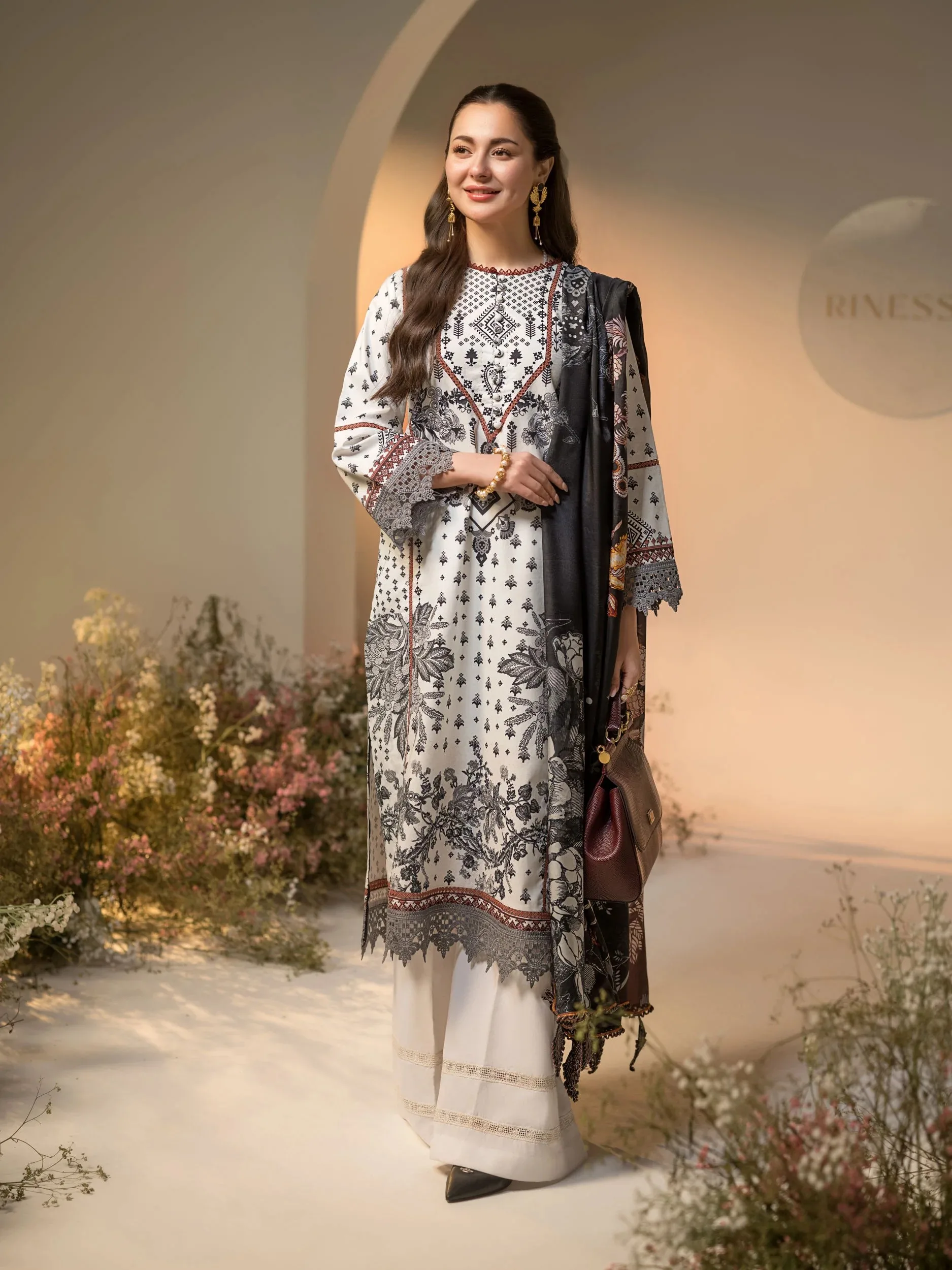
- Heavier embroidery concentration on the neckline, hem, and sleeves
- Lawn fabric as a summer staple — a fine cotton weave that's breathable and prints beautifully
- Muted, earthy, or dusty tones alongside bold festive colours — think sage, blush, ivory, rust
Pakistani fashion also draws heavily from its regional crafts: Sindhi mirror work, Balochi embroidery, Multani hand-block prints, and the iconic Lahori gota work all show up in mainstream readymade lines.
The global popularity of Pakistani fashion — carried by labels and curated stores like Rinessa — has made the Pakistani aesthetic instantly recognisable, and widely loved.
Popular Types of Readymade Pakistani Suits
Understanding the categories helps you shop smarter. Here's a breakdown:
Three-Piece Lawn Suits
The bread-and-butter of Pakistani fashion. Includes a printed or embroidered kurta, matching trousers or shalwar, and a dupatta. Widely available, affordable, and perfect for daily wear and casual outings.
Embroidered Chiffon or Organza Suits
Step up in formality. The kurta fabric is sheer and flowy, with machine or hand embroidery. Worn at dinners, mehndi functions, and semi-formal events.
Pret (Ready-to-Wear) Designer Suits
Mid to high-end readymade pieces from well-known Pakistani designer labels. These feature more refined construction, unique prints, and better finishing — priced accordingly.
Khaddar and Linen Winter Suits
Thick, warm fabrics for winter. Often block-printed or embroidered. Come in rich jewel tones.
Sharara and Gharara Sets
Festive and bridal-adjacent. These are statement pieces for weddings, Eid, and celebrations. More on these below.
Pakistani Sharara: Style, When to Wear It, and How to Choose
A Pakistani sharara is a wide-legged divided skirt — it looks like a skirt when you stand still but functions like trousers. The flare starts from the hip, giving a dramatic, sweeping silhouette.
What a Sharara Looks Like
- Wide, floor-length flared legs from the hip or just below
- Paired with a short or mid-length kurta (usually above the knee)
- Often features embroidery or sequins on the hem and kurta neckline
- Comes with a dupatta to complete the three-piece look
When to Wear a Sharara
Shararas are festive wear. You'll see them at:
- Eid celebrations
- Wedding functions (mehndi, dholki, baraat)
- Formal parties and engagements
- Photography shoots and styled events
They're also gaining popularity as a modern, dressy alternative to lehengas — less bulky, more wearable, and easier to move in.
Choosing the Right Sharara
- Body type: Shararas work beautifully for pear-shaped and hourglass figures. If you're petite, opt for a higher-waisted cut and avoid too much volume at the hem.
- Fabric: Georgette and chiffon shararas drape elegantly. Net sharara sets are more bridal-formal.
- Embellishment: For daytime weddings, go for subtle resham (thread) work. For evening events, heavy sequin or zari work reads better.
Pakistani Gharara: History, Look, and Occasions
The Pakistani gharara has a longer cultural history than the sharara. It originated in the Mughal courts of North India and was the signature outfit of women in Lucknow and Lahore for centuries.
What a Gharara Looks Like
- Wide-flared trousers that ruffle dramatically from the knee downward
- The upper half (above the knee) fits close to the leg — this is the key distinction from a sharara
- Paired with a short kurta or anghrakha-style top
- Almost always heavily embroidered — this is a formal, celebratory garment
Cultural Significance
In many Pakistani families, the gharara is still the traditional bridal outfit — especially for nikahs and more conservative weddings. It carries a sense of heritage and formality that no other silhouette quite matches.
When to Wear a Gharara
- Nikah ceremonies
- Bridal showers and valima functions
- Formal weddings where traditional dress is expected
- Cultural events and melas with a classical theme
Choosing the Right Gharara
- Opt for heavier fabrics like banarasi silk, velvet, or heavily embroidered net for evening functions
- Lighter gharara sets in chiffon or cotton-silk work for summer weddings
- Short kurta length (at or above the hip) keeps the silhouette balanced
Best Fabrics for Pakistani Suits by Season
Fabric is everything in Pakistani fashion. Here's a quick reference:
Summer (April–September)
- Lawn — The gold standard. Fine cotton, breathable, takes printed designs brilliantly.
- Cambric — Slightly thicker than lawn, good for everyday kurtas.
- Chiffon — Lightweight and flowy, ideal for semi-formal summer events.
- Cotton-silk blend — Airy with a subtle sheen.
Winter (October–March)
- Khaddar — Rough-textured handwoven cotton. Warm and earthy.
- Linen — Structured and comfortable.
- Velvet — For festive winter occasions.
- Wool blends — Practical warmth with ethnic styling.
Year-Round (Festive/Formal)
- Organza — Stiff, sheer, and structured — great for embroidery base.
- Georgette — Soft and flowy, used widely in sharara and gharara sets.
- Net — Used as overlay layers in bridal wear.
How to Find Your Right Size in Readymade Pakistani Suits
Sizing is the biggest pain point with readymade ethnic wear — and for good reason. Pakistani suits often use chest or shirt sizing rather than S/M/L labels.
Standard Pakistani Suit Sizing
Size LabelChest (inches)Best FitSmall (S)34–36Slim / petite buildMedium (M)38Average buildLarge (L)40Regular to slightly fullerXL42Fuller bust/hipsXXL44–46Plus sizeTips for Getting the Right Fit
- Measure your chest, waist, and hip before ordering online. Compare against the brand's size chart — not generic S/M/L assumptions.
- Kurta length matters as much as width — check if the brand lists it separately.
- Trouser/shalwar fit is usually adjustable with a drawstring. Less critical to measure precisely.
- Shararas and gharara sets are more forgiving — the waistband is typically adjustable.
- When in doubt, size up. It's far easier to take in a kurta than to let one out.
Styling Tips: From Casual to Festive
Casual Everyday Look
- Choose: A simple lawn or cambric kurta with printed trousers
- Footwear: Kolhapuri sandals or plain juttis
- Dupatta: Draped loosely over one shoulder or tied around the wrist
- Minimal accessories — just small jhumkas and a plain bangle
Office or Semi-Formal
- Choose: A straight-cut embroidered kurta in muted tones with cigarette trousers
- Footwear: Block heels or formal flats
- Dupatta: Pinned neatly or omitted entirely
- Bag: A structured tote or clutch
Festive / Wedding Guest
- Choose: Embroidered chiffon three-piece or a sharara set
- Footwear: Embellished heels or heavily embroidered juttis
- Dupatta: Pinned to the shoulder with brooches or draped over the head
- Jewellery: Kundan, polki, or pearl sets work beautifully
Bridal / Formal Evening
- Choose: A heavily embroidered gharara set in jewel tones — deep red, emerald, midnight blue
- Footwear: Platform heels for height, or traditional khussa
- Hair: Low bun with floral pins or a maatha-patti (headpiece)
- Go all in on jewellery — this is the look for it
Where to Buy Readymade Pakistani Suits
Pakistani Brand Websites (Ships Internationally)
- Rinessa — A curated destination for readymade Pakistani suits, from everyday lawn three-pieces to embroidered sharara and gharara sets, with international shipping available
Online Marketplaces
- Amazon and eBay — Useful for diaspora shoppers in the US, UK, Canada; verify seller reviews carefully
- Etsy — Good for handcrafted or boutique Pakistani suits
- Local ethnic wear e-commerce platforms in India, the UK, and UAE often carry Pakistani styles
Physical Stores
- In UK cities like Bradford, Birmingham, Manchester — dedicated Pakistani fabric and readymade stores
- In India — Markets like Lajpat Nagar (Delhi), Linking Road (Mumbai), and Fashion Street carry Pakistani-style suits
- Dubai's Meena Bazaar has a strong selection
Expert Tips, Common Mistakes, and Best Practices
Pro Tips
- Buy lawn suits in summer collections (March–May) — that's when Pakistani brands release their best prints at the freshest prices.
- Invest in one good gharara or sharara rather than three cheap versions. The silhouette only works when the fabric has body and the embroidery has weight.
- Store embroidered suits folded in muslin cloth, not plastic bags — it prevents colour bleeding and fabric stress.
- A good tailor can transform a readymade suit — get the kurta length adjusted, sleeves altered, or a plain neckline embellished to make it feel custom.
Common Mistakes to Avoid
- Ignoring care labels. Many embroidered Pakistani suits are dry-clean only. Washing them at home can ruin the threadwork.
- Buying purely based on online photos. Fabric texture, colour accuracy, and embroidery quality vary significantly from screen to reality. Read fabric descriptions carefully.
- Over-accessorising a heavily embellished suit. If the outfit has extensive stonework or zari embroidery, keep jewellery simple and let the clothes speak.
- Choosing the wrong dupatta draping style. A heavy embroidered dupatta draped casually over the arm reads as unfinished. Either pin it properly or swap it for a lighter stole.
Best Practices
- Match dupatta weight to outfit formality.
- For online shopping, check the return and exchange policy before purchasing.
- For summer events, choose lawn or chiffon — velvet in July is never worth the discomfort.
- When wearing a gharara for the first time, practise walking at home. The silhouette takes some adjustment.
Conclusion
Readymade Pakistani suits have genuinely earned their place as a wardrobe essential — not just for festive occasions, but for anyone who wants to dress with intention every day.
The range today is remarkable: from breezy lawn prints you'll reach for on a hot afternoon to intricately embroidered gharara sets that carry centuries of craft in every stitch. And the Pakistani sharara sits right in the middle — festive enough for celebrations, modern enough to feel fresh.
The key takeaways from this guide:
- Know your occasion before choosing a style — sharara for festive-fun, gharara for formal-traditional
- Invest in fabric quality; it makes the single biggest difference to how a suit looks and feels
- Size up when in doubt with readymade, and keep a good tailor's number handy
- Take care of embroidered pieces — they'll last for years if stored and cleaned properly
Whether you're building a new ethnic wardrobe from scratch or adding a couple of statement pieces for the season, Pakistani fashion rewards good taste and careful choosing. Start with one beautiful three-piece lawn suit, one semi-formal embroidered set — and see where it takes you.
Looking to explore more Pakistani suit styles and trends? Browse Rinessa's curated collection to find readymade Pakistani suits, sharara sets, and gharara pieces that match your style and occasion.
Frequently Asked Questions
Q1: Can I wear a Pakistani sharara for a wedding?
Absolutely. A sharara is one of the most popular choices for wedding guests and even brides at informal functions like mehndi or dholki. For more formal ceremonies, opt for a heavily embroidered version in silk, georgette, or net.
Q2: What's the best fabric for a Pakistani suit in summer?
Lawn is the top choice for summer. It's a fine-weave cotton that's breathable, comfortable, and prints beautifully. Chiffon is the go-to for summer evening events when you want something dressier.
Q3: Is a gharara suitable for everyday wear?
Not really. The gharara is a formal, ceremonial silhouette with significant volume and embellishment. It's designed for weddings, nikahs, and festive events. For everyday wear, stick to three-piece lawn suits or straight-cut kurtas.
Q4: How do I care for embroidered Pakistani suits?
Most heavily embroidered suits — especially those with zari, sequins, or stonework — should be dry-cleaned. For lighter embroidery, hand washing in cold water with mild detergent is usually safe. Always air dry flat, not on a hanger.
Q5: Which Pakistani brands are best for readymade suits?
Rinessa offers a well-curated range spanning everyday pret to festive and formal pieces — including embroidered suits, sharara sets, and gharara collections. Browsing a focused, curated store like Rinessa is often easier than navigating multiple brand sites separately.
Q6: Are readymade Pakistani suits available in plus sizes?
Yes, most major Pakistani brands now carry sizes up to 3XL, and some up to 4XL. Online platforms and international retailers have expanded their plus-size ranges significantly. Always check sizing details before purchasing.
Q7: How is a Pakistani gharara different from a lehenga?
A lehenga is a skirt (undivided), worn with a choli (blouse). A gharara is divided — it's technically trousers with dramatic flare at the knee — worn with a shorter kurta. The gharara has a more draped, traditional feel; lehengas tend to have more bridal glam.