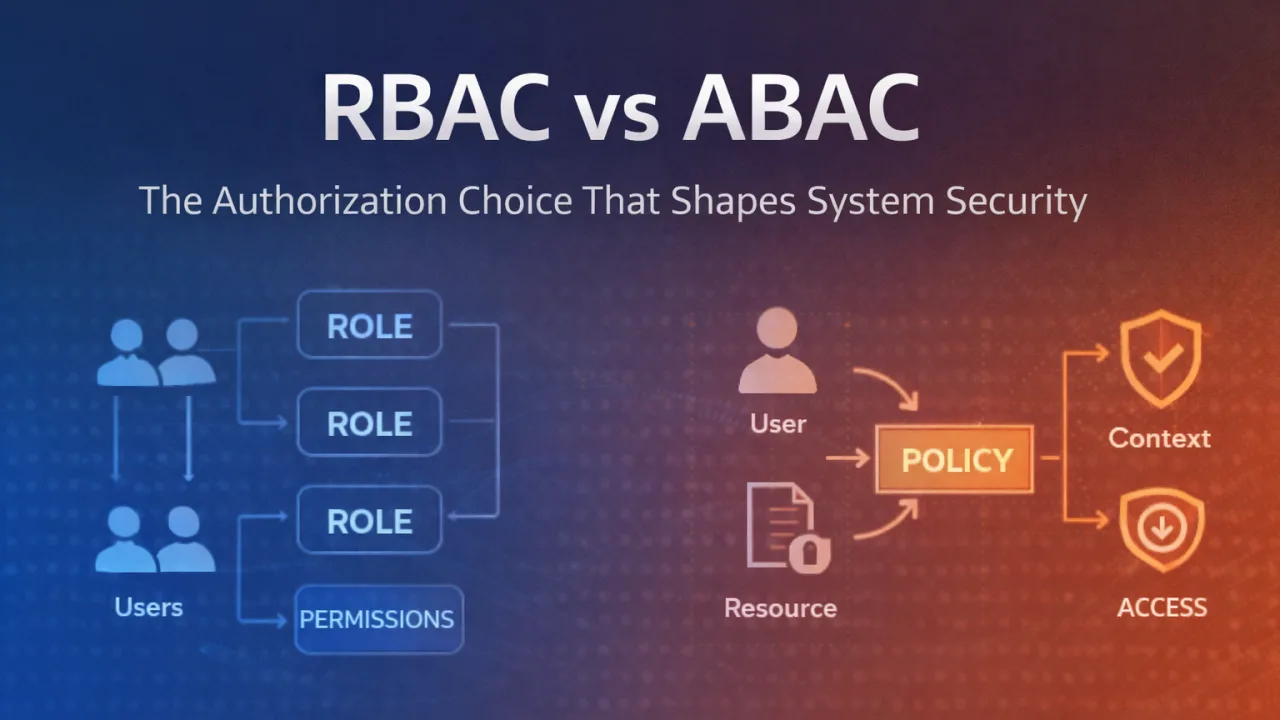
The prevention of fraud and data breach activities starts with strict access control strategies. Therefore, companies need to carefully choose the appropriate model for managing security permissions. Conventionally, role based access control has simplified the accessibility through predefined organization roles. However, modern cyber security Canada demands flexibility towards handling dynamic and contextual activities. Therefore, an attribute based access control has emerged for addressing these complicated security requirements. While RBAC emphasizes roles, ABAC evaluates multiple factors for security decisions. As a result, both models provide unique strengths as per organizational structure.
Advantages of RBAC
The core benefits of RBAC not only highlight its significance but also portray its transformative potential for the organization.
RBAC reduces the risk of unauthorized data accessibility RBAC streamlines operations through role assigning instead of individual permissions, which ensures consistency The straightforward solution of implementing role based permission adheres to advanced data protection standards RBAC offers scalability to meet growing security demands from startups to multinational companies
Advantages of ABAC
The significant benefits of ABAC enable authorized users to access system sources.
The flexibility of ABAC lies in its attribute system to provide high context granular accessibility. ABAC uses encapsulation to hide technical permission in plain sight ABAC helps policy makers to implement advanced restrictions with cognitive context for privacy and security ABAC uses automation for updating immediate and systemic accessibility.
Who should consider RBAC and ABAC?
Although both have numerous benefits, their suitability varies.
Startups or growing businesses
Firstly, onboarding employees of startups benefits from RBAC through predefined role assignment. Moreover, cyber security company Canada recommends predefined roles for consistent formation. Additionally, small teams with limited employees find RBAC effective and manageable. For example, a bakery enterprise with around 10 employees can easily implement the RBAC system. So, because bakers will access the inventory system, cashiers will handle point-of-sale operations.
Companies that need access based on specific times
Meanwhile Cyber Security company Toronto suggests ABAC for time based access control to be efficient. Because ABAC provides a sensitive system that is not accessible outside designated working hours securely. For example, retail businesses restrict inventory accessibility strictly after operational hours. Therefore, ABAC prevents unauthorized system usage efficiently.
Industries requiring regulatory compliance
Finally, even the compliance driven industries have benefited from the conditions based ABAC system. Specifically, financial companies enforce access rules on the basis of time, role, and location. Consequently, ABAC can help organizations to meet strict Global Security regulations like GDPR and PCI DSS.
Creative businesses
Creative companies require flexibility and dynamic access control solutions. Therefore, in such cases, Cyber Security firms Canada recommend ABAC strategies. Because these will allow frequent changes in resource access permission. For example, designers are sharing concept files, whereas finance teams are controlling and billing document accessibility simultaneously. Therefore, ABAC is suitable for organizations with constantly evolving collaboration and access requirements.
Conclusion
Both RBAC and ABAC have distinct advantages as per business requirements and structure. On one hand, RBAC ensures simplicity, consistency, and management ease for a stable environment and a smaller team. On the contrary ABAC delivered flexibility and accuracy with more strict security for dynamic and compliance driven industries. Therefore, implementing the right security model depends on scalability and operational complexity. If you want to strengthen your security system, contact Matayo for advanced solutions.