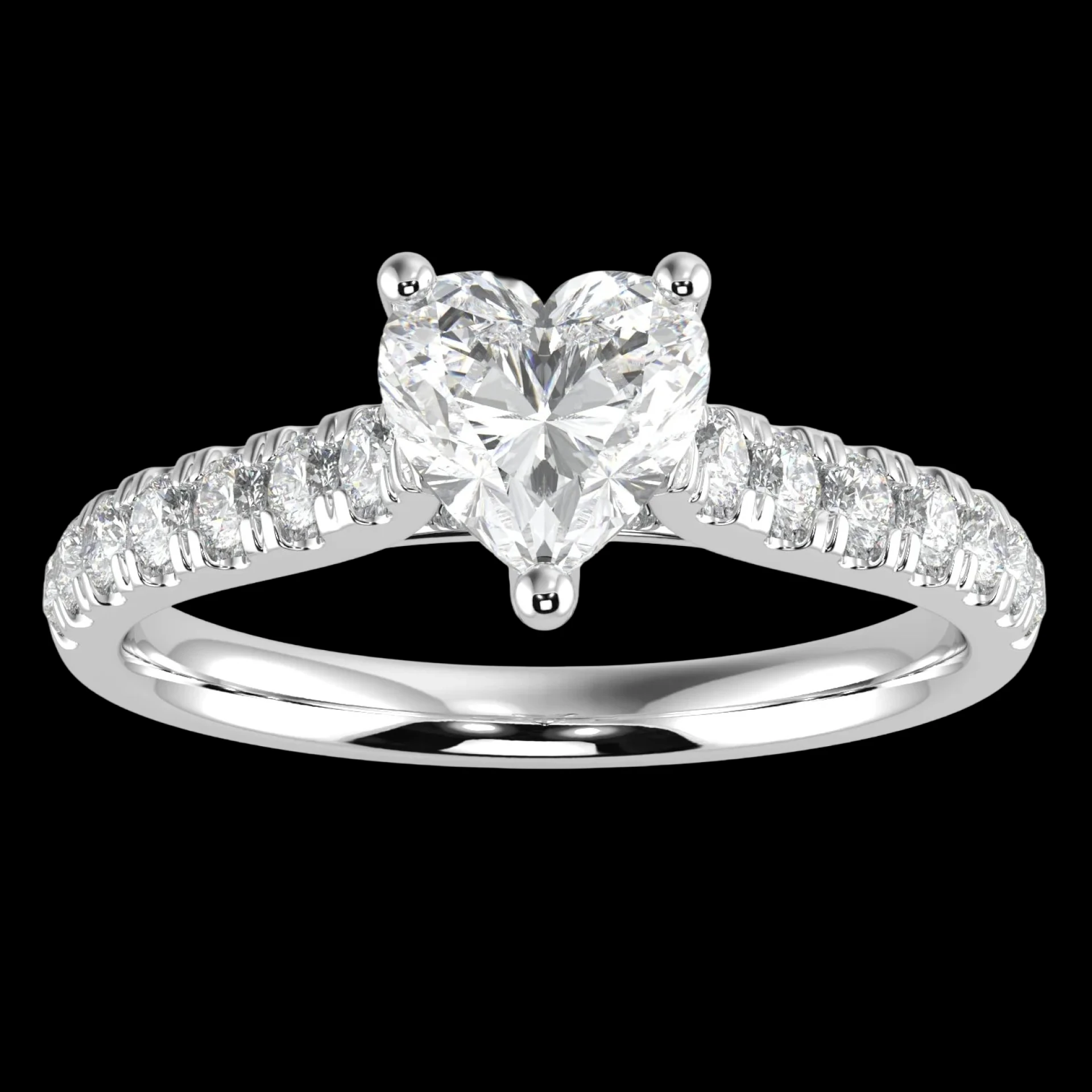
Trends in love, like trends in fashion, have a way of circling back to what feels most authentic. As 2026 approaches, the engagement ring conversation is shifting again. After several years where lab-grown diamonds dominated headlines for their accessibility and impressive size, couples are rediscovering the quiet power of rarity. Natural diamonds, formed deep within the earth over billions of years, are once again capturing hearts—not because they are easy to obtain, but precisely because they are not.
In this renewed appreciation, natural diamond engagement rings are being chosen less as status symbols and more as storytellers. Today’s couples are asking deeper questions about meaning, longevity, and individuality. They want a ring that represents a love that cannot be replicated or mass-produced. While lab-grown diamonds offer visual perfection and affordability, natural diamonds offer something far rarer: a singular geological identity shaped by time, pressure, and chance.
At the core of this comeback is the idea of scarcity. Natural diamonds are finite. They come from rare earth-mined diamond deposits that took between one and three billion years to form under conditions that no longer exist on the planet’s surface. Every natural diamond is the result of a specific moment in the earth’s history, brought upward by volcanic forces and discovered by human hands centuries or millennia later. This kind of origin story cannot be recreated in a laboratory, no matter how advanced the technology becomes.
In contrast, lab-grown diamonds can be produced on demand. While they are chemically identical to natural stones, their abundance has changed how they are perceived. When something can be manufactured endlessly, it inevitably loses its sense of exclusivity. Couples in 2026 are increasingly aware of this distinction. They are looking beyond surface brilliance and asking what their engagement ring will represent decades from now. The answer, for many, lies in a stone that is inherently limited in supply.
Another reason natural diamonds are regaining favor is their individuality. No two natural diamonds are exactly alike. Their inclusions, growth patterns, and subtle variations act like a fingerprint—often described as the diamond’s unique “DNA.” These internal characteristics are not flaws to modern buyers; they are proof of authenticity. In a world increasingly shaped by algorithms and uniformity, owning something truly one-of-a-kind carries emotional weight.
This concept of uniqueness aligns closely with how modern relationships are viewed. Couples today often see their partnership as deeply personal and distinct from any other. A natural diamond mirrors that philosophy. Its journey from deep within the earth to an engagement ring parallels the idea that meaningful things take time, resilience, and transformation. That symbolism is difficult to replicate with stones created in a matter of weeks.
There is also a growing awareness of natural diamonds as a form of investment jewelry. Historically, high-quality natural diamonds have demonstrated long-term value retention, particularly rare stones with exceptional characteristics. While not every engagement ring is purchased with resale in mind, many couples appreciate knowing that their ring holds intrinsic worth beyond sentiment. Lab-grown diamonds, due to their increasing supply and decreasing production costs, do not offer the same long-term value stability.
This investment perspective does not necessarily come from a desire to sell, but from a mindset of permanence. Couples want a ring that can become an heirloom, passed down with a story intact. Natural diamonds, with their rarity and enduring demand, fit naturally into this narrative. They are not just symbols of love, but of legacy.
Ethical sourcing has also evolved as a conversation. In 2026, buyers are more informed and selective than ever. Responsibly sourced rare earth-mined diamonds, backed by transparent supply chains and certifications, are becoming a priority. Many jewelers now focus on traceability, ensuring that natural diamonds are mined with respect for communities and the environment. This transparency has helped rebuild trust and appeal among socially conscious consumers.
Brands like Aamiaa have recognized this shift, curating collections that emphasize craftsmanship, authenticity, and responsibly sourced natural stones. Rather than competing on size alone, such brands highlight the story behind each diamond—where it comes from, what makes it unique, and why it will endure. This approach resonates with couples who want their engagement ring to feel intentional, not transactional.
The emotional value of natural diamonds also plays a significant role in their resurgence. There is something profoundly romantic about wearing a gemstone that existed long before humanity itself. It connects the present moment to deep time, reminding the wearer that love, like the earth, is shaped slowly and survives immense pressure. This poetic dimension cannot be engineered; it can only be discovered.
As minimalism and mindful consumption continue to influence lifestyle choices, people are buying fewer things but investing more meaning into what they do buy. An engagement ring is no longer about excess or spectacle. It is about alignment with personal values. For many, choosing a natural diamond reflects a belief in depth over convenience and story over scale.
The comeback of natural diamonds in 2026 is not a rejection of innovation, but a recalibration of priorities. Lab-grown diamonds will continue to have a place in the market, particularly for those who prioritize size or affordability. However, natural diamonds are reclaiming their position as the choice for those who value rarity, history, and individuality. They stand as a reminder that not everything meaningful needs to be optimized for efficiency.
Ultimately, the renewed interest in natural diamonds speaks to a broader cultural shift. In an age where so much can be replicated instantly, true scarcity has become precious. Natural diamonds are rare not just because of limited supply, but because of the time and chance required to create them. For couples stepping into a lifelong commitment, that symbolism feels more relevant than ever.
As 2026 unfolds, natural diamond engagement rings are once again being celebrated for what they have always been: singular works of nature, each with its own origin story and irreplaceable character. In choosing one, couples are not just selecting a gemstone—they are choosing a piece of the earth’s history, shaped by billions of years, to mark the beginning of their own.