
In today’s competitive business environment, speed, efficiency, and adaptability are critical factors in determining whether a new product succeeds or fails. Companies across industries are under constant pressure to innovate while reducing time to market and controlling costs. This is where rapid product development and manufacturing plays a vital role. By streamlining the journey from idea to market-ready product, businesses can respond quickly to customer needs, validate concepts earlier, and gain a significant competitive advantage.
Rapid product development and manufacturing is a structured yet flexible approach that combines design, engineering, prototyping, testing, and production planning into an integrated process. Instead of treating each stage as a separate step handled in isolation, this approach encourages collaboration and iteration. As a result, potential issues are identified early, design decisions are better informed, and products move through development with fewer delays and surprises.
At the core of rapid product development is the ability to turn ideas into tangible solutions quickly. Every successful product starts with an idea, but transforming that idea into something functional requires clarity, technical expertise, and careful planning. Early-stage concept development focuses on understanding the problem being solved, the target user, and the commercial opportunity. Clear requirements and realistic goals set the foundation for a development process that moves quickly without sacrificing quality.
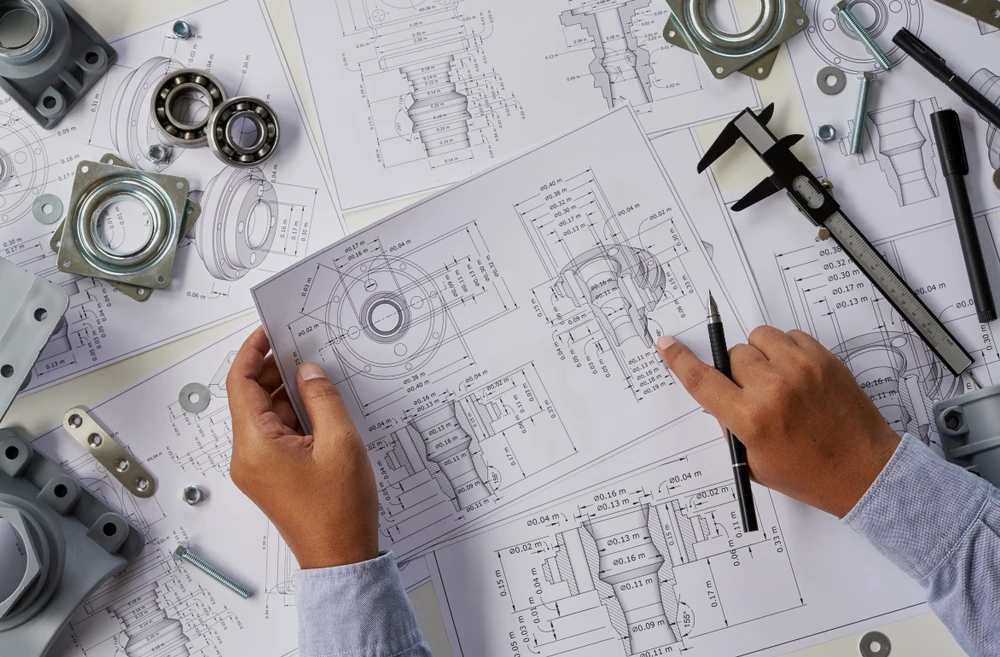
Design plays a crucial role in rapid product development and manufacturing. Industrial design and engineering must work closely together to ensure that a product is not only visually appealing but also functional, manufacturable, and cost-effective. Early design decisions have a major impact on materials, production methods, and overall feasibility. By considering manufacturing constraints from the outset, businesses can avoid costly redesigns later in the process.
Engineering development is where ideas begin to take physical form. Mechanical, electronic, and software engineering often need to come together, especially for modern, technology-driven products. Rapid development approaches priorities modular designs, proven components, and efficient system architectures. This reduces complexity and allows teams to focus on refining performance rather than solving avoidable technical challenges.
Prototyping is one of the most powerful tools in rapid product development and manufacturing. Creating physical or functional prototypes allows teams to test assumptions, gather feedback, and make improvements early. Rapid prototyping techniques, including 3D printing and low-volume fabrication, enable fast iterations without the high costs associated with traditional tooling. These prototypes help validate form, fit, function, and user experience before committing to full-scale production.
Testing and validation are essential to ensuring that speed does not come at the expense of reliability. Rapid development does not mean skipping testing; instead, it means integrating testing throughout the process. Functional testing, usability testing, and performance evaluation provide valuable insights that guide design refinements. Early and frequent testing reduces the risk of failures later, when changes are more expensive and time-consuming.
Manufacturing considerations are tightly linked to product development in a rapid approach. Design for manufacture and assembly ensures that products can be produced efficiently, consistently, and at the required quality level. This includes selecting appropriate materials, optimizing part counts, and designing components that are easy to assemble. When manufacturing expertise is involved early, products transition more smoothly from prototype to production.
Rapid product development and manufacturing is particularly valuable for startups and innovators. For new businesses, speed to market can be the difference between success and failure. Investors and customers want to see progress, proof of concept, and traction. A rapid approach allows startups to demonstrate value quickly, refine their offering based on real-world feedback, and adapt their strategy as needed.
Established companies also benefit from rapid development methodologies. Large organizations often face internal complexity and longer decision-making cycles, which can slow innovation. By adopting rapid development principles or working with external specialists, these businesses can accelerate new product initiatives without disrupting existing operations. This agility is increasingly important in markets where customer expectations and technologies evolve rapidly.
Another key advantage of rapid product development and manufacturing is risk reduction. Traditional development models often delay validation until late in the process, increasing the risk of costly failures. Rapid approaches emphasize early learning through prototypes, testing, and user feedback. This allows teams to identify weak assumptions, technical limitations, or market misalignment before significant resources are committed.
Cost control is also closely linked to speed and efficiency. While rapid development may seem more expensive upfront due to prototyping and iteration, it often reduces overall costs by avoiding late-stage changes and production issues. Making informed decisions early helps prevent waste, rework, and delays that can significantly impact budgets and timelines.
Collaboration is a defining characteristic of successful rapid product development and manufacturing. Cross-functional teams that include designers, engineers, manufacturers, and commercial stakeholders are better equipped to make balanced decisions. Open communication and shared goals ensure that trade-offs are understood and managed effectively. This collaborative mindset helps maintain momentum and keeps projects moving forward.
Technology plays an important role in enabling rapid development. Digital design tools, simulation software, and data-driven decision-making allow teams to explore options quickly and with greater confidence. Advanced manufacturing techniques support fast turnaround times and flexible production. Together, these tools empower businesses to innovate at speed while maintaining control over quality and performance.
Market readiness is the ultimate goal of rapid product development and manufacturing. Bringing a product to market involves more than just technical completion. Packaging, compliance, supply chain planning, and scalability must all be considered. A well-managed rapid development process prepares products for real-world conditions, ensuring they are ready for customers, partners, and investors.
As markets continue to evolve, the ability to develop and manufacture products quickly will remain a critical success factor. Customers expect solutions that address their needs now, not years in the future. Businesses that embrace rapid product development and manufacturing are better positioned to respond to change, seize opportunities, and stay ahead of competitors.
Ultimately, rapid product development and manufacturing is about combining speed with smart decision-making. It enables businesses to innovate with confidence, learn quickly, and deliver value sooner. By integrating design, engineering, and manufacturing into a cohesive process, companies can transform ideas into successful products while minimizing risk and maximizing impact.