Rajasthan University of Veterinary and Animal Sciences: A Center for Excellence in Veterinary Training and Research
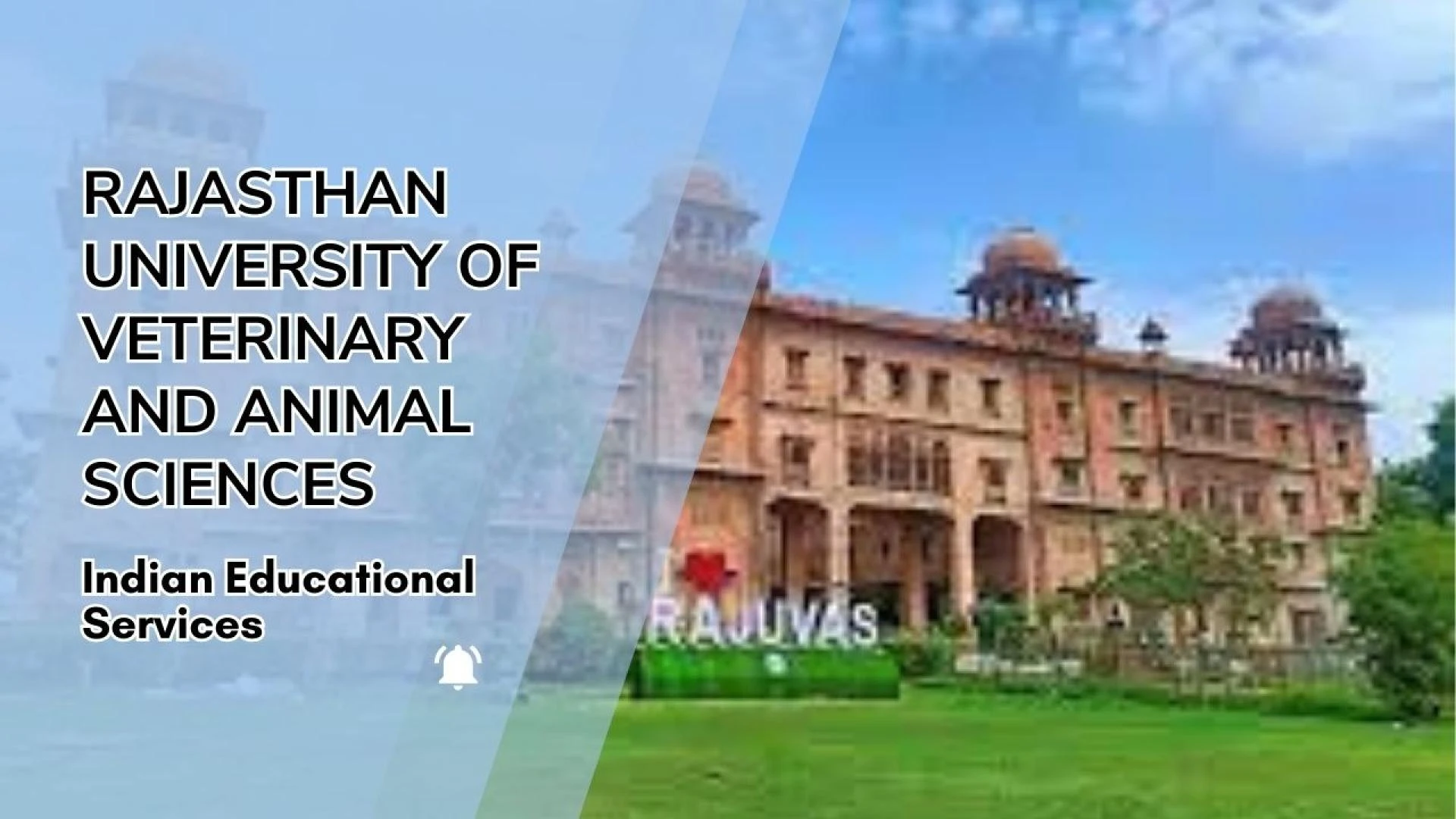
Rajasthan University of Veterinary and Animal Sciences (RAJUVAS), founded in 2010, stands as a top-tier institution devoted to veterinary and animal sciences education, inquiry, and outreach in Rajasthan, India. Situated in Bikaner, Rajasthan University of Veterinary and Animal Sciences has profoundly influenced the evolution of veterinary education and the enhancement of animal health and productivity in the region.
Historical Background:
The roots of veterinary education in Rajasthan trace back to 1954 with the inception of the College of Veterinary and Animal Science (CVAS) in Bikaner. This college established the foundation for veterinary education and research across the state. Acknowledging the escalating significance of veterinary sciences, the Government of Rajasthan instituted the Rajasthan University of Veterinary and Animal Sciences in 2010 under the Rajasthan University of Veterinary and Animal Sciences Act, 2010. This initiative was aimed at forming a specialized university dedicated to veterinary and animal sciences, bolstering research, education, and outreach activities in these domains.
Campus and Infrastructure:
The RAJUVAS campus in Bikaner is outfitted with cutting-edge facilities to bolster its academic and research pursuits. The university features well-equipped laboratories, contemporary classrooms, a comprehensive library, and specialized research centers. These amenities provide students and researchers with essential tools to engage in advanced studies and innovative research in veterinary and animal sciences.
Academic Programs:
RAJUVAS delivers a broad spectrum of academic programs tailored for undergraduate, postgraduate, and doctoral students:
Undergraduate Programs: The Bachelor of Veterinary Science and Animal Husbandry (B.V.Sc. & A.H.) is an extensive program that readies students for professions in veterinary practice, animal health management, and related areas.
Postgraduate Programs: The university presents Master of Veterinary Science (M.V.Sc.) programs across various specializations, enabling students to explore specific facets of veterinary science in depth.
Doctoral Programs: RAJUVAS offers Ph.D. programs for those aspiring to engage in advanced research and academic careers within veterinary and animal sciences.
Diploma Courses: To fulfill the demand for skilled professionals in rural regions, the university provides two-year diploma courses in animal husbandry. These programs endow students with practical expertise to aid livestock management and healthcare at the grassroots.
Constituent Colleges and Research Stations:
RAJUVAS includes numerous constituent colleges and research stations that play an essential role in education, research, and outreach efforts:
College of Veterinary and Animal Science (CVAS), Bikaner: Founded in 1954, CVAS offers undergraduate and postgraduate programs in veterinary science. The college has been crucial in producing proficient veterinarians who have greatly contributed to animal health and production in Rajasthan and beyond.
College of Veterinary and Animal Science, Navania, Vallabhnagar, Udaipur: This college extends RAJUVAS's influence to the southern part of Rajasthan, offering similar programs and aiding regional advancement in veterinary education and services.
Post Graduate Institute of Veterinary Education and Research (PGIVER): PGIVER concentrates on advanced studies and research in veterinary sciences, providing an avenue for postgraduate education and specialized research ventures.
Livestock Research Stations: The university runs seven livestock research stations located at Bikaner, Beechhwal (Bikaner), Kodamdesar (Bikaner), Chandan (Jaisalmer), Nohar (Hanumangarh), Navania (Udaipur), and Bojunda (Chittorgarh). These stations research various livestock species, focusing on breed enhancement, nutrition, disease management, and practices suitable for the arid and semi-arid regions of Rajasthan.
Research and Development:
Research forms a fundamental part of RAJUVAS's mission. The university prioritizes applied research to tackle the issues faced by the livestock sector in Rajasthan. Key research domains encompass:
Animal Health: Crafting strategies for the prevention, diagnosis, and treatment of livestock diseases prevalent in the region.
Animal Nutrition: Developing economically viable and nutritionally adequate feed to boost livestock productivity.
Breed Improvement: Genetic enhancement of indigenous breeds to improve their productivity and adaptability to local conditions.
Reproductive Biotechnology: Investigating methods such as artificial insemination and embryo transfer to enhance reproductive efficacy in livestock.
The outcomes of these research initiatives are communicated to farmers and livestock owners through extension programs, ensuring that the fruits of research benefit the end-users.
Extension Initiatives:
RAJUVAS is dedicated to extending its knowledge beyond the campus to support the rural livestock-rearing populations. The university’s extension initiatives encompass:
Workshops and Training: Facilitating workshops and training sessions for farmers, para-veterinarians, and livestock proprietors on optimal practices in animal husbandry, disease control, and nutrition.
Health Clinics: Arranging animal health clinics in rural locations to offer veterinary services, vaccinations, and treatments.
Awareness Programs: Informing the public about zoonotic diseases, animal welfare, and eco-friendly livestock management methods.
Advisory Services: Providing specialized guidance to government bodies, NGOs, and private entities engaged in the livestock industry.
Collaborations and Alliances:
To boost its educational and research prowess, Rajasthan University of Veterinary and Animal Sciences partners with various national and global institutions:
Indian Council of Agricultural Research (ICAR): As an affiliated body, RAJUVAS aligns its programs with ICAR directives and engages in national research initiatives.
Universities and Research Organizations: Collaborations with other universities and research entities facilitate collaborative research efforts, faculty exchanges, and capacity enhancement projects.
Government Sectors: Partnerships with state and federal government sectors ensure that research and extension initiatives cater to the practical demands of the livestock industry.
Achievements and Influence:
Since its establishment, Rajasthan University of Veterinary and Animal Sciences has made remarkable contributions to the veterinary and animal sciences domain in Rajasthan and beyond. Some of its notable achievements include:
Enhancing Veterinary Training: The university has educated thousands of veterinary professionals who now work in government bodies, private practices, research facilities, and the livestock sector.
Elevating Livestock Health and Efficiency: Through its research and extension initiatives, RAJUVAS has been instrumental in diminishing livestock mortality and enhancing breed quality.
Empowering Rural Incomes: By endorsing best practices in animal husbandry and dairy production, the university has supported farmers and livestock owners in boosting their earnings and improving their economic resilience.
Pioneering Veterinary Research: RAJUVAS has provided innovative approaches for managing livestock diseases, increasing feed efficiency, and optimizing reproductive success in animals.
Accreditation and Recognition: The university is acknowledged by the Veterinary Council of India (VCI) and the Indian Council of Agricultural Research (ICAR), ensuring its programs adhere to national and global standards.
Conclusion:
The Rajasthan University of Veterinary and Animal Sciences (RAJUVAS) serves as a cornerstone of excellence in veterinary education, investigation, and animal healthcare. With its cutting-edge facilities, devoted faculty, pioneering research, and impactful extension initiatives, the university is effecting a significant change in Rajasthan’s livestock sector.
As the need for qualified veterinary professionals continues to rise, RAJUVAS remains committed to its mission of fostering talent, promoting knowledge, and enhancing the well-being of animals and the communities relying on them. For future veterinarians, researchers, and animal enthusiasts, RAJUVAS represents a leading institution that provides a hopeful trajectory in the realm of veterinary and animal sciences.