Buying a home is thrilling—new keys, new memories, a fresh start. But amid the excitement, there’s a hidden danger many buyers overlook entirely. It’s silent, invisible, odorless, and potentially deadly. Even worse, it can exist in a home that looks absolutely perfect on the surface.
That hidden threat is radon gas, and it’s something home inspectors quietly worry about because they know how often it goes undetected. If you’re planning to move into a newly purchased home—or already have—understanding radon could be one of the most important steps you take to protect your family.
In this comprehensive guide, we’ll reveal what radon is, why inspectors are concerned, what most buyers don’t know, and how to ensure your home is truly safe before you settle in.
The Invisible Threat Lurking Beneath Your Home
Radon is a naturally occurring radioactive gas produced when uranium breaks down in soil and rock. It rises through the ground and can seep into homes through tiny openings in the foundation.
What makes radon especially dangerous is that:
- You cannot see it
- You cannot smell it
- You cannot taste it
- It causes no immediate symptoms
According to the U.S. Environmental Protection Agency, radon is the second leading cause of lung cancer overall and the leading cause among non-smokers. The World Health Organization estimates that radon contributes to a significant percentage of lung cancer cases worldwide.
In other words, radon isn’t just a minor concern—it’s a serious health hazard.
Why Home Inspectors Are Concerned About Radon
Professional home inspectors are trained to identify structural problems, safety issues, and potential hazards. However, radon presents a unique challenge.
Here’s what inspectors wish every buyer understood:
Radon Isn’t Part of Every Inspection
Standard home inspections often focus on visible issues—roof damage, plumbing leaks, electrical hazards. Radon testing typically requires a separate request.
It Can Exist in Any Home
Old homes, new homes, renovated homes—none are immune.
It Can Vary Dramatically Between Houses
Two identical houses side by side can have completely different radon levels.
It’s a Long-Term Risk
Inspectors know the damage from radon exposure happens slowly, which makes prevention crucial.
Because of these factors, inspectors often recommend testing even if everything else looks flawless.
How Radon Gets Inside: Entry Points You Never Notice
Radon travels from soil into your home through the path of least resistance. You don’t need large cracks or visible damage for it to enter.
Common entry points include:
- Hairline cracks in concrete floors
- Gaps around utility pipes
- Construction joints
- Sump pump openings
- Crawl spaces
- Porous building materials
Even a well-built, newly constructed home can have radon infiltration.
Why New Homes Can Have High Radon Levels
Many buyers assume newer homes are safer. Ironically, modern construction can sometimes increase radon risk.
Tighter Sealing
Energy-efficient homes are designed to prevent air leakage, which also traps radon inside.
Improved Insulation
Less airflow means gases accumulate more easily.
Disturbed Soil
Construction can release radon trapped underground.
Home inspectors frequently warn buyers not to assume a new build is radon-free.
The Health Risks Buyers Rarely Hear About
Radon exposure is dangerous because it damages lung tissue over time. When radioactive particles are inhaled, they can lead to cancer years later.
Key facts inspectors wish buyers knew:
- Risk increases with prolonged exposure
- Smokers face dramatically higher danger
- Children may be more vulnerable
- Symptoms often appear only in advanced stages
Because the effects are delayed, many families never connect illness to radon exposure in their homes.
The Only Way to Know: Testing Before You Move In
Since radon is undetectable by human senses, testing is the only reliable method.
Short-Term Tests
Quick results in a few days—ideal during real estate transactions.
Long-Term Tests
More accurate readings over several months.
Professional Testing
Certified experts use calibrated equipment for precise measurements.
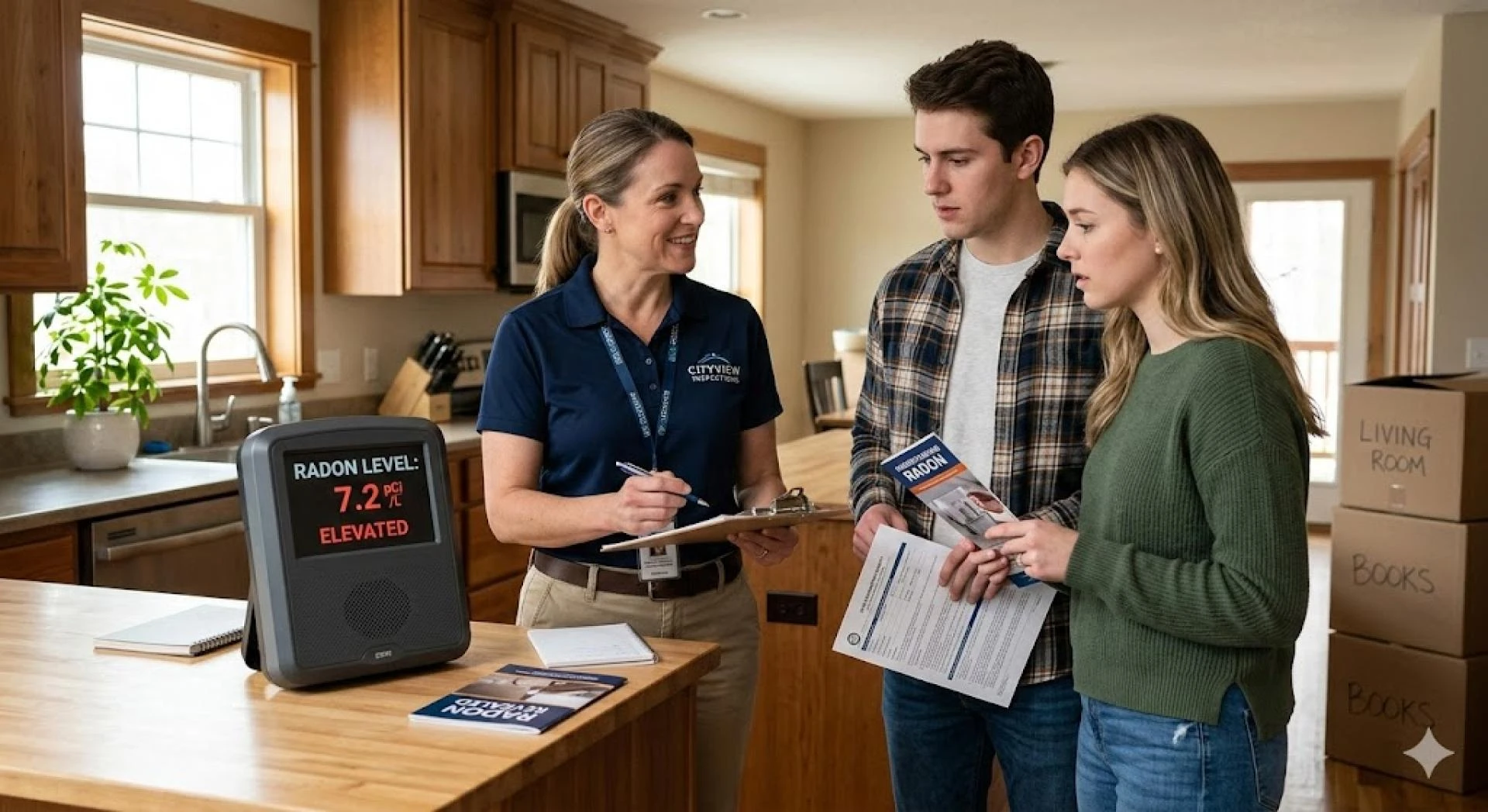
Inspectors strongly recommend testing before moving in, especially if the home hasn’t been tested recently.
What Radon Levels Mean for Your Safety
Radon concentration is measured in picocuries per liter (pCi/L).
- Below 2 pCi/L — Low risk
- 2–4 pCi/L — Moderate risk
- 4 pCi/L or higher — Action needed
No amount of radon is completely safe, but mitigation becomes critical above recommended levels.
Radon Mitigation: Solutions That Actually Work
If testing reveals elevated radon, don’t panic. Home inspectors emphasize that mitigation is highly effective.
Sub-Slab Depressurization
A vent pipe and fan system draws radon from beneath the home and releases it outside.
Sealing Foundation Cracks
Reduces entry pathways.
Crawl Space Ventilation
Improves airflow to prevent buildup.
Radon-Resistant Construction Techniques
Used in new homes to prevent accumulation from the start.
Most mitigation systems can reduce levels by up to 99%, making the home safe.
What Inspectors Wish Buyers Would Ask Before Closing
Before finalizing a home purchase, knowledgeable buyers should ask:
- Has the home ever been tested for radon?
- When was the last test conducted?
- Are mitigation systems installed?
- Are test results documented?
These questions could reveal risks that aren’t visible during walkthroughs.
Radon Myths That Put Buyers at Risk
Misconceptions often prevent people from taking radon seriously.
Myth: Radon is only a problem in certain regions
Reality: It can occur anywhere
Myth: Concrete foundations block radon
Reality: Gas can pass through tiny pores
Myth: Upper floors are always safe
Reality: Radon can circulate throughout a home
Myth: If previous owners didn’t mention it, there’s no issue
Reality: They may not have known
Understanding the truth helps buyers make informed decisions.
Why Waiting to Test Is a Mistake
Many homeowners plan to test “later” after moving in. Inspectors strongly advise against this approach.
Delaying testing means:
- Prolonged exposure
- Higher health risks
- Missed opportunities for negotiation
- Potentially costly future fixes
Testing early gives you control and peace of mind.
Protecting Your Investment and Your Family
A home isn’t just a financial asset—it’s where your family lives, sleeps, and grows. Ensuring it’s safe from invisible hazards is essential.
Benefits of addressing radon include:
- Improved indoor air quality
- Increased property value
- Easier resale in the future
- Confidence in your home’s safety
Buyers who take radon seriously often feel more secure in their decision.
The Peace of Mind Every New Homeowner Needs
Imagine settling into your new home knowing you’ve addressed every hidden risk. That confidence transforms a house into a true sanctuary.
Home inspectors don’t want to alarm buyers—they want them informed. Radon testing is one of the simplest steps with the biggest impact on long-term health.
Conclusion: What Every Buyer Should Remember Before Moving In
Moving into a new home should be exciting, not stressful. Yet beneath the floors and behind the walls, radon gas could quietly threaten your family’s well-being if left unchecked.
Home inspectors understand this risk better than anyone. That’s why they wish every buyer knew about radon before unpacking the first box. Learn more at Cedar Rapids Radon Pros.
The solution is straightforward:
- Test your home
- Understand the results
- Install mitigation if needed
- Retest regularly
Taking these steps ensures your dream home remains a safe haven—not a hidden danger.
Because when it comes to radon, what you don’t know truly can hurt you. And the best time to act isn’t later—it’s before you move in.