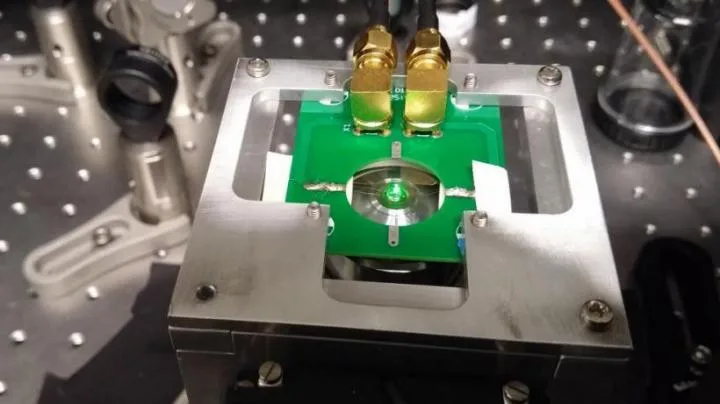
The quantum sensors market pain points reflect the practical difficulties organizations encounter when developing, purchasing, integrating, and operating next-generation sensing technologies. Quantum sensors offer exceptional precision, but their commercial success depends on more than technical performance. Businesses also require affordability, reliability, simple deployment, efficient maintenance, and compatibility with existing systems.
As quantum sensing moves toward broader industrial use, identifying these pain points can help manufacturers design products that address real customer requirements rather than focusing exclusively on laboratory performance.
Complex Product Architecture
One of the most common pain points is the complexity of quantum sensor architecture. Some systems require lasers, optical components, magnetic shielding, vacuum environments, specialized electronics, and sophisticated control mechanisms.
Such configurations can make products difficult to install and operate. Customers without dedicated quantum technology teams may find it challenging to manage these systems effectively.
Simplifying hardware and automating operational procedures will be important for improving accessibility.
Difficulty Moving From Prototype to Product
A technology that performs well in a controlled research environment may not automatically become a dependable commercial product.
Prototype systems often receive extensive attention from specialists, while commercial devices must operate continuously with minimal intervention. Manufacturers therefore need to address durability, calibration, environmental stability, packaging, software, and service requirements.
This transition from demonstration to dependable product remains a major pain point across the industry.
Cost and Return on Investment
Quantum sensing systems can involve expensive components, specialized engineering, and substantial development costs. For potential customers, the central question is whether the performance advantage justifies the total cost of ownership.
Organizations may delay purchases if the economic benefit is difficult to quantify. A sensor offering exceptional precision may still struggle to gain adoption if its advantages do not translate into lower operating costs, improved safety, better productivity, or new business capabilities.
Clear application-based value propositions will therefore become increasingly important.
Environmental Operating Conditions
Many quantum sensors are sensitive to temperature, vibration, electromagnetic interference, and other environmental factors.
Field applications can be particularly demanding. A sensor operating inside a laboratory benefits from controlled conditions, whereas a device installed on a vehicle, construction site, aircraft, or industrial facility may encounter continuous disturbances.
Customers need equipment that maintains consistent performance under realistic conditions. Developing robust packaging, shielding, compensation technologies, and automated controls can help address this concern.
Limited Technical Expertise
Operating quantum sensing systems can require knowledge of quantum physics, optics, electronics, software, and data analysis.
Many potential users do not have employees with this combination of skills. This creates a training and recruitment burden that can discourage adoption.
Products with intuitive interfaces, automated diagnostics, remote support, and simplified calibration could reduce dependence on highly specialized personnel.
Integration With Existing Systems
Another major pain point involves connecting quantum sensors to existing industrial infrastructure.
Customers may already use established monitoring platforms, databases, communication protocols, and control systems. A new quantum sensor must work within this environment rather than functioning as an isolated device.
Poor interoperability can increase implementation time and costs. Manufacturers that provide flexible software interfaces and standardized communication options can make adoption considerably easier.
Calibration and Maintenance Burdens
High-precision sensors require stable calibration to maintain measurement quality. Quantum devices may need periodic adjustments as environmental conditions or system components change.
For customers operating numerous sensors, manual calibration can become expensive and time-consuming.
Automated calibration, built-in diagnostics, remote monitoring, and self-correction technologies could significantly improve the user experience and lower maintenance requirements.
Unclear Performance in Real-World Applications
Laboratory sensitivity does not always translate directly into practical performance.
Customers care about how accurately a sensor performs in noisy, changing, and unpredictable environments. They also want to understand installation requirements, operating costs, maintenance schedules, and expected service life.
Greater field testing and transparent performance specifications can help customers make more informed decisions.
Data Interpretation Challenges
Quantum sensors can produce highly sensitive measurements, but raw data may not immediately provide actionable information.
Users may require specialized software to filter noise, identify patterns, combine measurements, and detect anomalies. Without effective analytics, the value of high-quality sensor data can remain limited.
Integration with machine learning and automated analytics could help convert complex measurements into useful operational insights.
Manufacturing Consistency
Producing advanced quantum sensors consistently at scale presents another challenge.
Small variations in components, materials, optical systems, or fabrication processes can influence performance. Commercial customers expect products to deliver predictable results across different units.
Improving manufacturing precision and quality-control procedures will be essential as production volumes increase.
Long Sales and Validation Cycles
Organizations adopting new sensing technologies often require extensive testing before approving them for critical operations.
This can result in lengthy evaluation periods, especially in sectors such as aerospace, healthcare, energy, transportation, and infrastructure.
Manufacturers may need to provide pilot programs, technical demonstrations, integration support, and long-term performance data to build customer confidence.
Competition From Established Alternatives
Conventional sensors remain attractive because they are familiar, widely available, and supported by mature supply chains.
Even when quantum sensors provide better sensitivity, customers may prefer existing technologies if those solutions already satisfy operational requirements.
Quantum sensing companies therefore need to focus on applications where improved precision creates a clearly measurable advantage.
Supply Chain and Component Availability
Specialized lasers, photonic components, atomic systems, precision electronics, and advanced materials can create supply-chain challenges.
Dependence on limited suppliers may increase production risks and make large-scale commercialization more difficult.
Developing diversified supplier networks and more standardized components can improve manufacturing resilience.
Building Customer Confidence
Because quantum sensing remains an emerging technology category, some customers may be uncertain about product maturity, service availability, and long-term support.
Building confidence requires reliable products, strong technical documentation, responsive customer service, and clear implementation pathways.
Partnerships with established industrial organizations can also help demonstrate practical value.
Conclusion
The quantum sensors market pain points extend across technology development, commercialization, deployment, maintenance, and customer adoption. Complexity, cost, environmental sensitivity, limited expertise, integration challenges, calibration requirements, manufacturing consistency, and competition from conventional sensors can all slow market expansion.
Addressing these issues requires a customer-centered approach. Future products will need to combine quantum-level measurement capabilities with simple operation, reliable performance, scalable manufacturing, intelligent software, and strong technical support.
The companies most capable of eliminating practical friction will have an important advantage as quantum sensing progresses from specialized applications toward broader industrial adoption.